
- All
- Galaxies
- NEBULAE
- PLANETARY NEBULAE
- OPEN / GLOBULAR CLUSTERS
- TEAM MAGELLAN
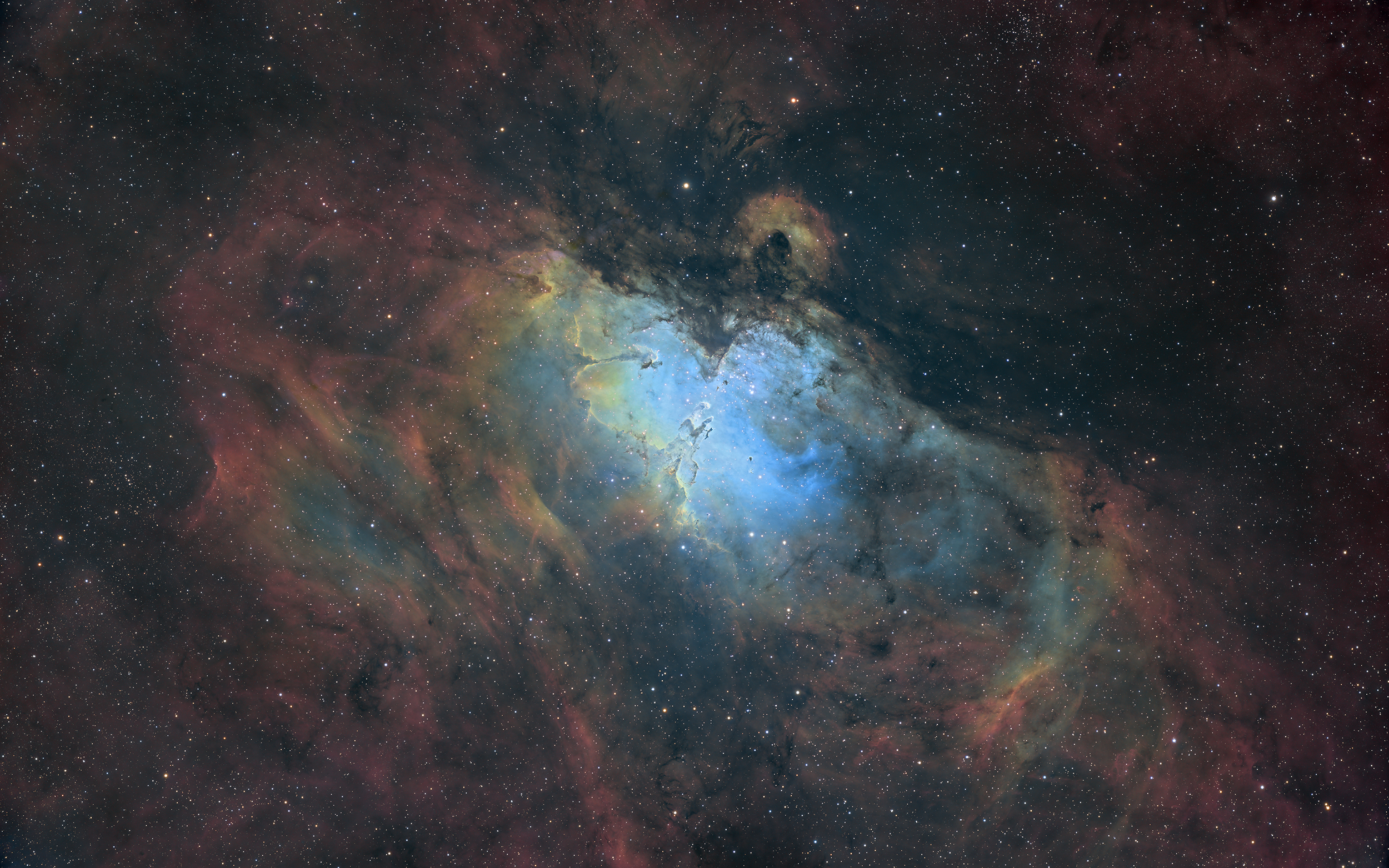
M16, The Eagle Nebula
A vast star-forming region in Serpens, about 7,000 light-years away, hosting a young cluster of massive stars. These stars sculpt the surrounding gas, and the eagle-like shape with outstretched wings gives the nebula its name.
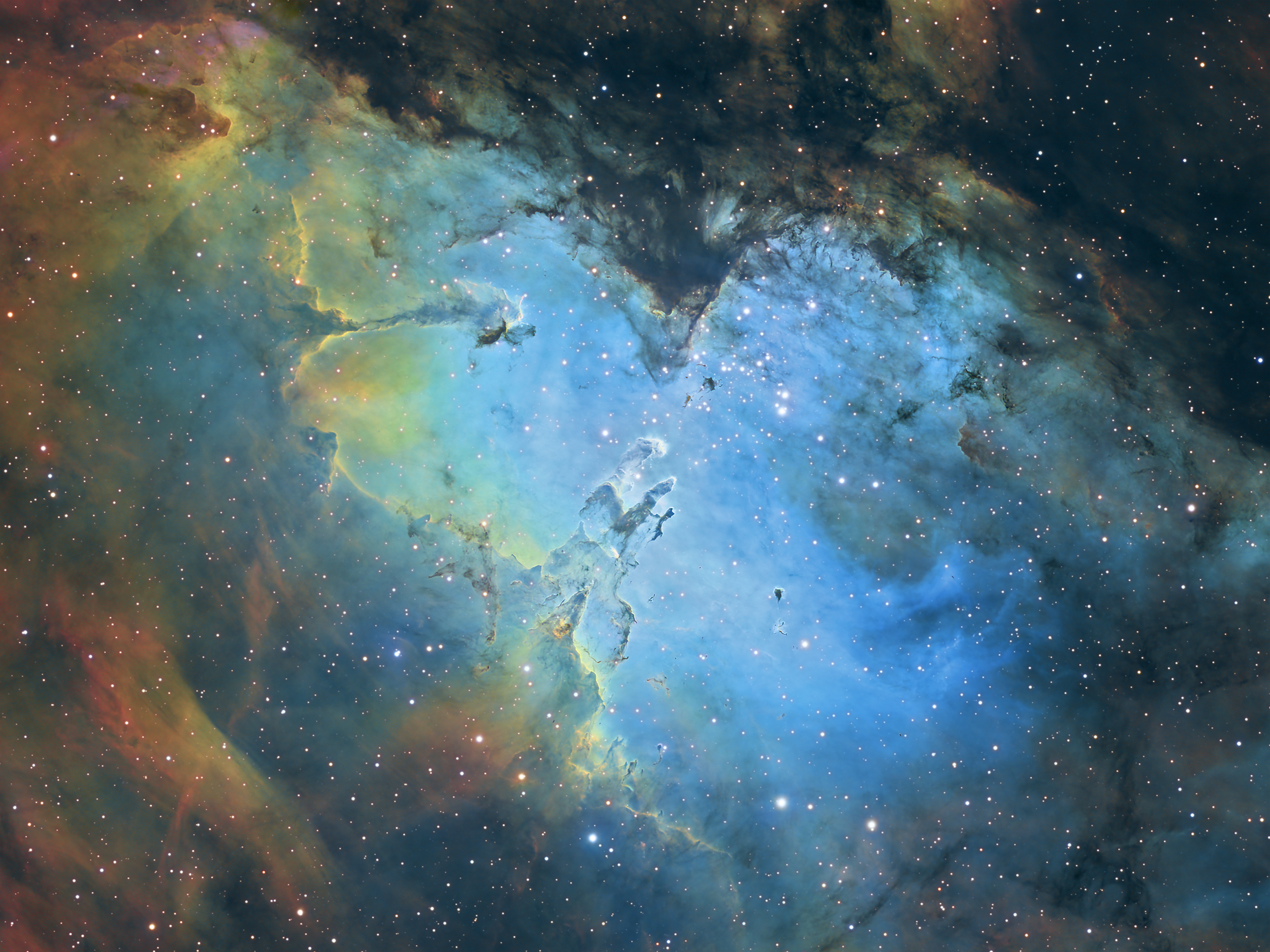
Pillars of Creation
Columns of gas and dust at the heart of M16, made famous by Hubble’s 1995 image. Stars are born at the tips of these pillars, which are slowly eroded by the radiation of nearby stars.
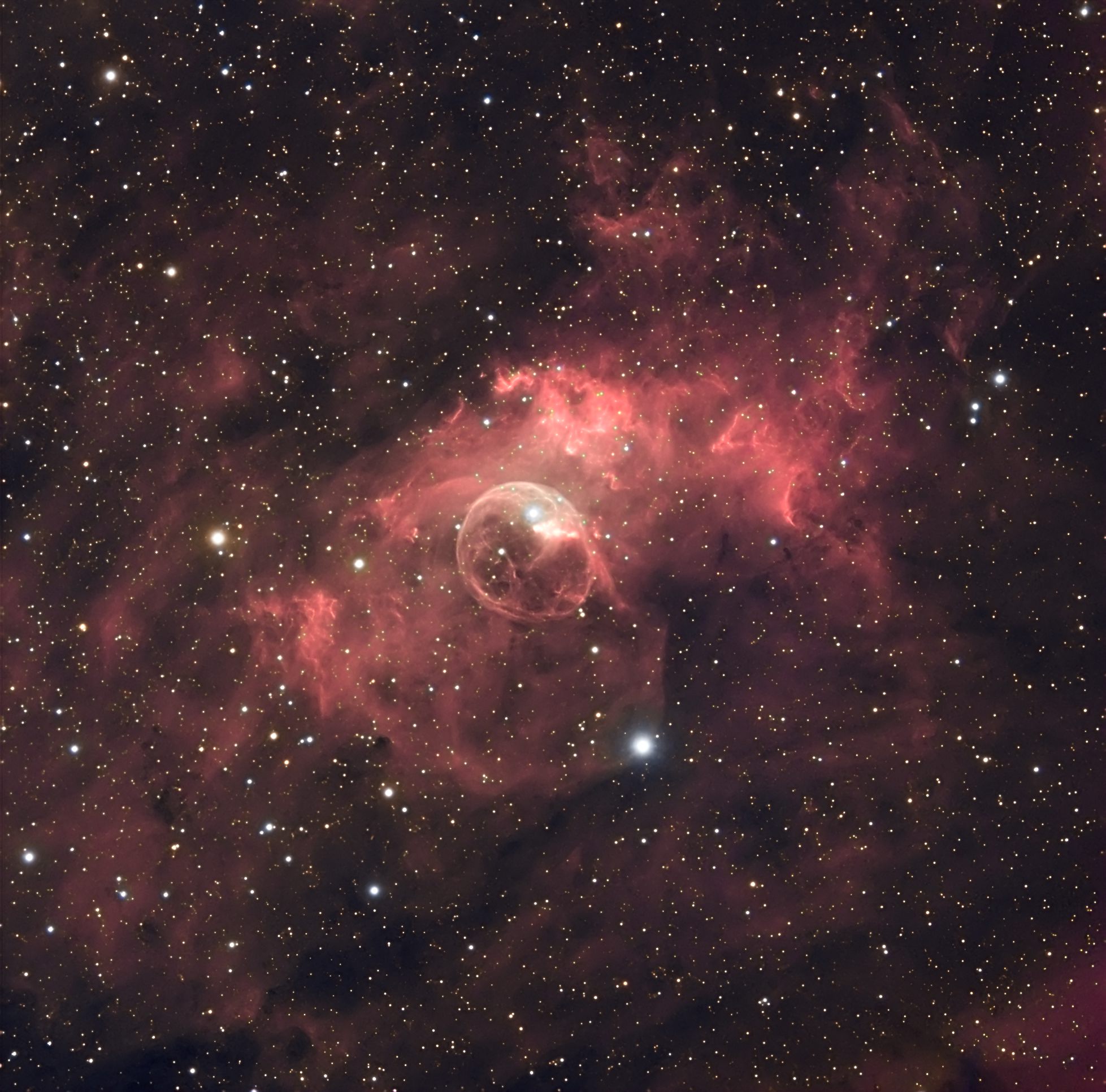
NGC7635, The Bubble Nebula
A 10-light-year-wide bubble of gas in Cassiopeia, blown by the wind of a massive star (BD+60 2522). A striking example of how a single star can shape its surroundings.
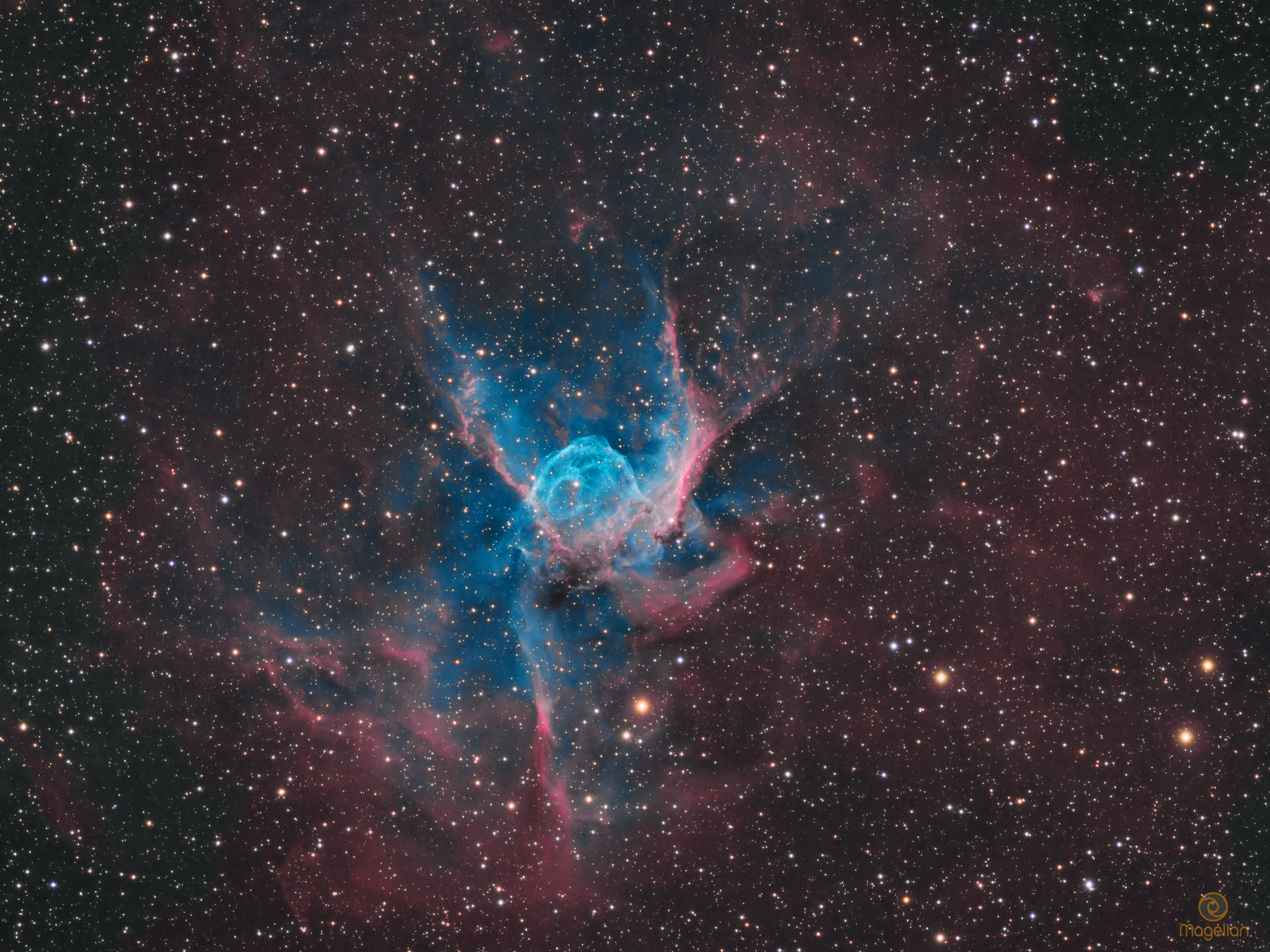
Thor's Helmet
An emission nebula in Canis Major whose filaments evoke a winged helmet. It surrounds a Wolf-Rayet star whose violent winds carved out this bubble.
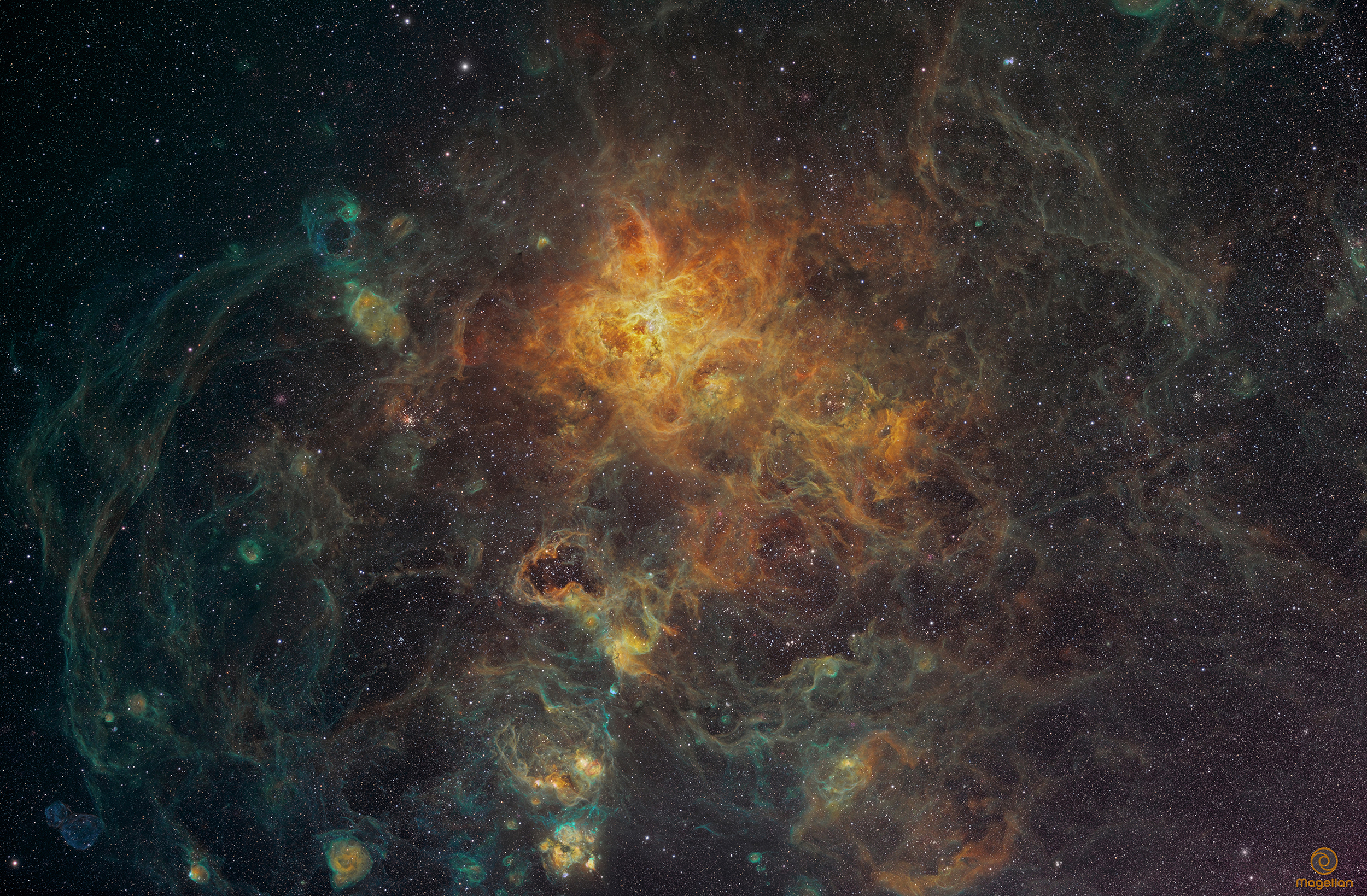
Tarantula Nebula
Located in the Large Magellanic Cloud, 160,000 light-years away. It is the most active star-forming region in the Local Group, so luminous it would be visible to the naked eye if it were as close as M42.
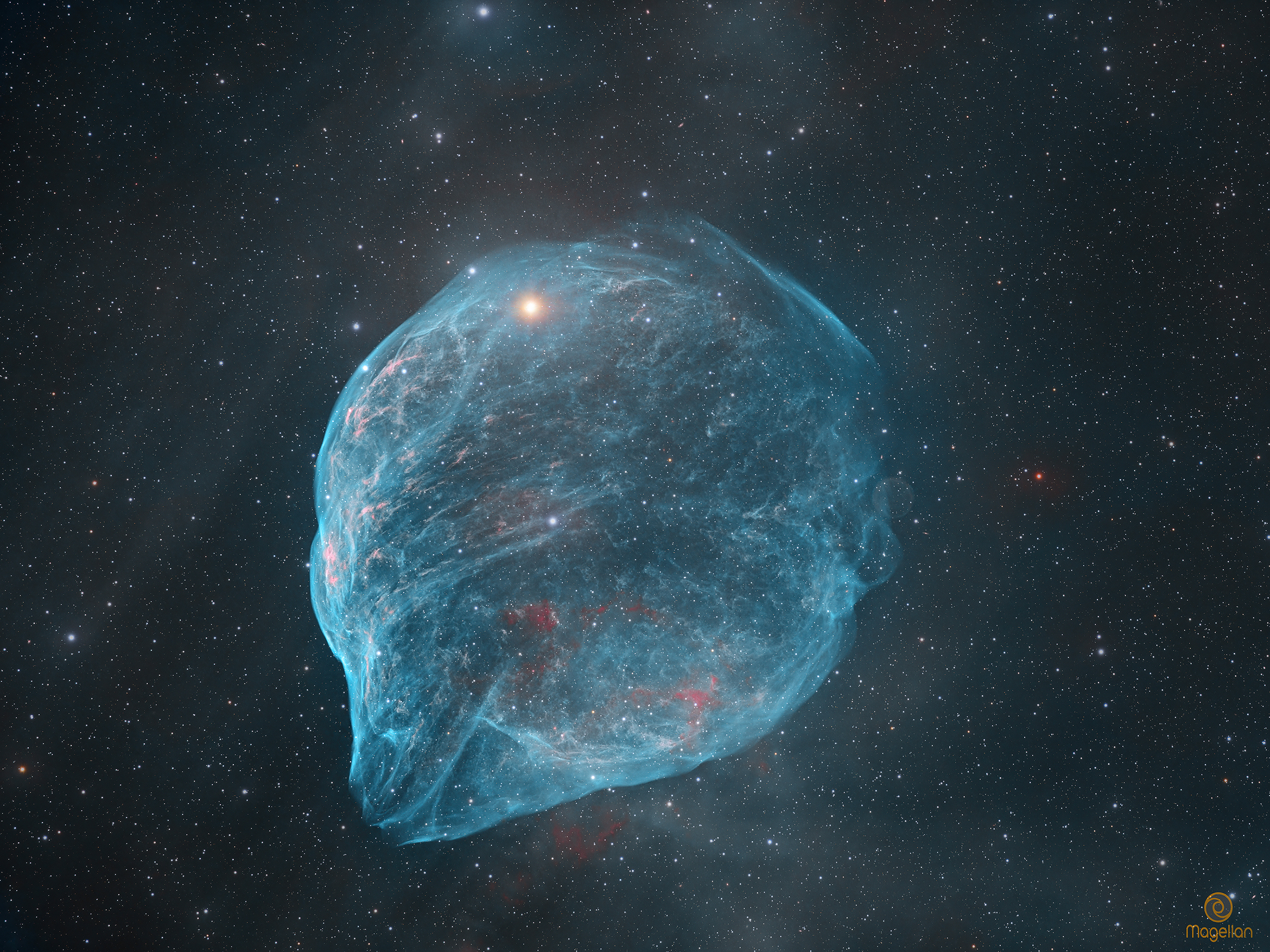
Dolphin Head Nebula
A faint, bluish bubble in Canis Major, created by the Wolf-Rayet star EZ CMa. It is very pale in OIII, which is why long exposures are needed to reveal it.
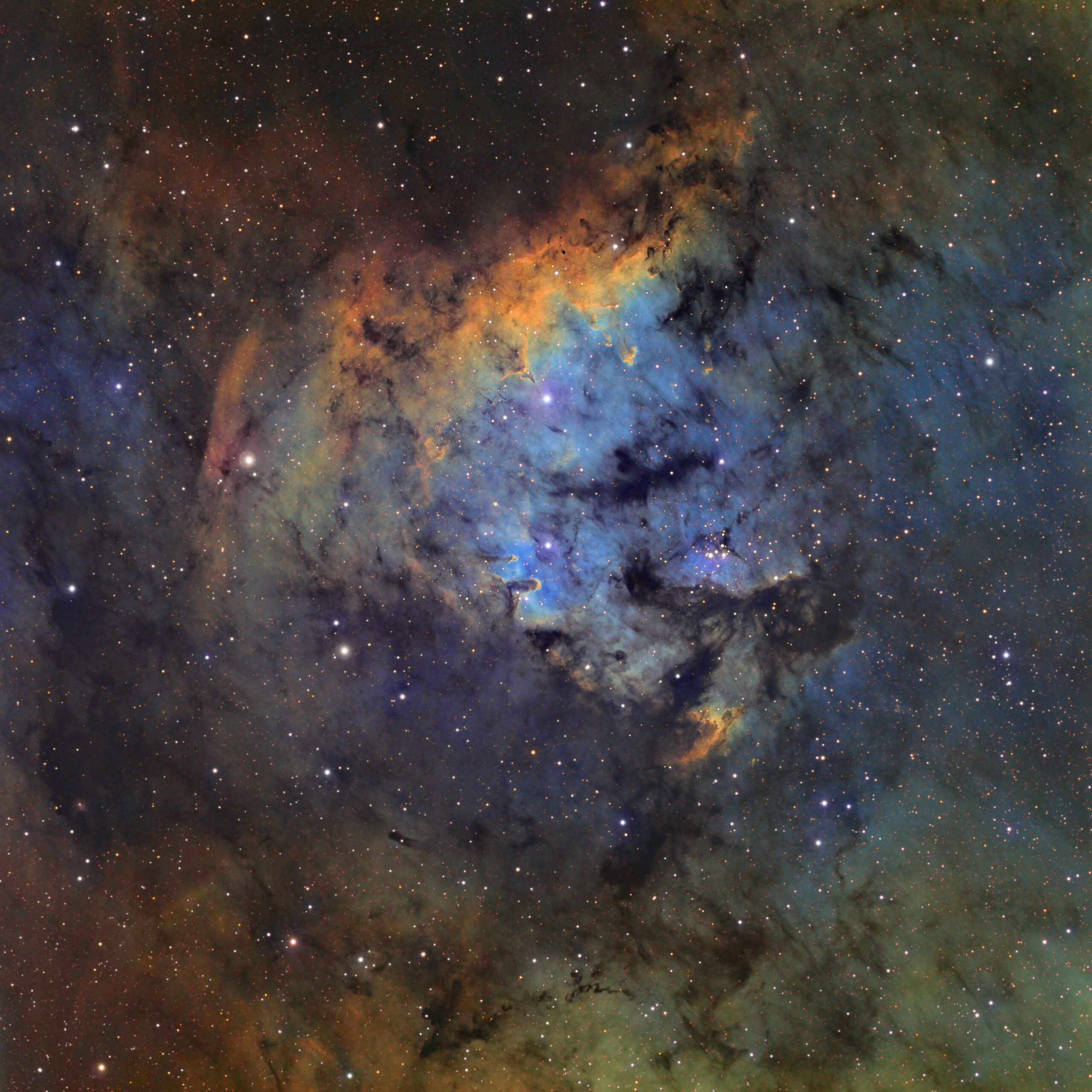
Sharpless 171 - NGC7822
A complex of gas and dust in Cepheus, where young stars are sculpting pillars still in formation. A favourite target in Ha/OIII bicolour for its contrasts.
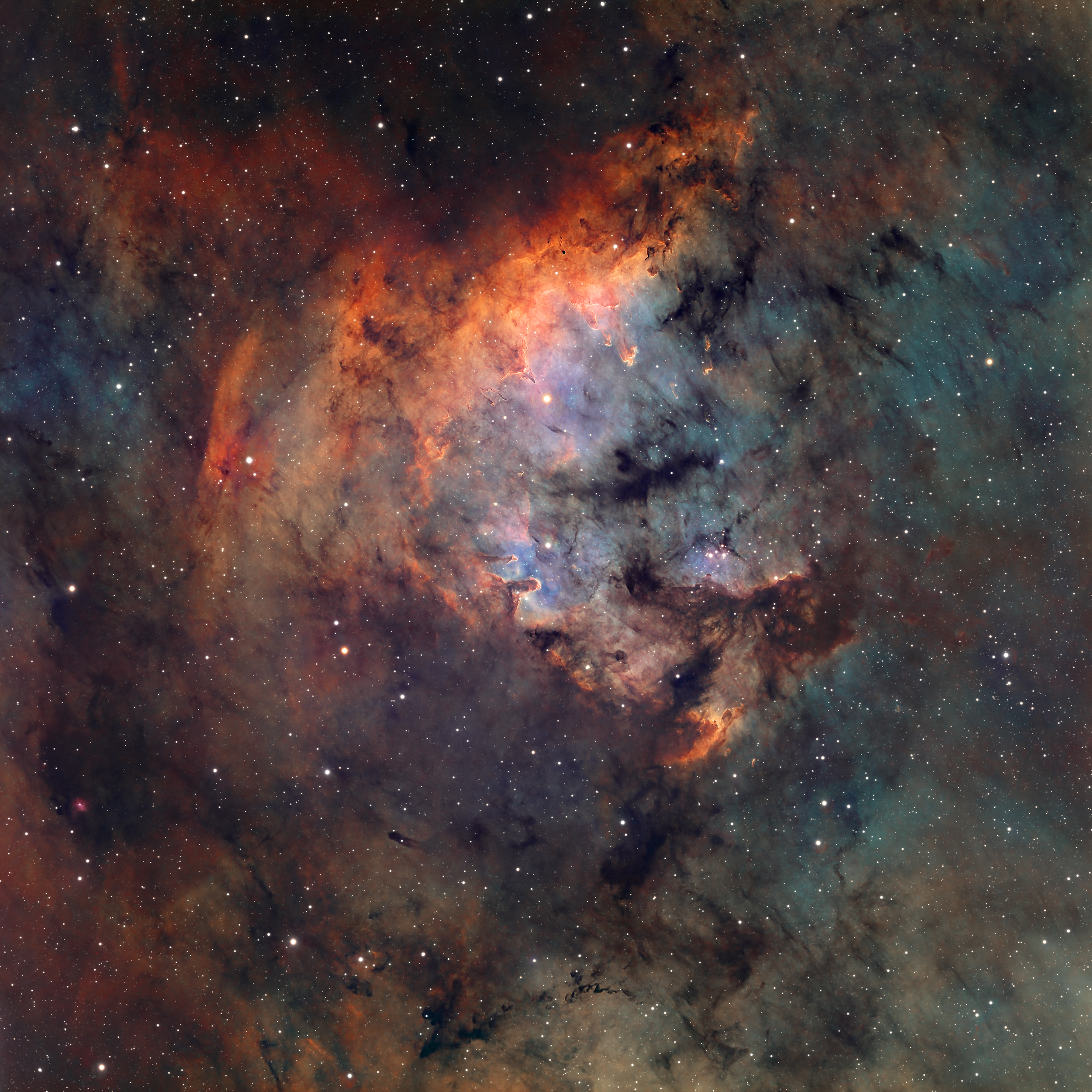
Sharpless 171
SHO 2025 New Treatment
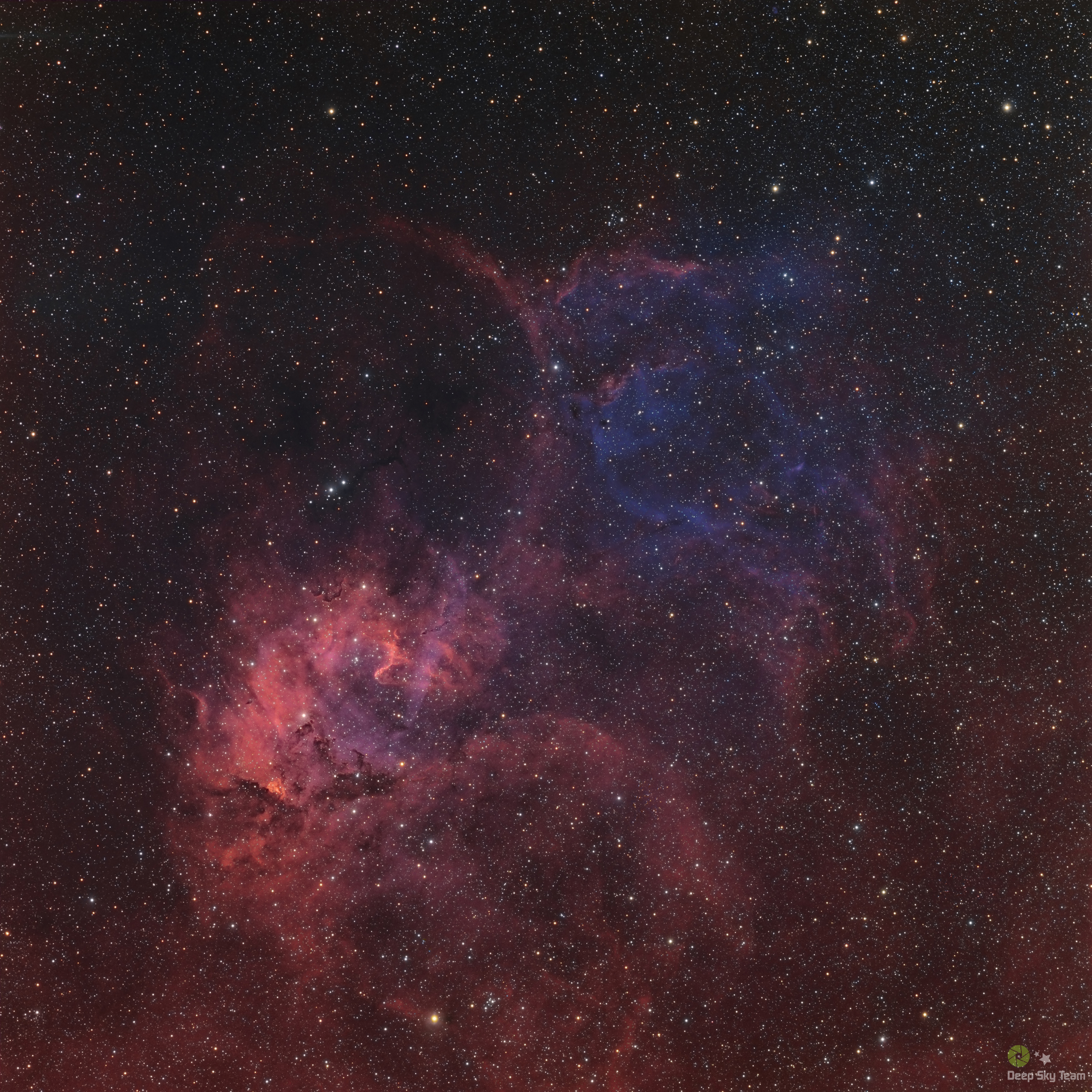
Sharpless 132, The Lion
A large emission nebula in Cepheus whose shape recalls a lion in profile. It is lit by a Wolf-Rayet star and shows fine structures in Ha and OIII.
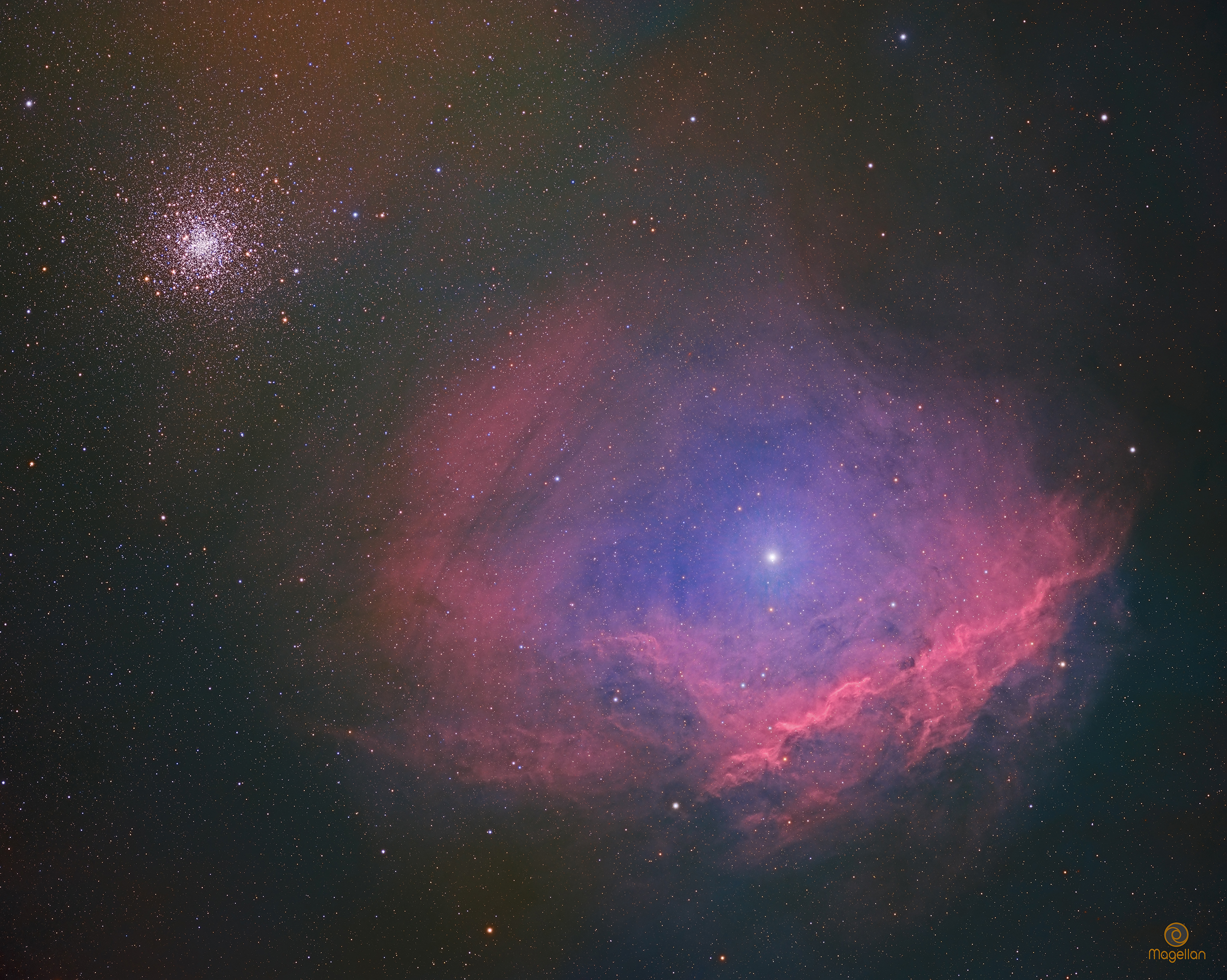
Sharpless 9
A nebulous region in Scorpius/Ophiuchus, centred on Sigma Scorpii and close to Antares. Its red and blue gas contrasts with the rich star fields of the area.
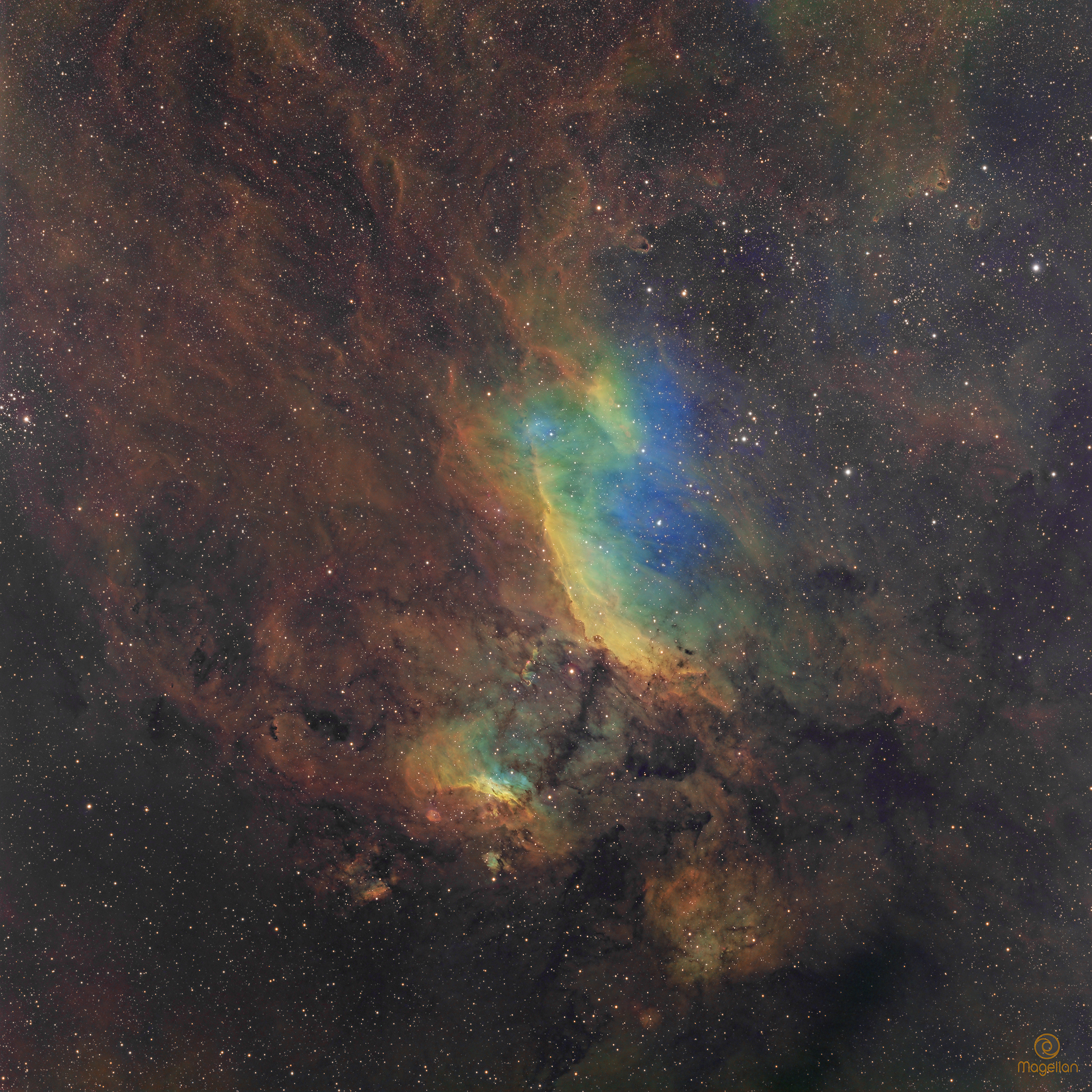
Shrimp Nebula - IC4628
A large emission nebula in Scorpius, its filaments recalling a shrimp. It is excited by young, massive stars and offers a fine field in Ha.
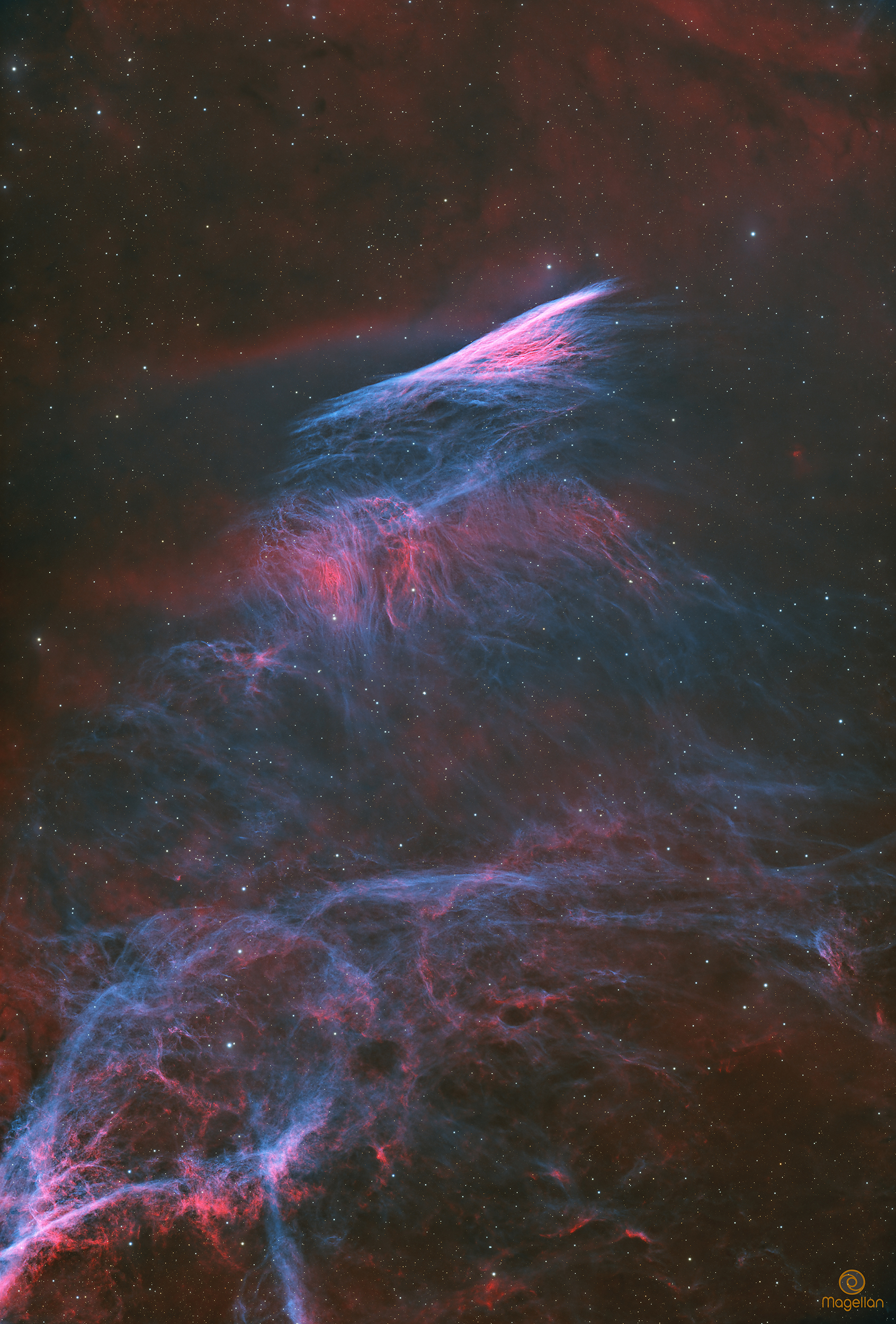
Pencil Nebula - NGC 2736
A long, narrow, luminous filament in Puppis, a remnant of the ancient Vela supernova. Its thin, elongated shape, as if drawn with a pen, gives it its name.
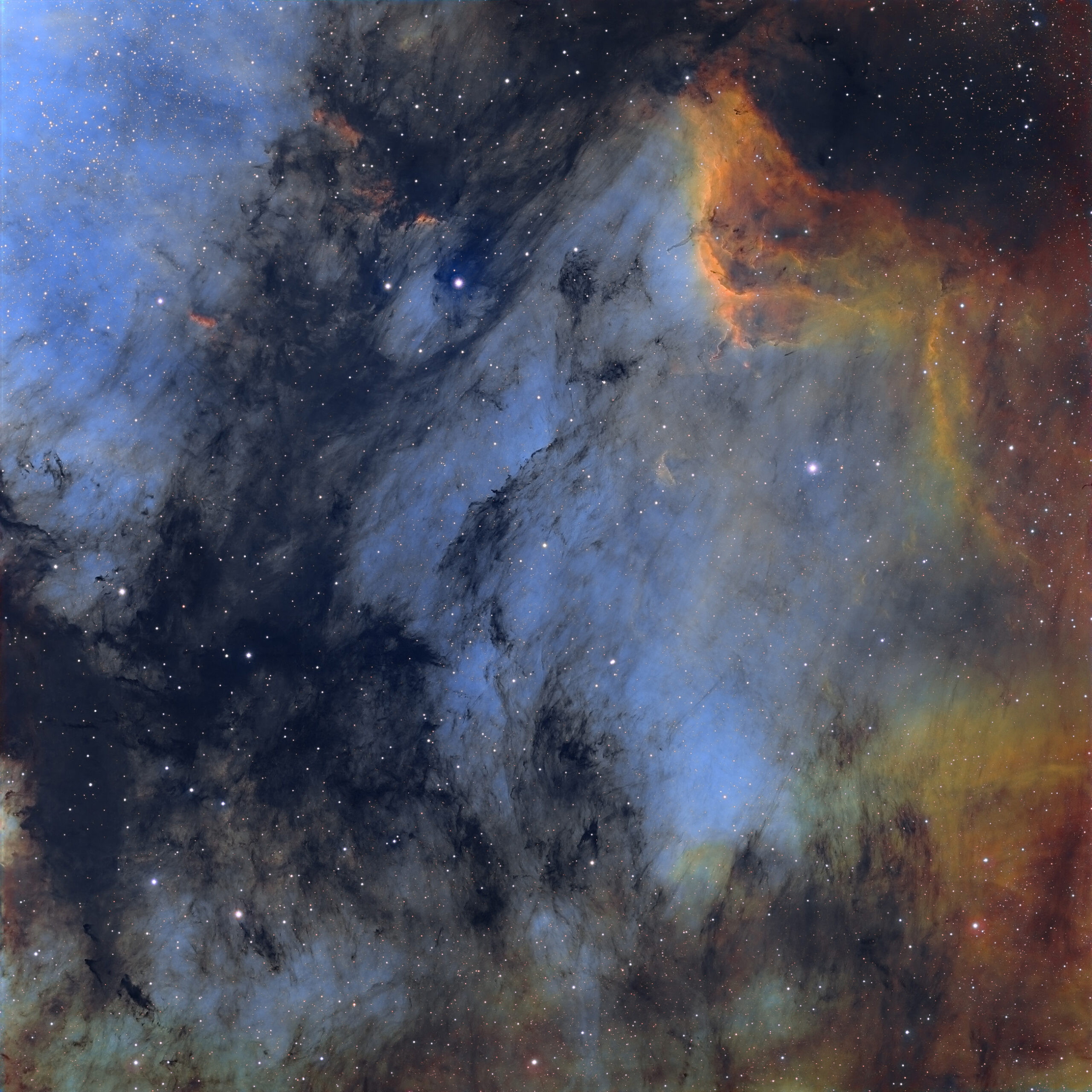
Pelican Nebula - IC 5070
Located next to the North America Nebula in Cygnus. The “beak” and “head” of the bird are shaped by an ionization front where new stars are being born.
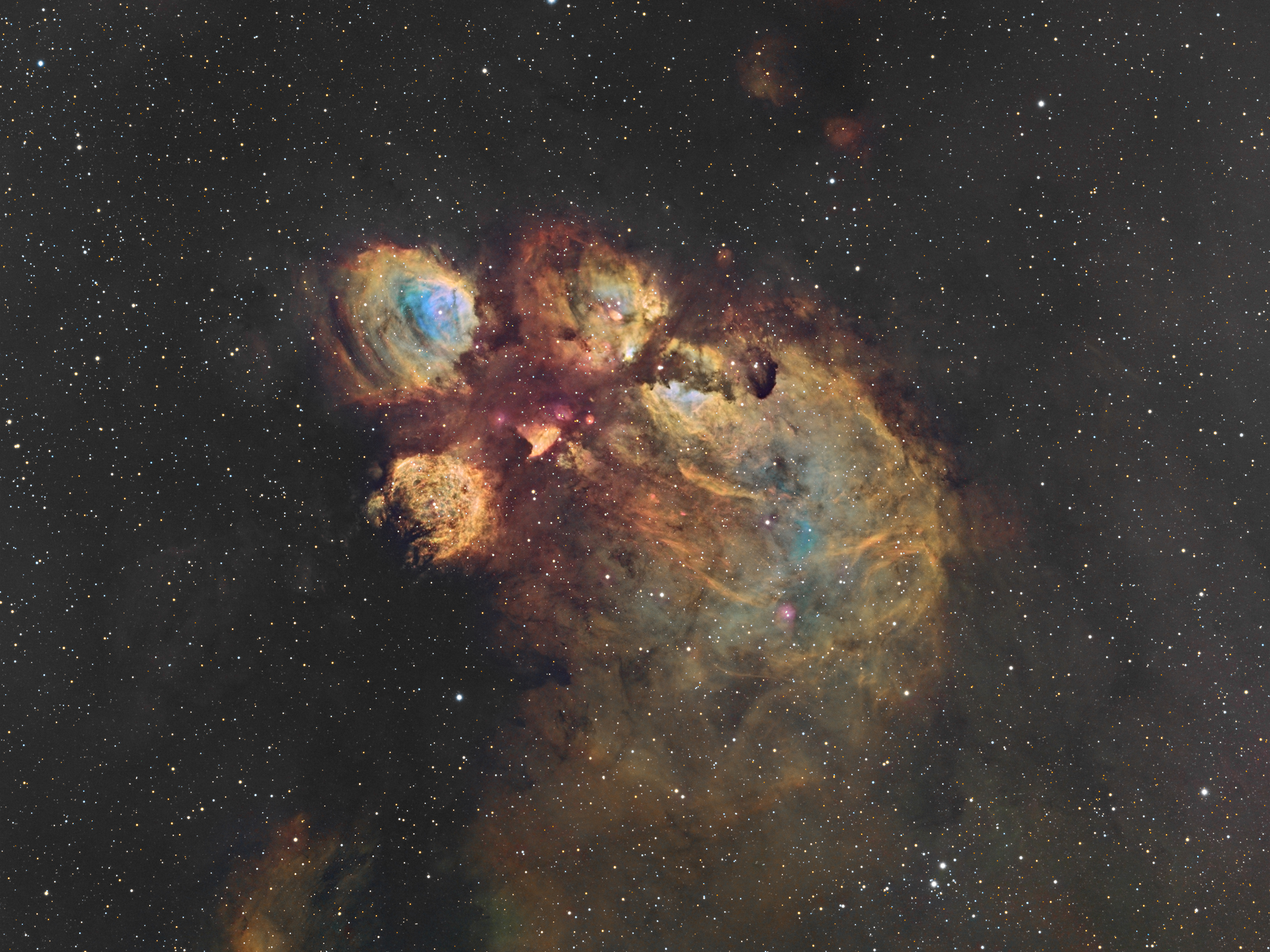
Cat’s Paw Nebula - NGC 6334
A star-forming region in Scorpius, 5,500 light-years away. Its reddish lobes recall a feline paw print. It hosts massive stars still in formation.
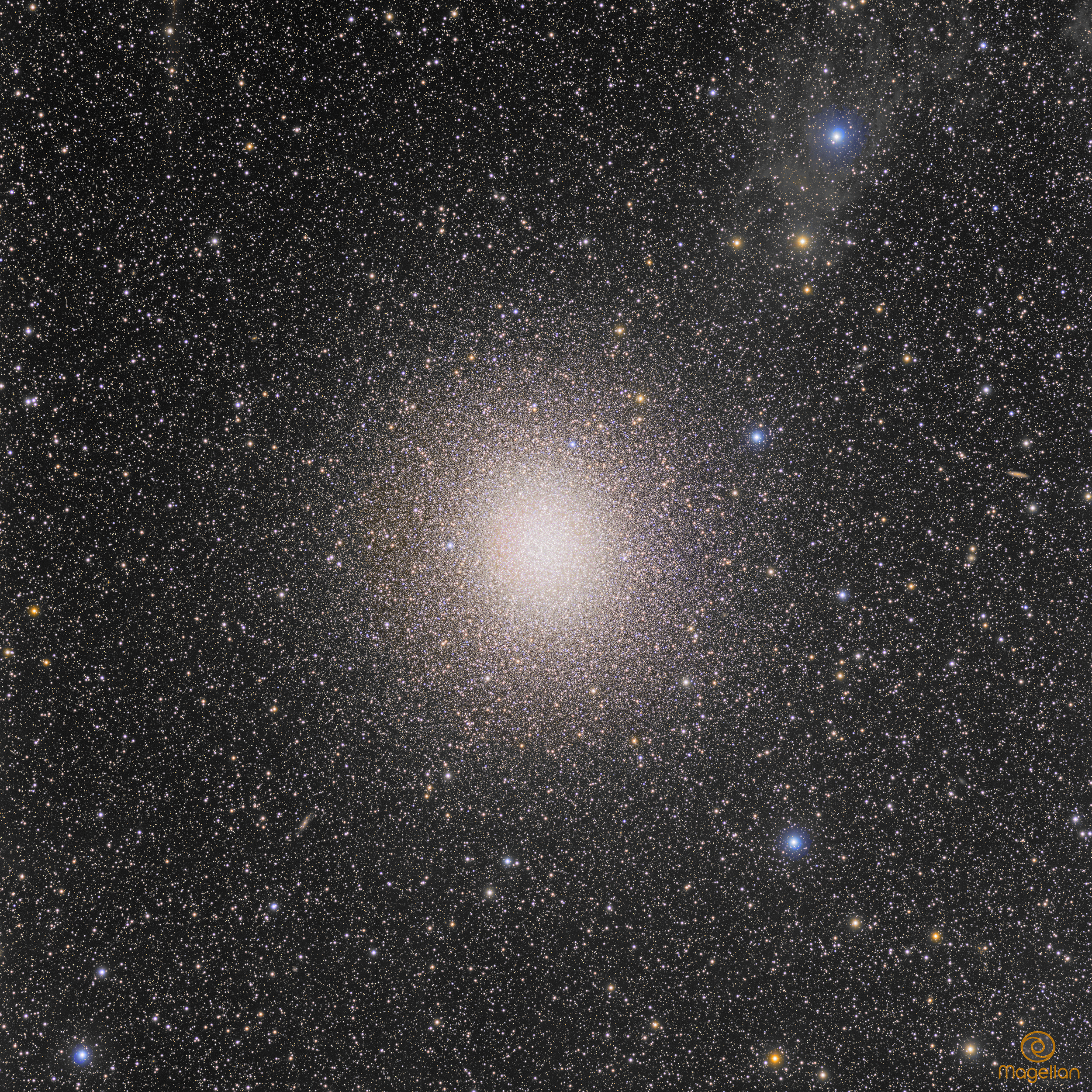
Omega Centauri - NGC 5139
The largest and most massive globular cluster in the Milky Way, containing millions of stars. It may be the core of an ancient dwarf galaxy absorbed by our own.
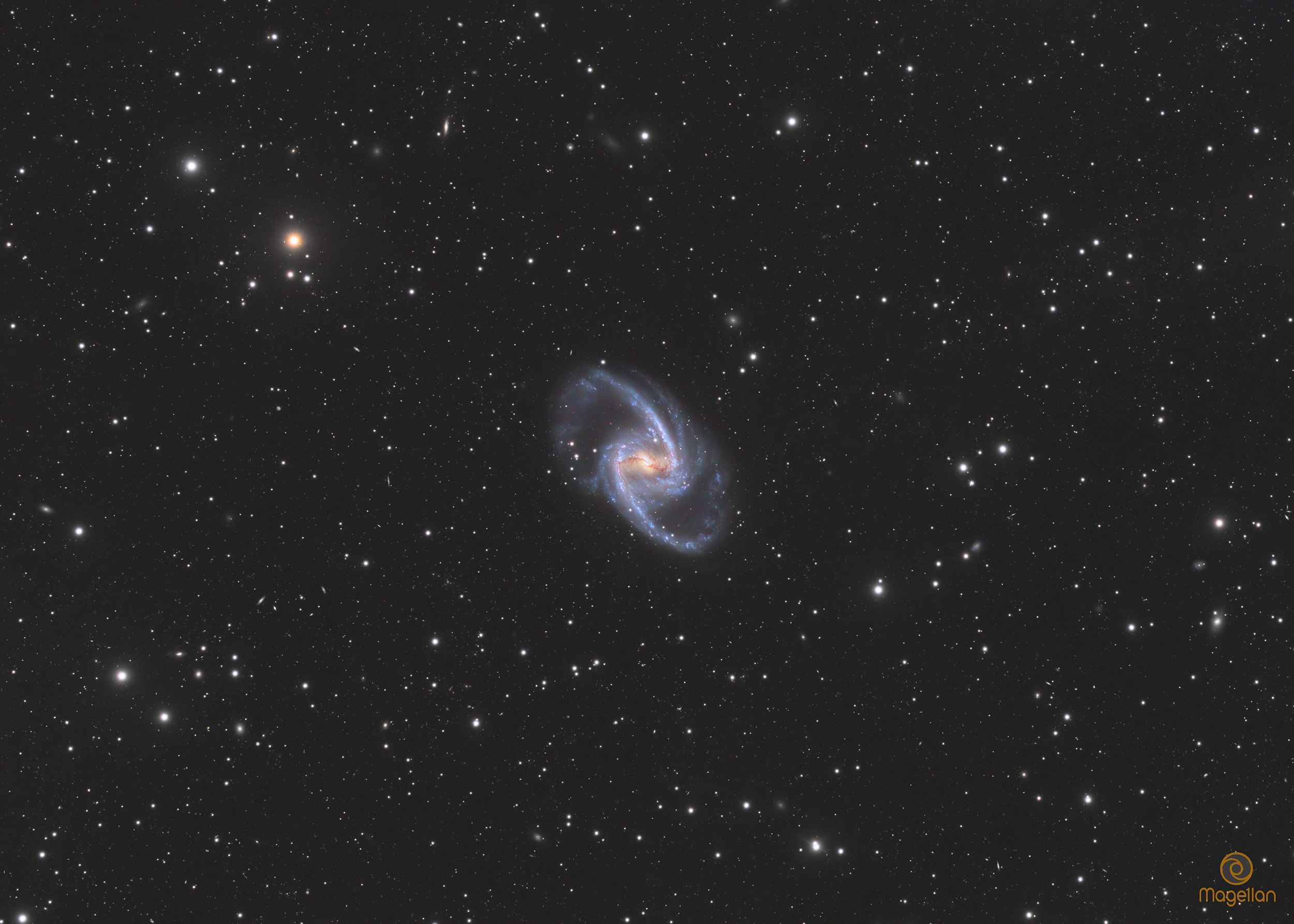
NGC1365
A large barred spiral galaxy in Fornax, 56 million light-years away. Its prominent bar and well-structured arms make it an archetype of the type.
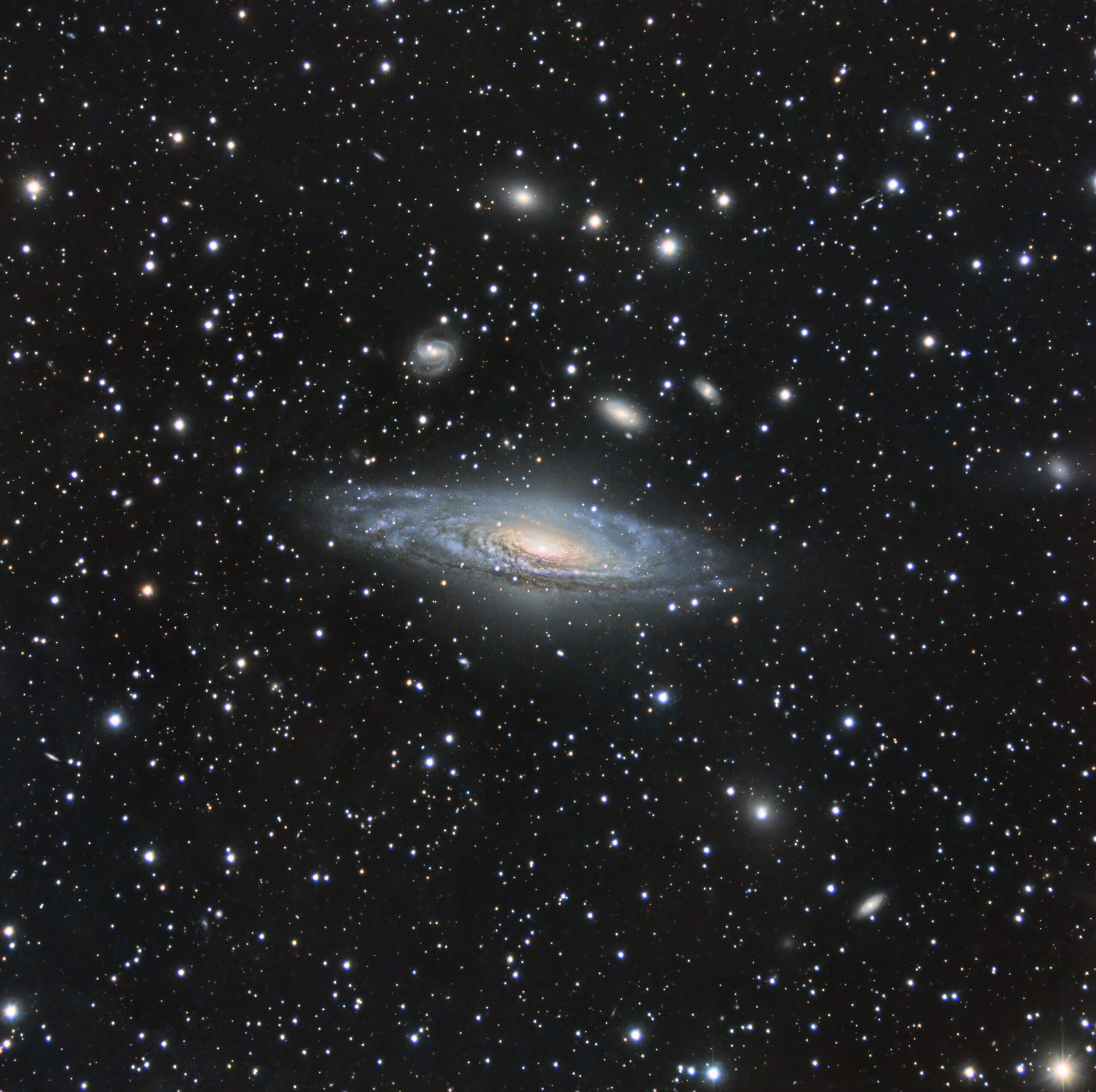
NGC7331
A spiral galaxy in Pegasus, often called the “Milky Way’s twin.” It is surrounded by small, distant background galaxies, giving very rich fields in depth.
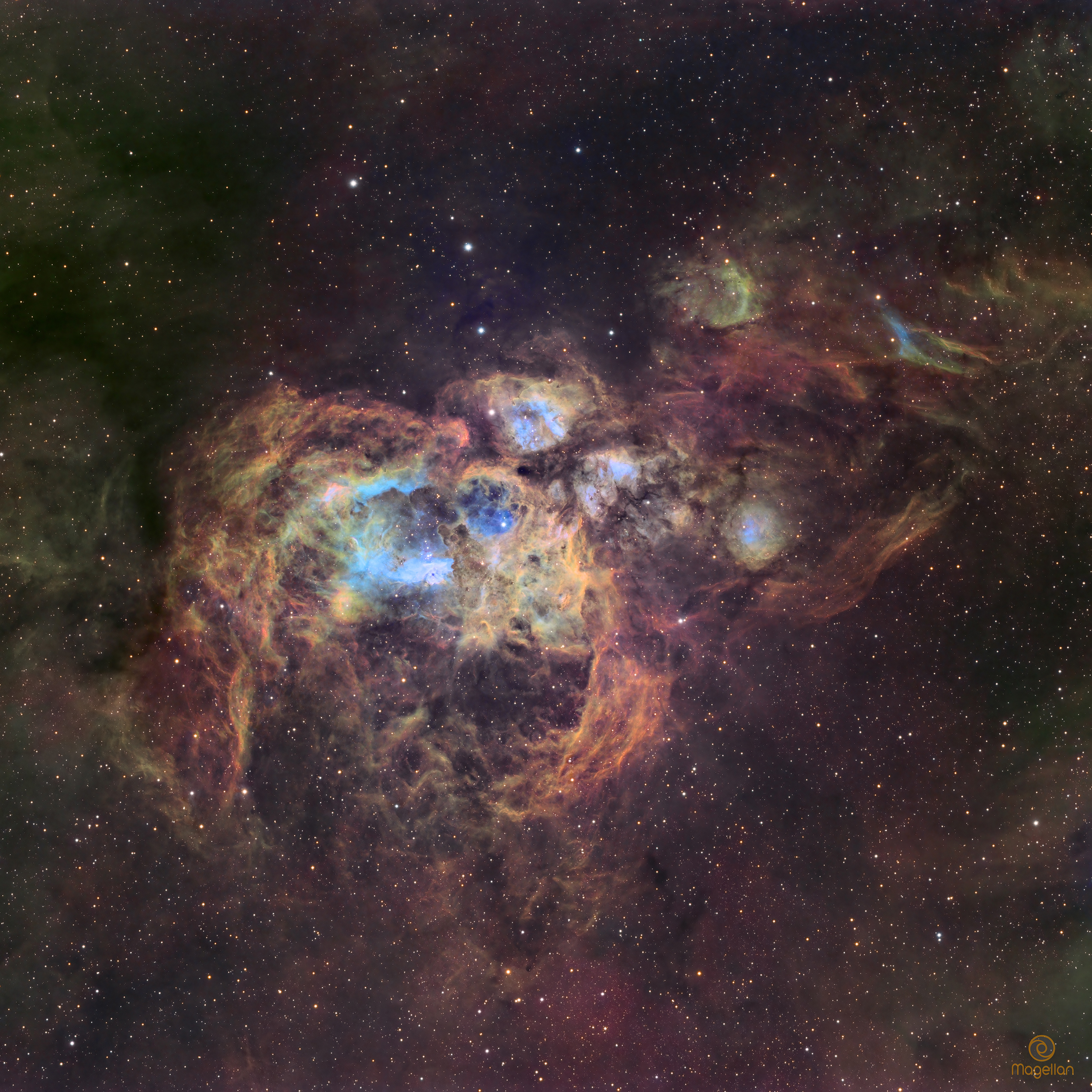
War and Peace Nebula - NGC 6357
A gas complex in Scorpius, next to the Cat’s Paw. Its shape evokes both a dove (peace) and a skull (war). It hosts the Pismis 24 cluster, rich in very massive stars.
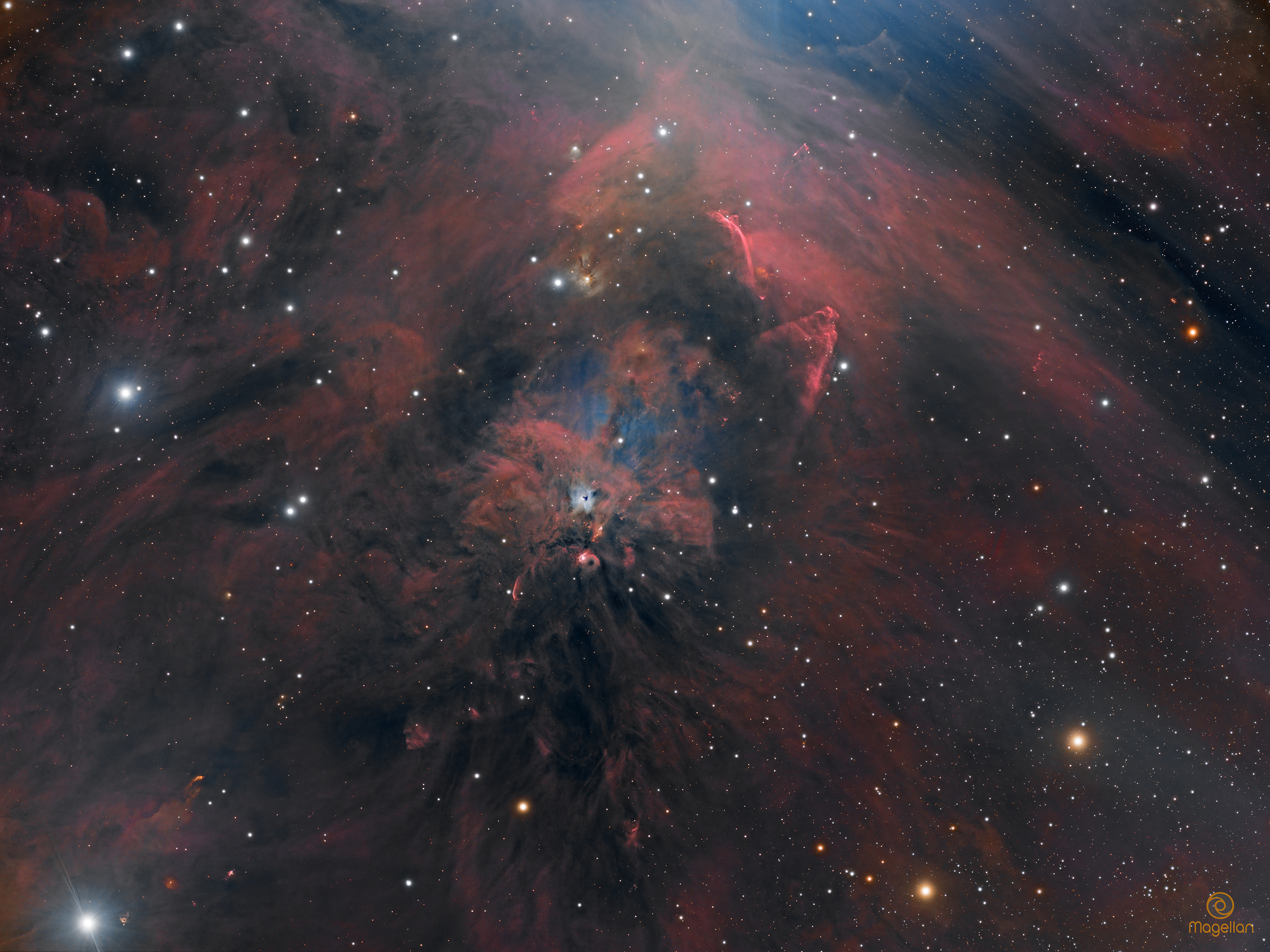
NGC1999
A reflection nebula in Orion, lit by the star V380 Ori. It is famous for its dark, keyhole-shaped patch, an opaque globule of gas.
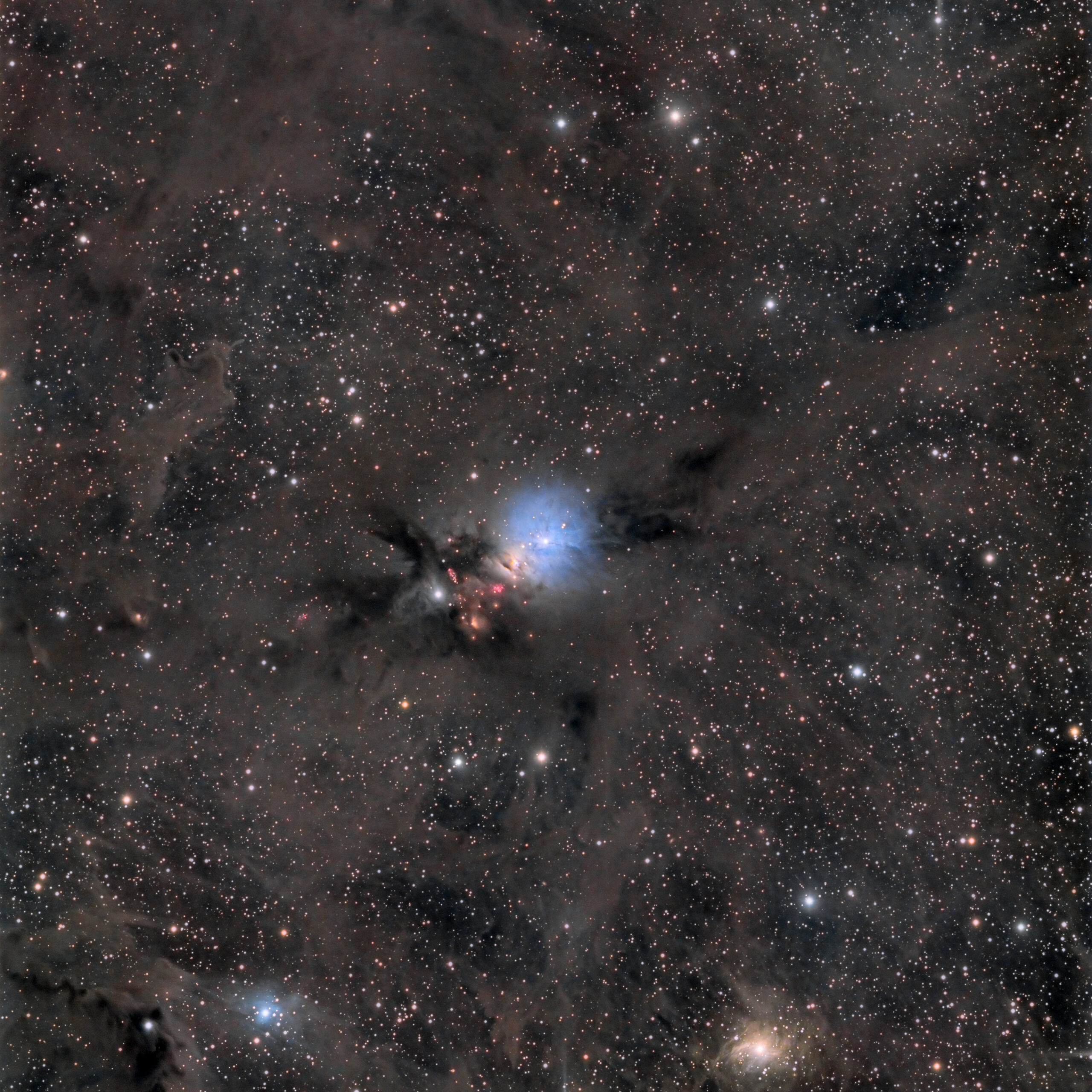
NGC1333
A reflection nebula in Perseus, within a very active stellar nursery. It is rich in young stars still embedded in their dusty cocoons (Herbig-Haro objects).
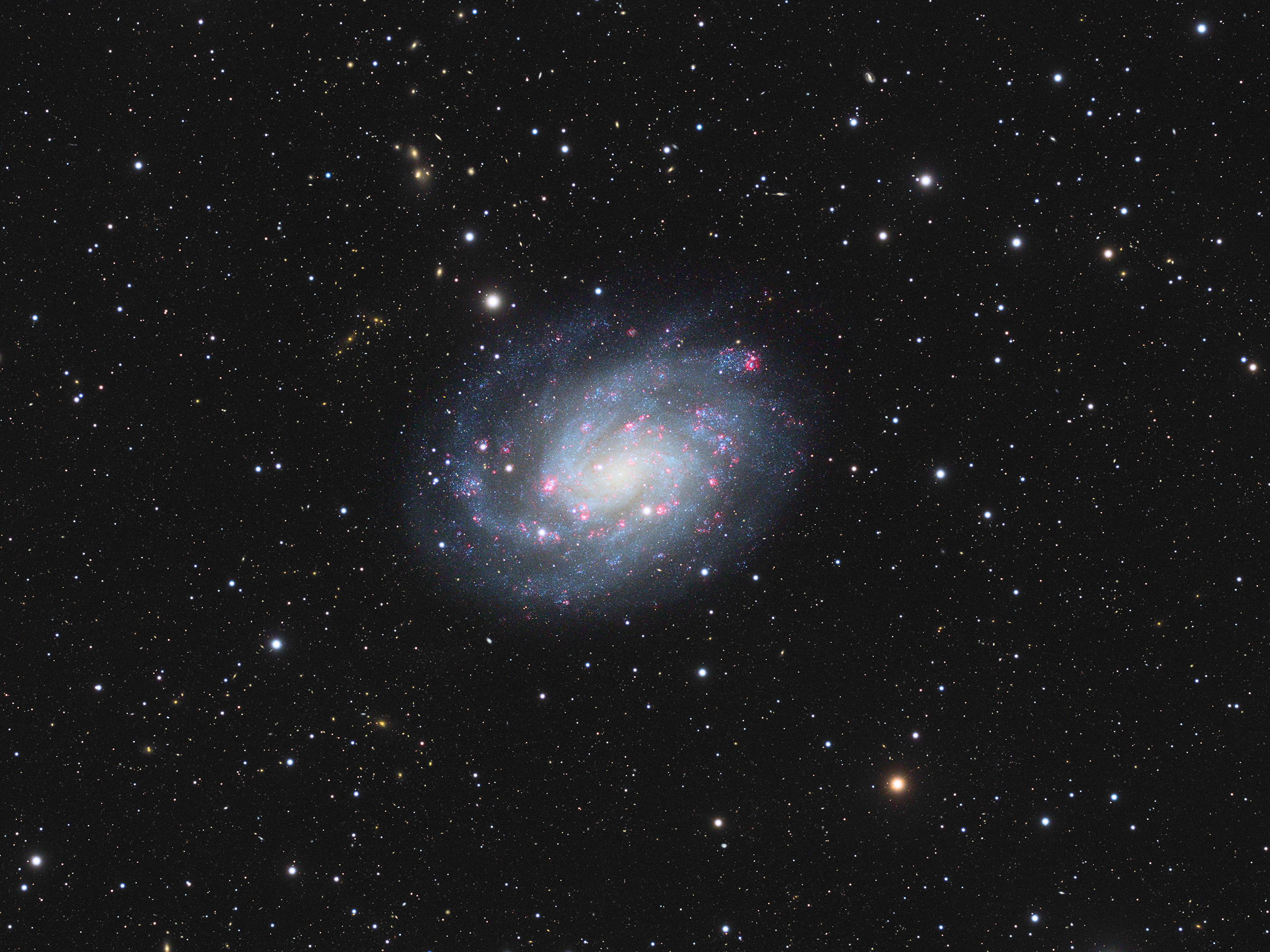
NGC300
A spiral galaxy in Sculptor, one of the closest to us (about 6 million light-years away). Its arms are dotted with numerous star-forming regions.
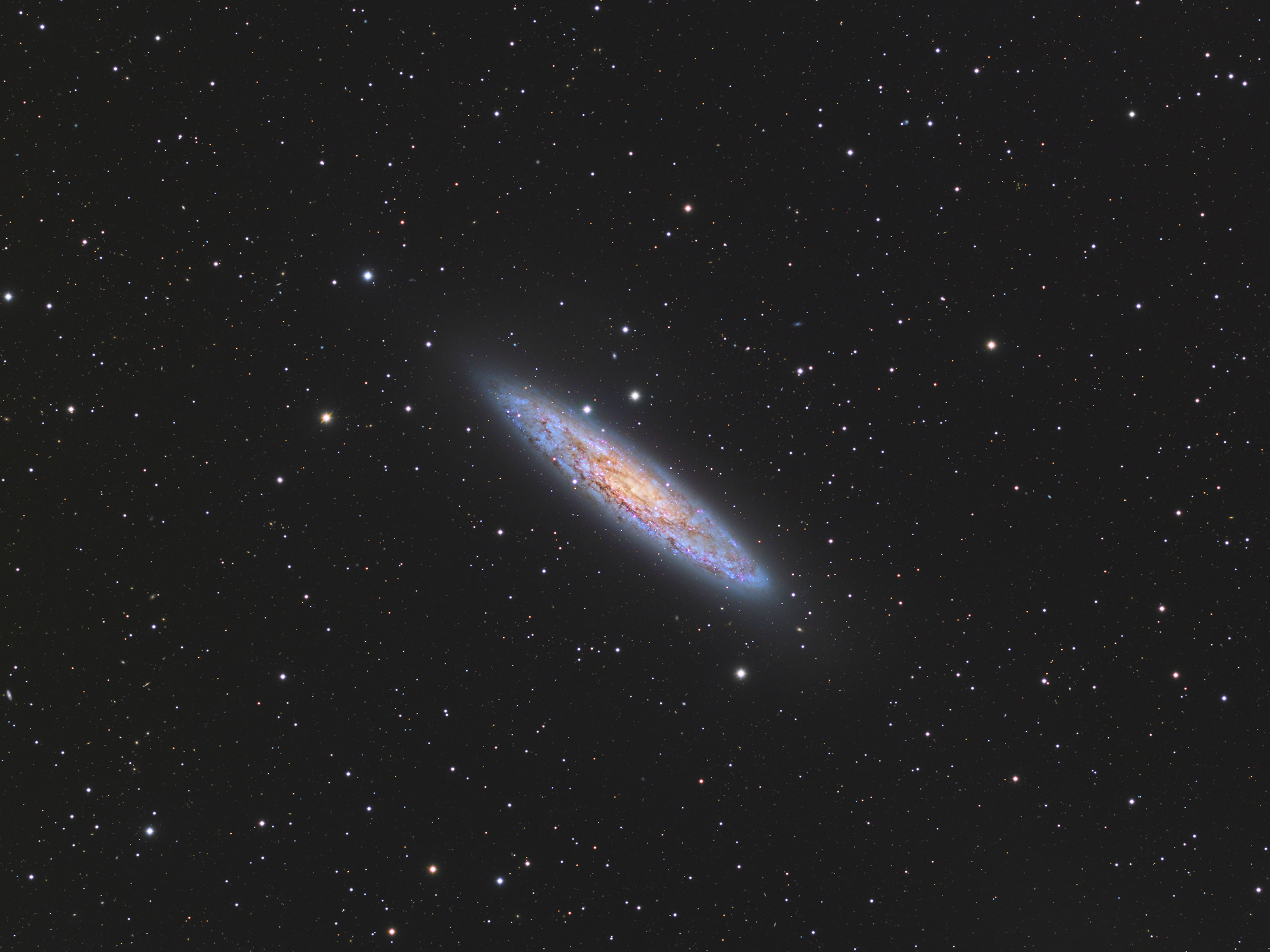
NGC 253, the Sculptor Galaxy
A near edge-on spiral about 11 million light-years away. It is a starburst galaxy, among the brightest in the sky.
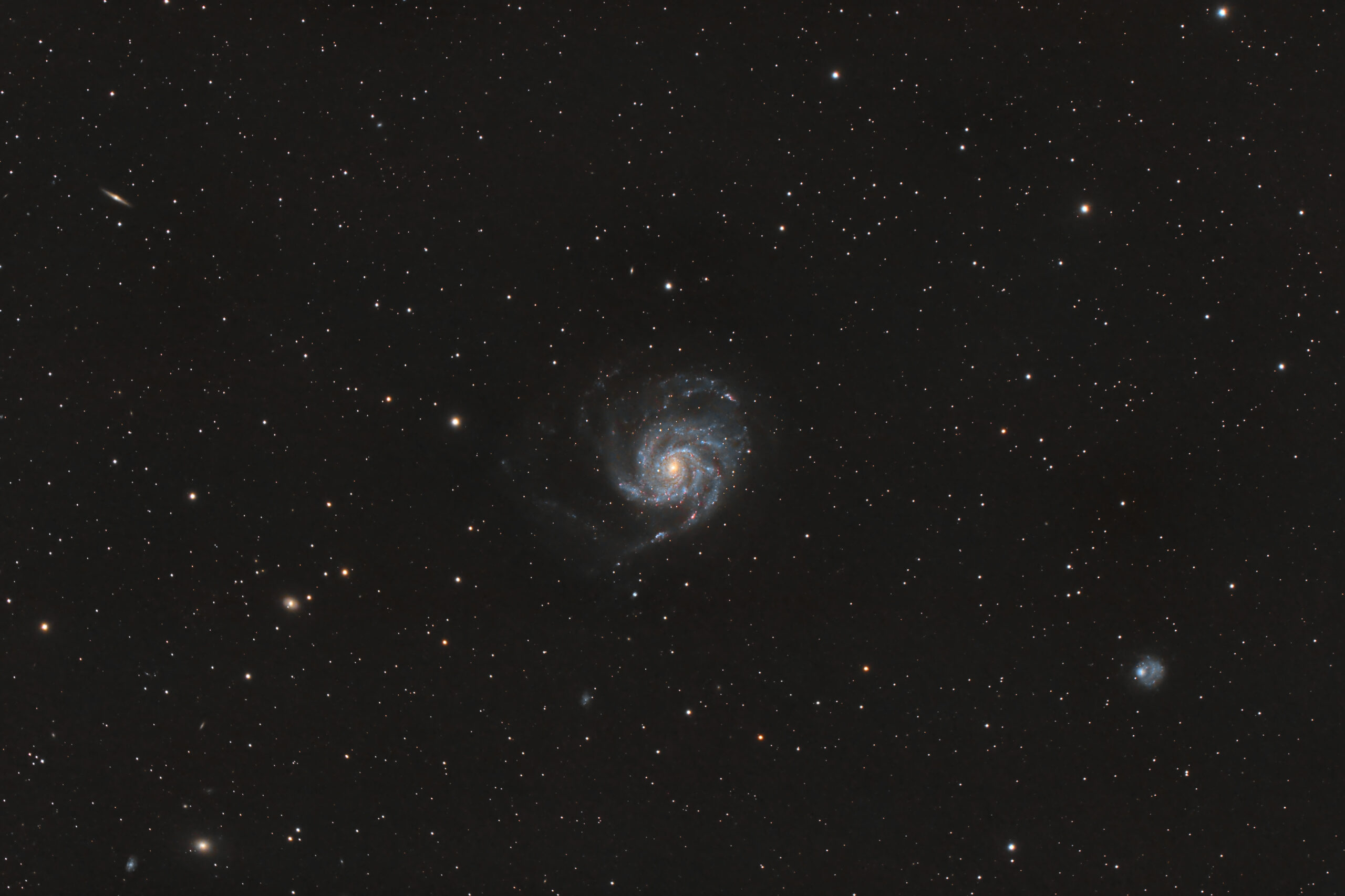
M101, the Pinwheel Galaxy
A large face-on spiral in Ursa Major with asymmetric arms. It is ideal for studying spiral structure, with numerous visible HII regions
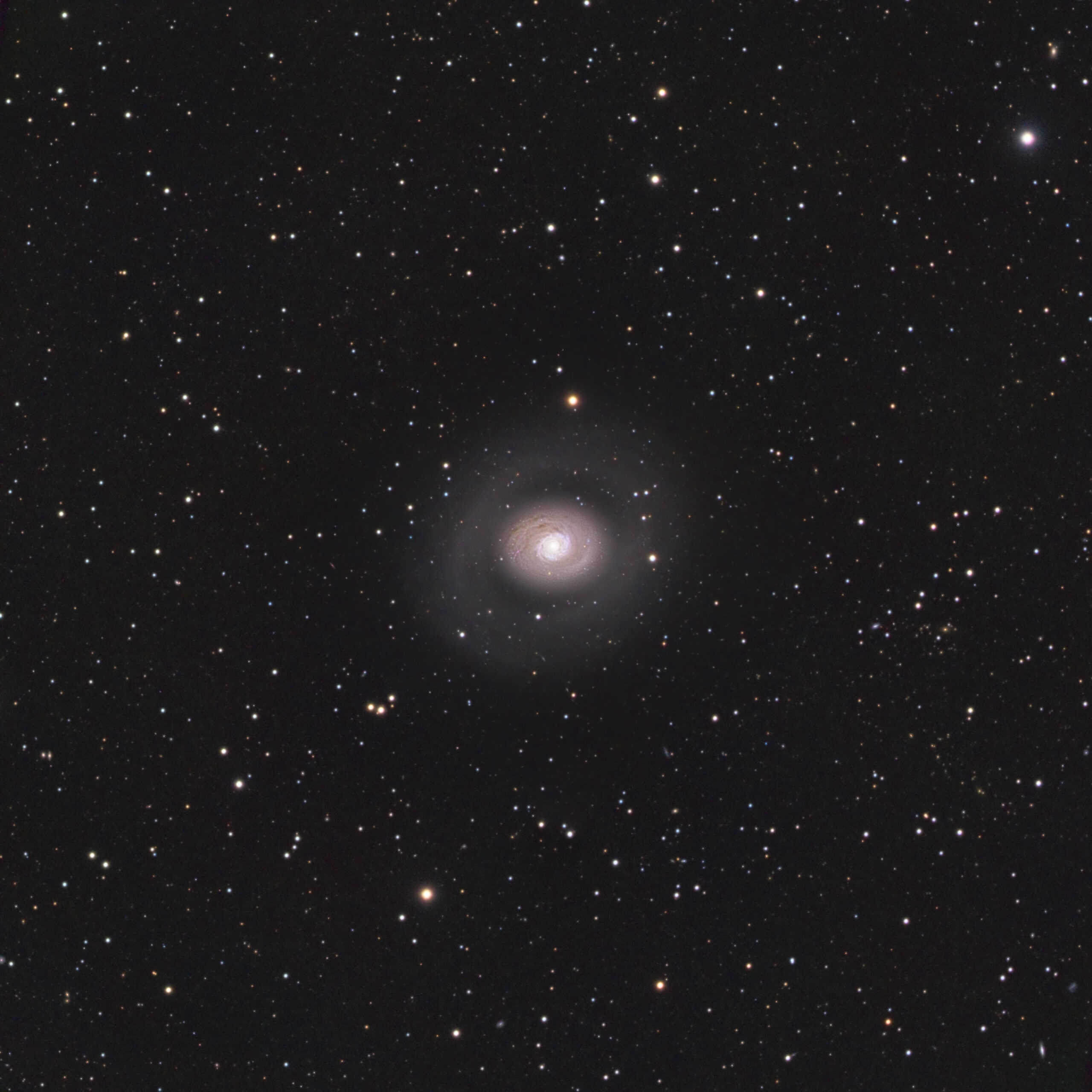
M94
A galaxy in Canes Venatici with a strong ring of star formation. It has a bright nucleus surrounded by a blue ring, earning it the nickname “Croc’s Eye Galaxy.”
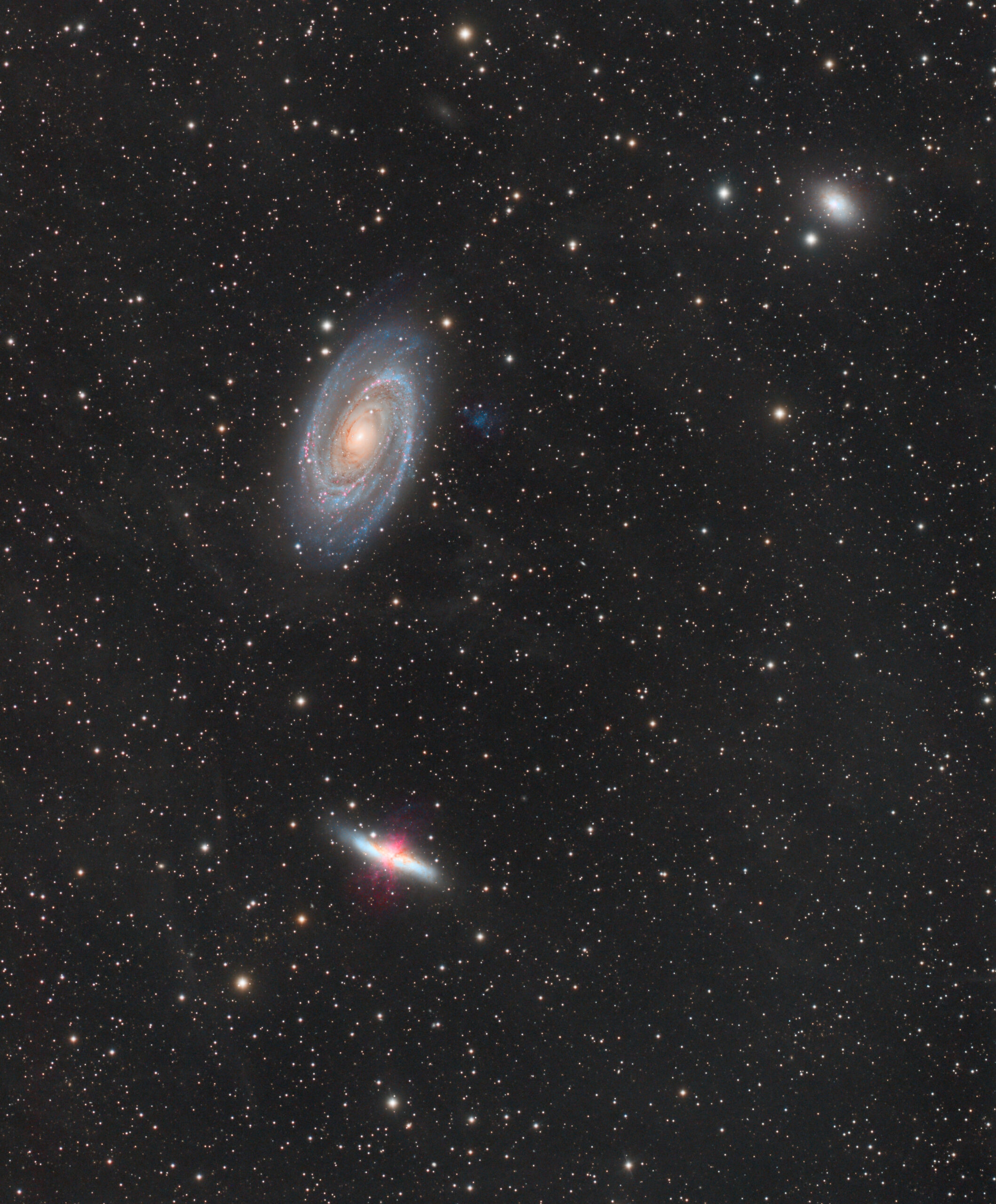
M81 et M82
A pair of galaxies in Ursa Major: M81, an elegant spiral, and M82, the Cigar Galaxy, undergoing an intense starburst. Their gravitational interaction is clearly visible.
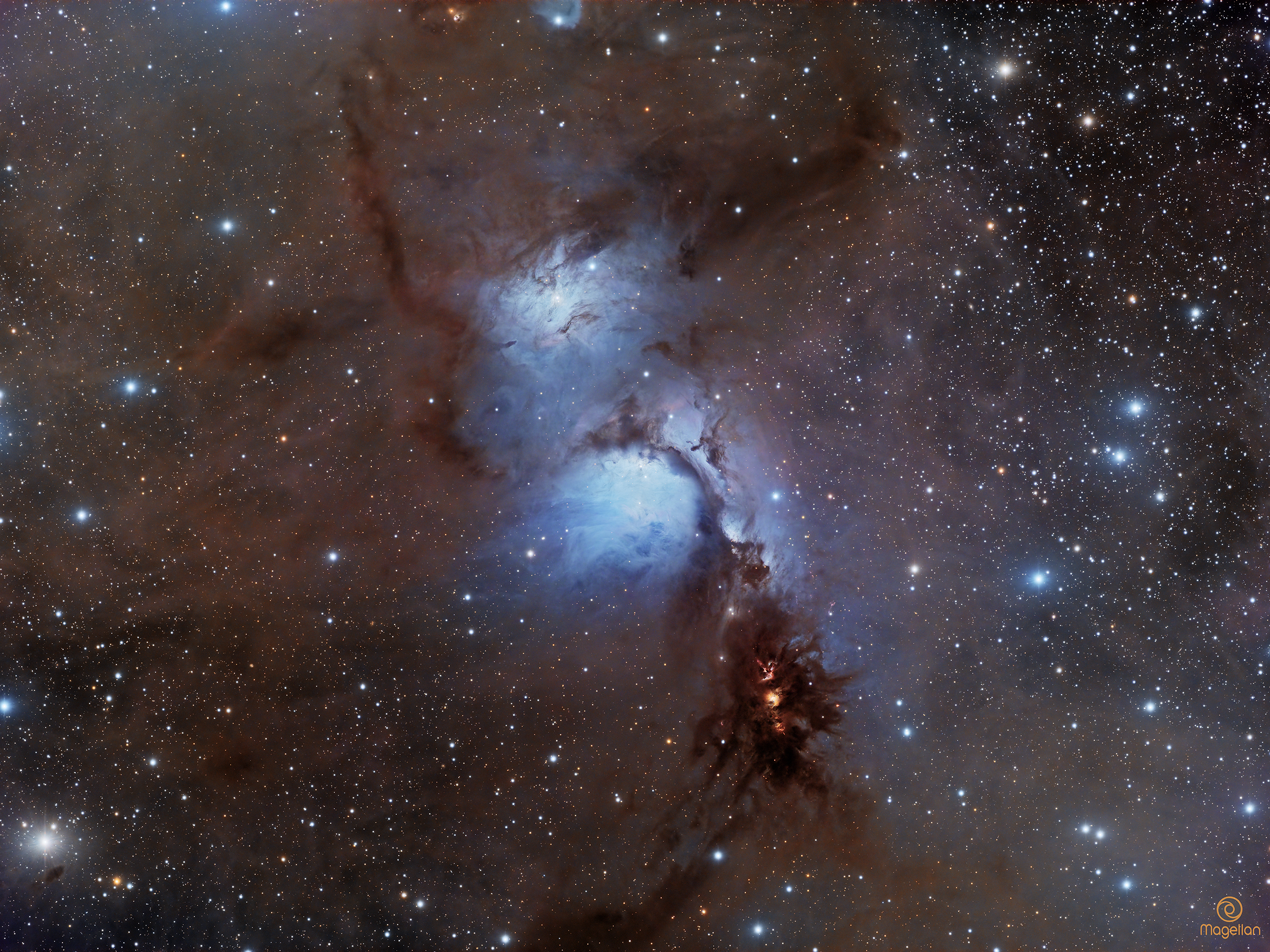
M78
A reflection nebula in Orion, with bluish tones and dark dust lanes. It is lit by young stars still in their cradle.
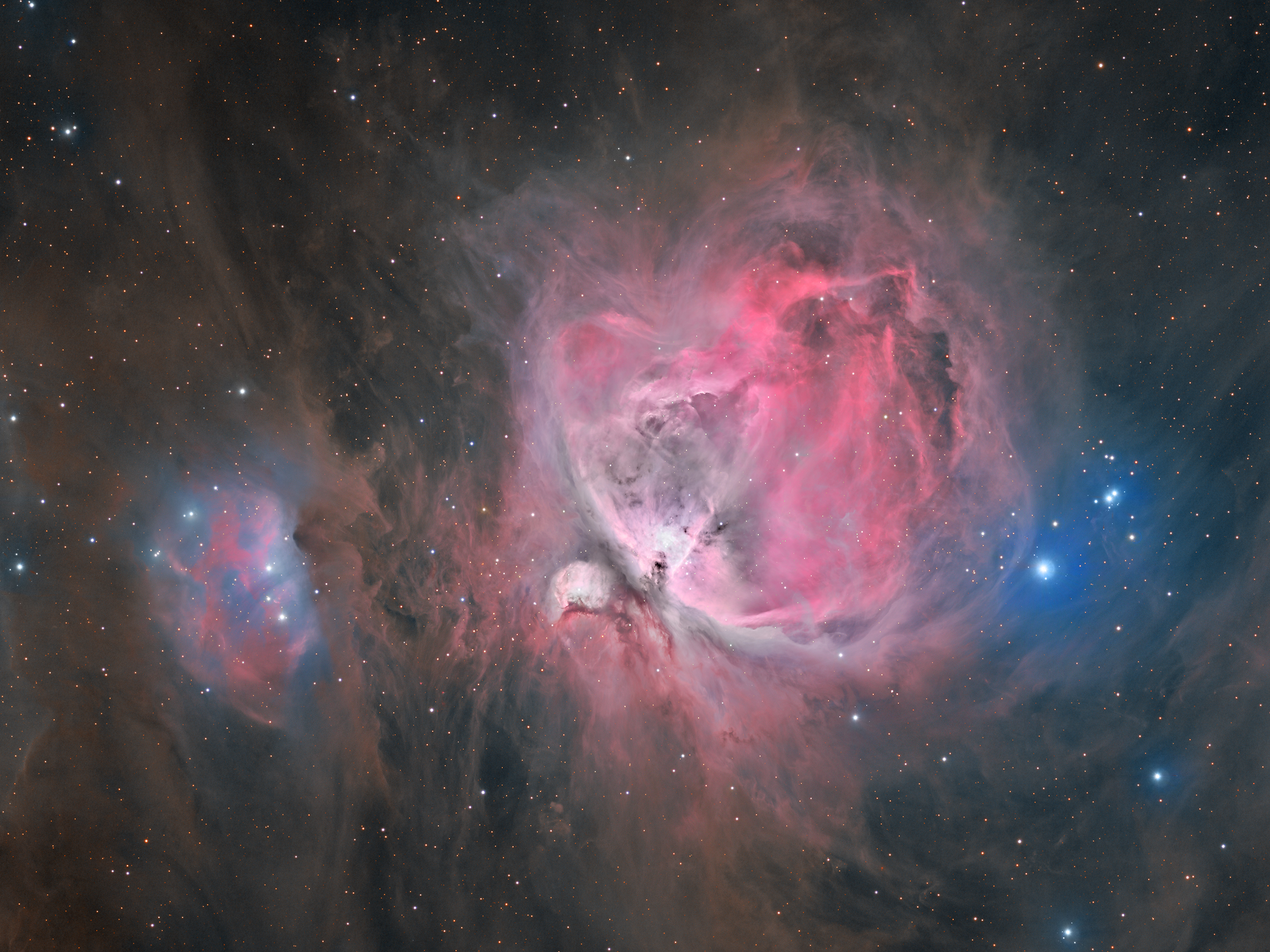
M42, the Orion Nebula
The brightest nebula in the sky, visible to the naked eye, 1,300 light-years away. It is the closest stellar nursery for beginners and experts alike.
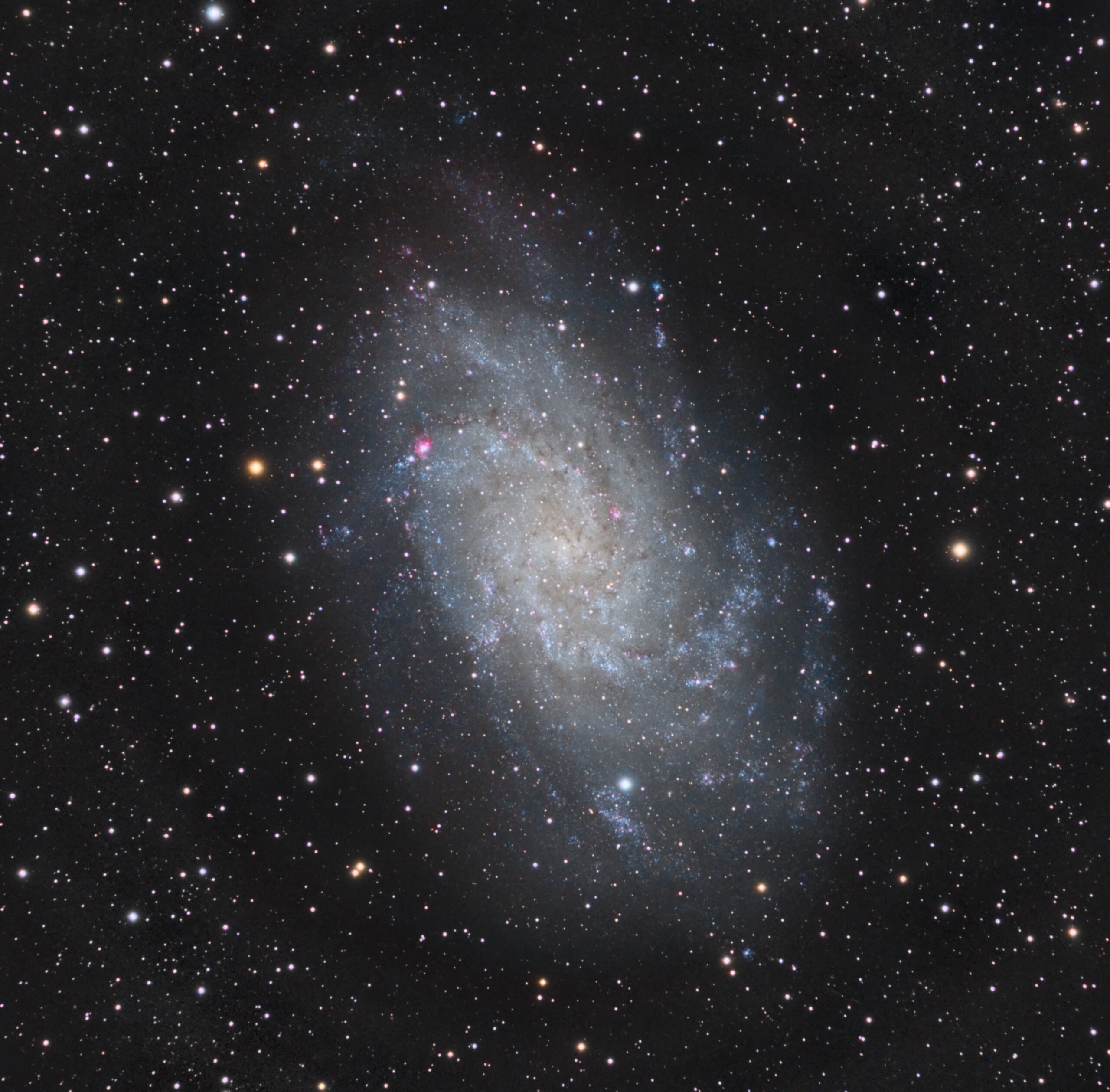
M33, the Triangulum Galaxy
The third-largest galaxy in the Local Group. Its spiral is seen face-on, with numerous star-forming regions.
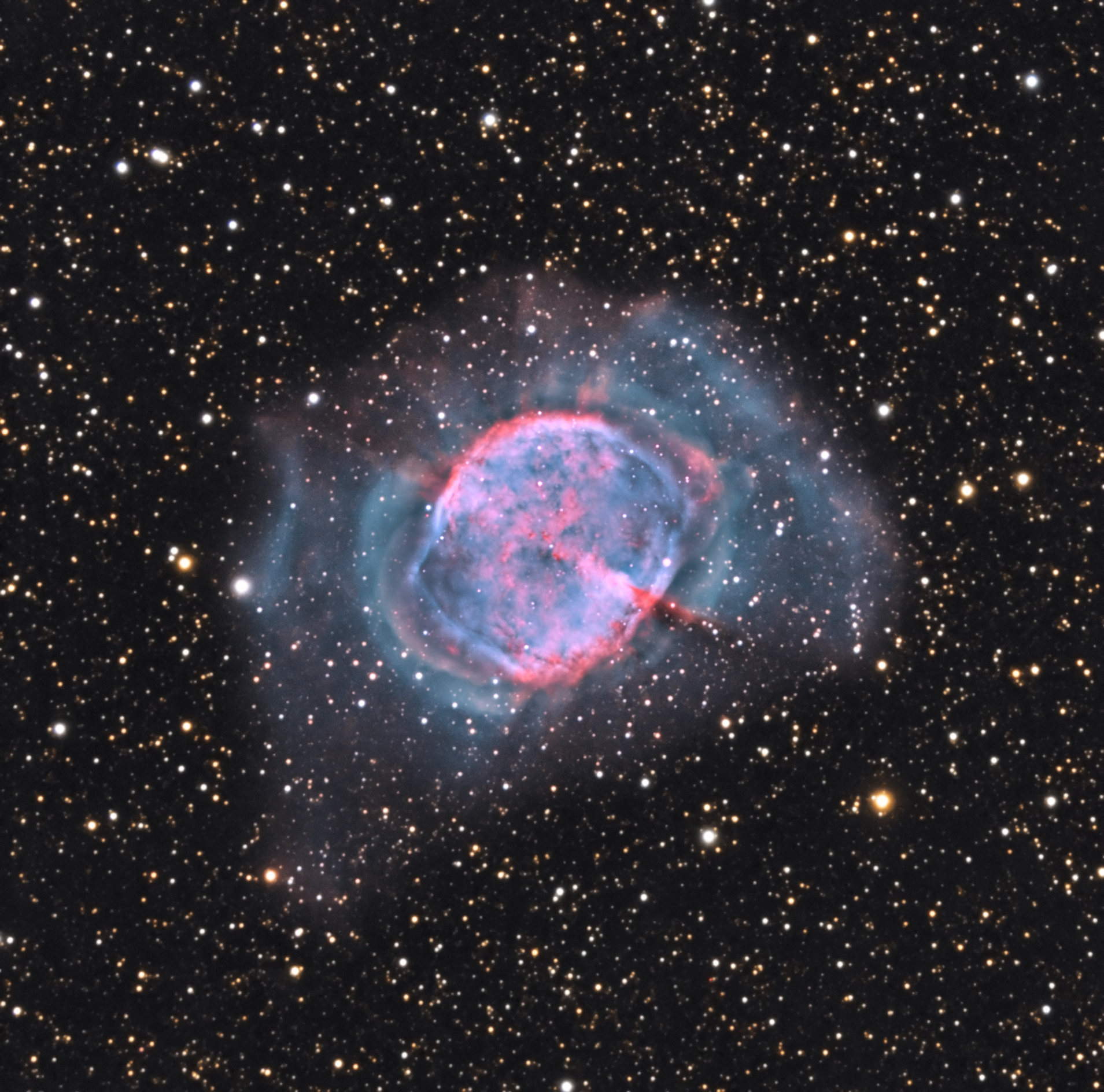
M27, the Apple Core
A large planetary nebula in Vulpecula (also called the Dumbell Nebula), the remnant of a dead star. It is bright and easy to observe.
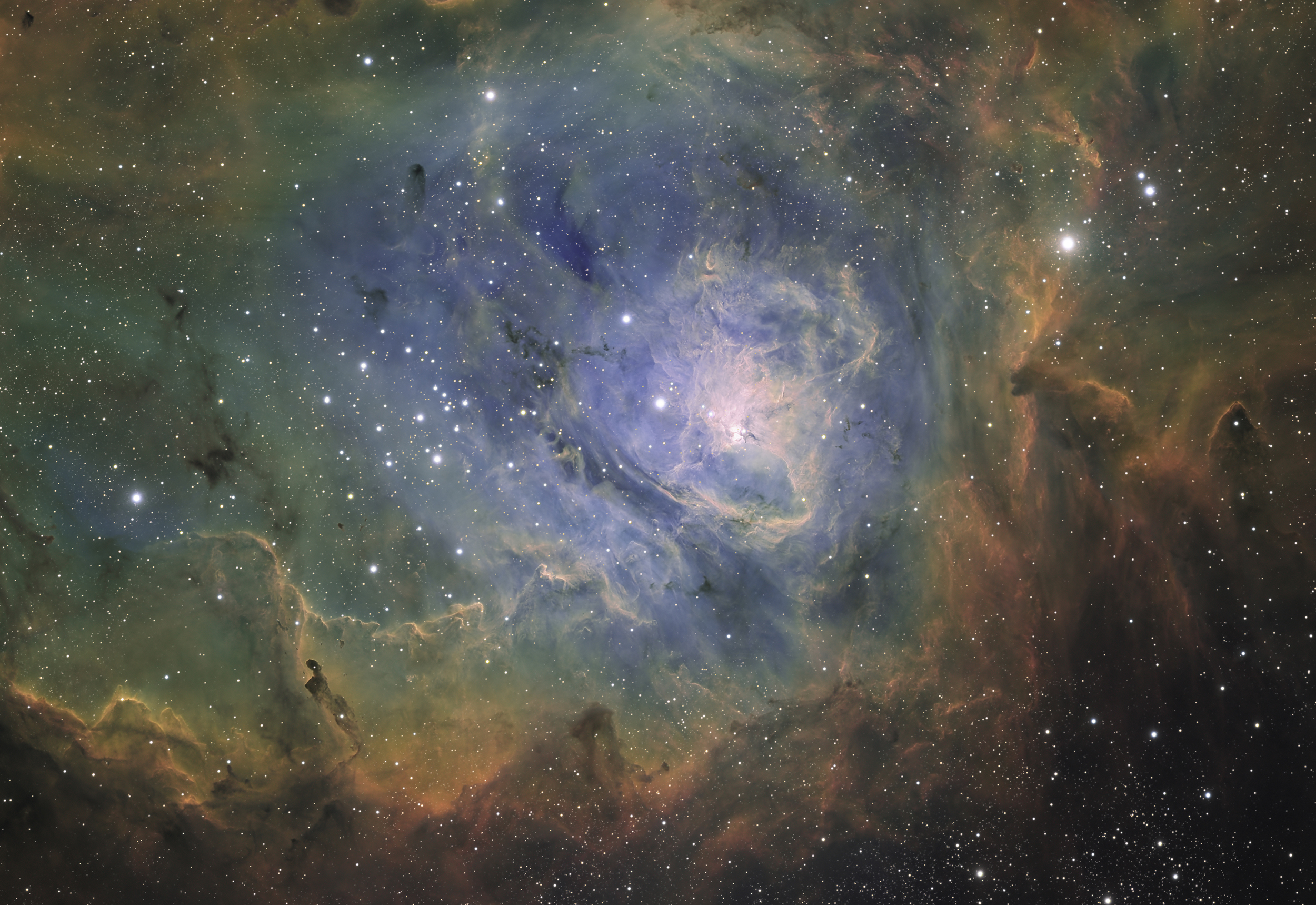
M8, a close-up of the core
The Lagoon Nebula, seen close-up at its core. Dense, ionized structures, including the “Hourglass,” are visible, sculpted by young stars.
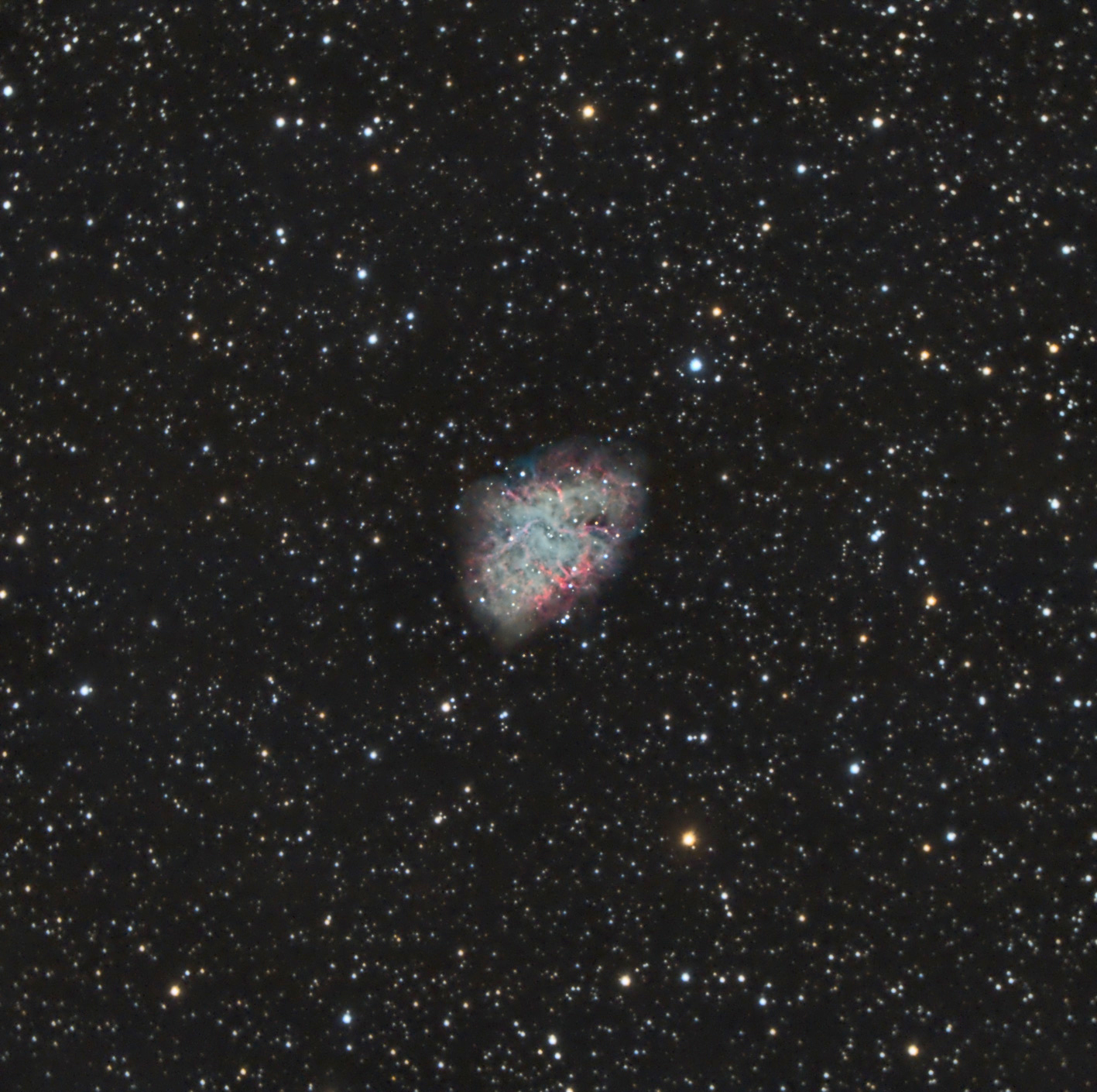
M1, the Crab Nebula
The remnant of the supernova observed in 1054. Its central pulsar spins 30 times per second. A major historical object.
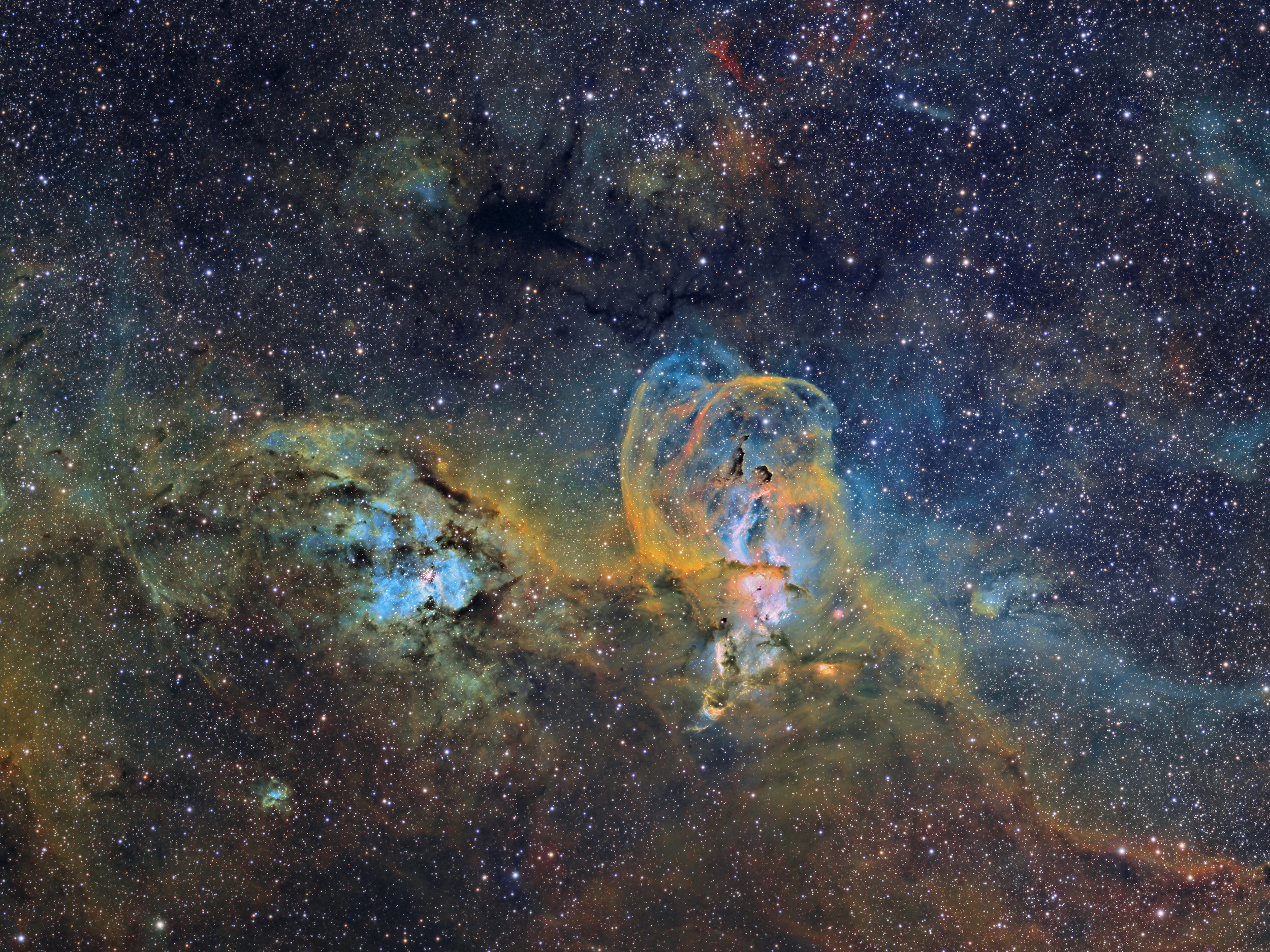
The Statue of Liberty - NGC 3576
An emission nebula in Carina, whose swirls evoke the famous statue. It lies next to NGC 3603, an extreme star-forming region.
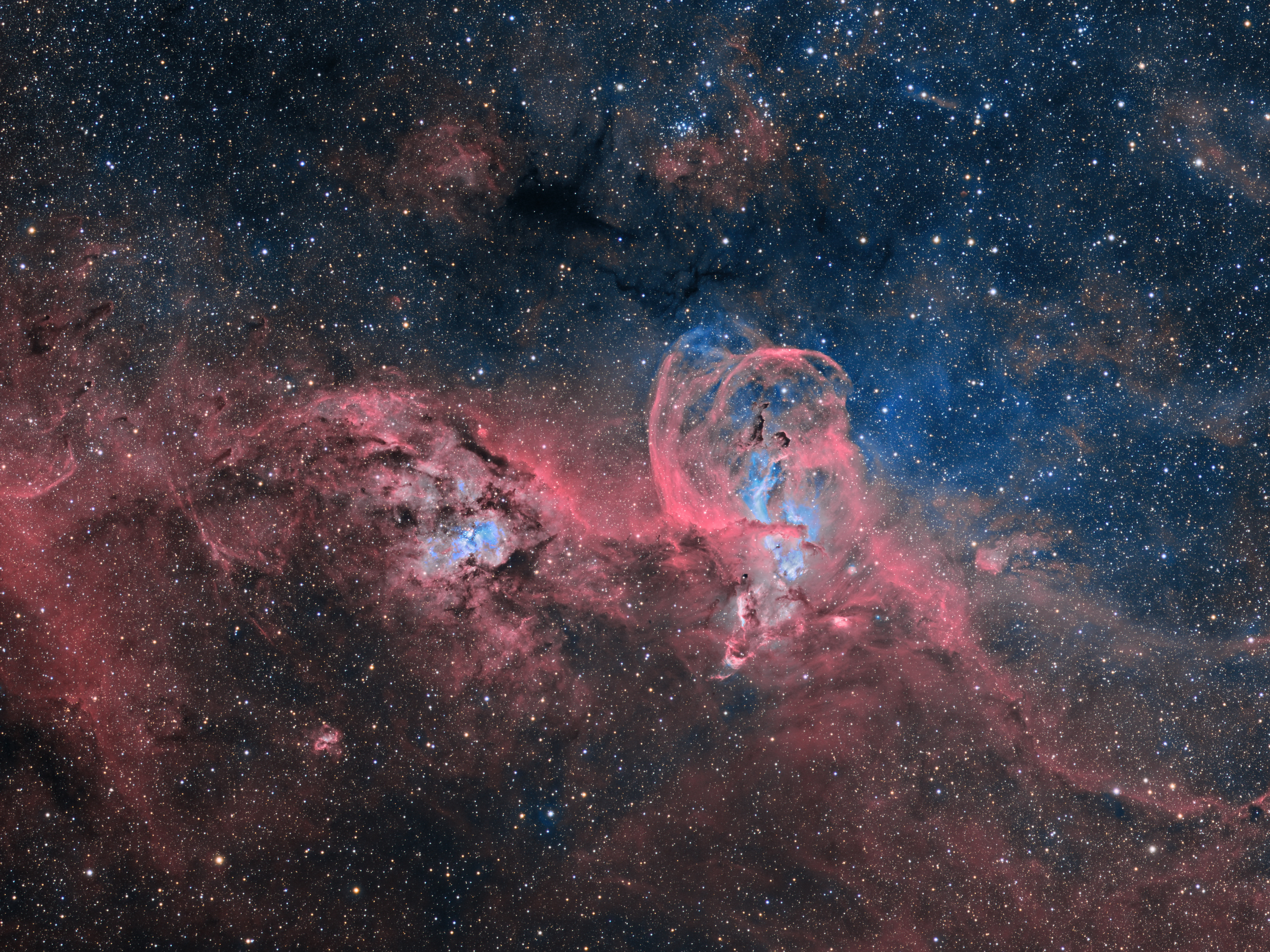
The Statue of Liberty HOO palette
HOO treatment of the previous object
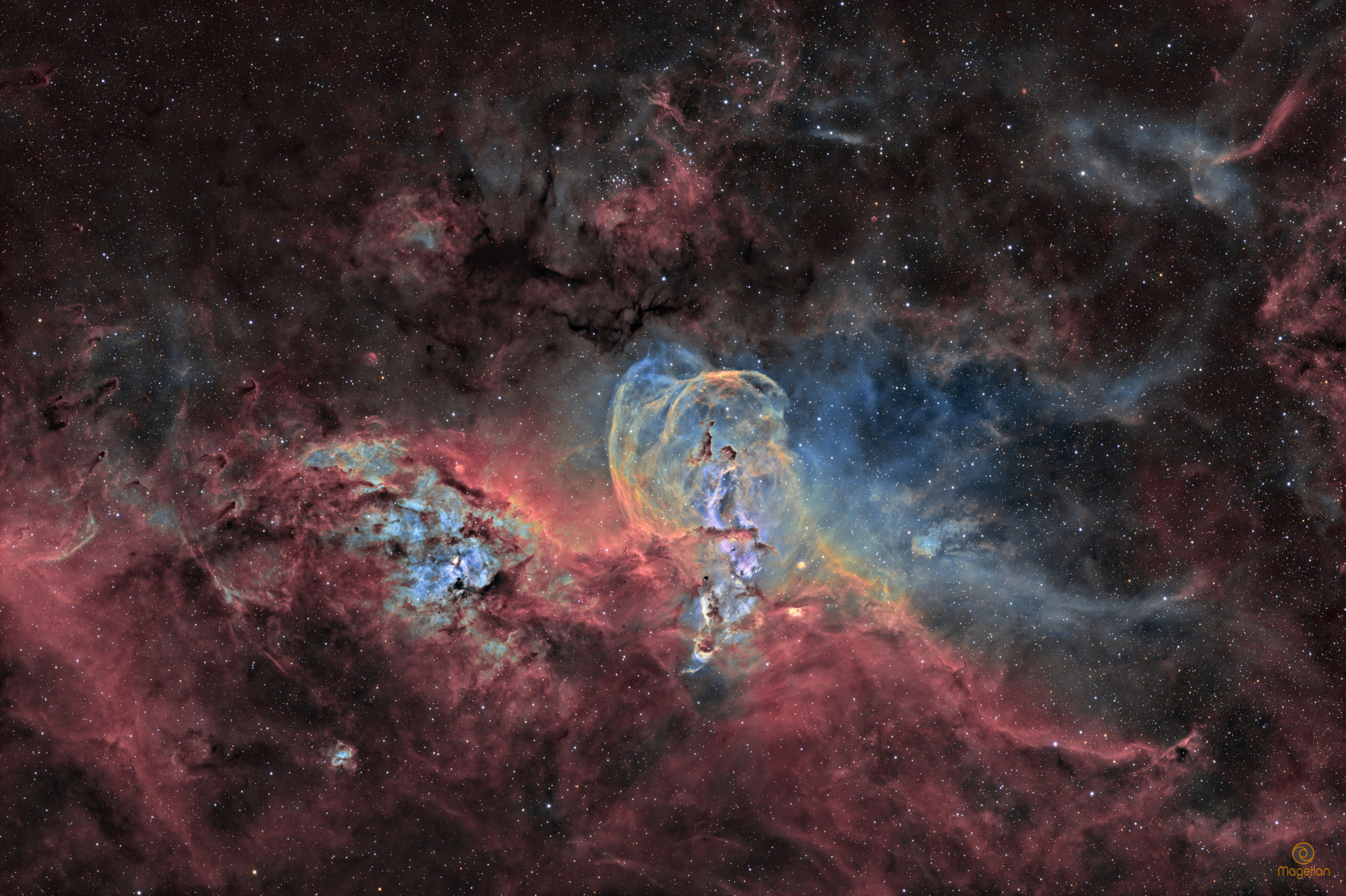
The Statue of Liberty - V2026
New image of NGC 3576, captured with a more sensitive camera and 3 nm narrowband filters.
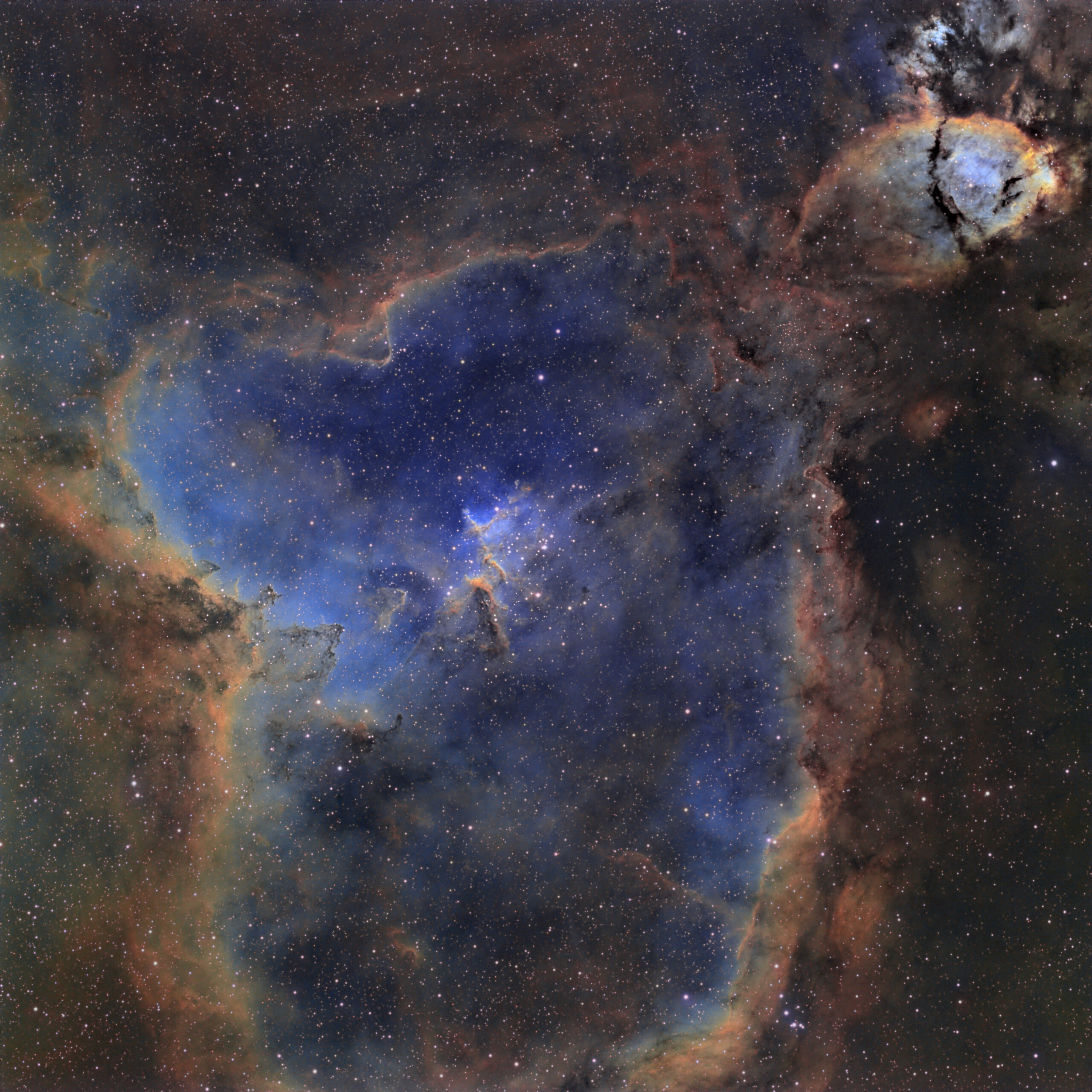
Heart Nebula - IC1805
A vast heart-shaped nebula in Cassiopeia, with an open cluster of hot stars at its centre. It lies near the Soul Nebula.
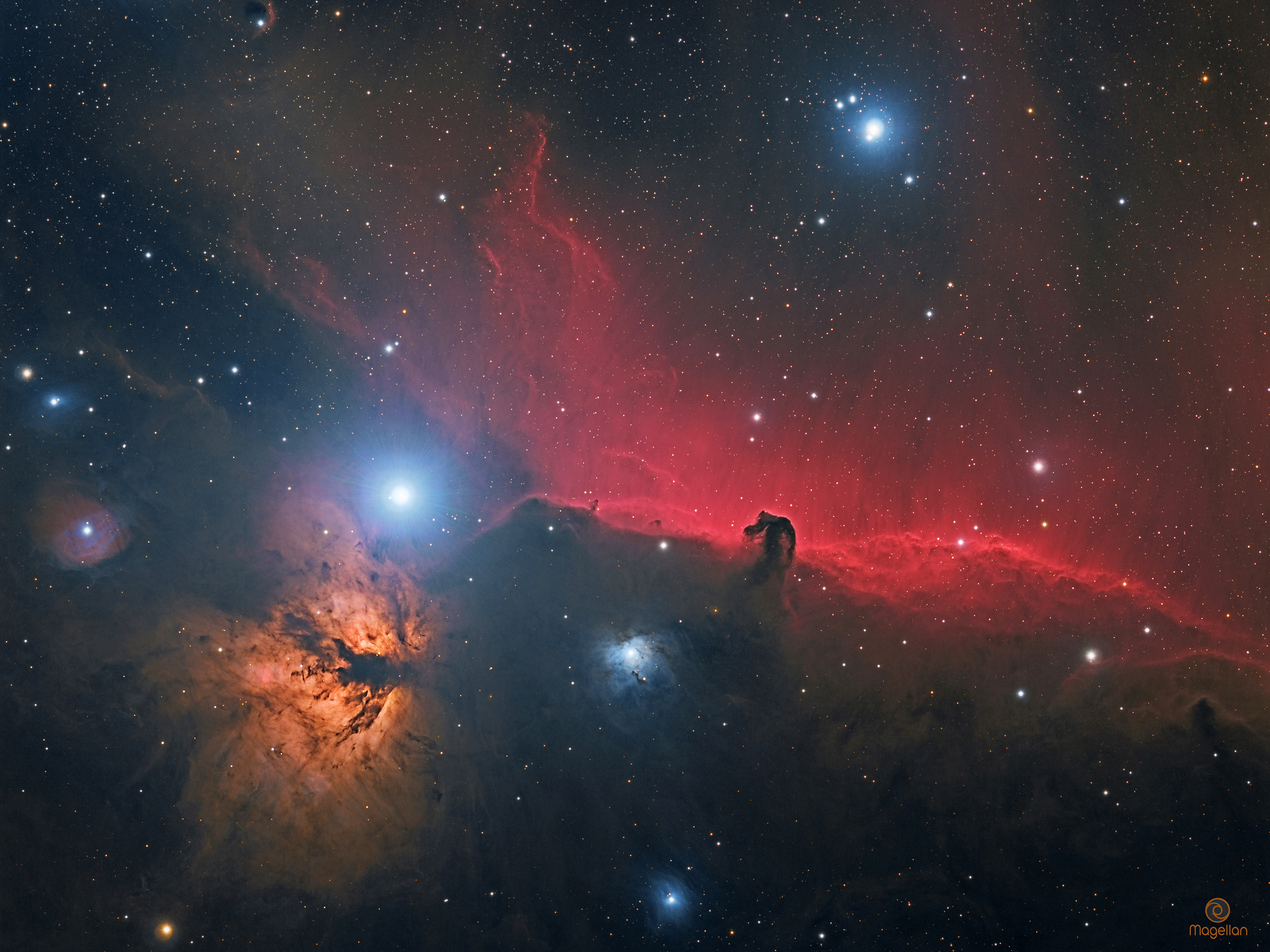
IC434, The Horsehead Nebula
A bright emission nebula in Orion that serves as the backdrop to the famous dark silhouette of the Horsehead (Barnard 33).
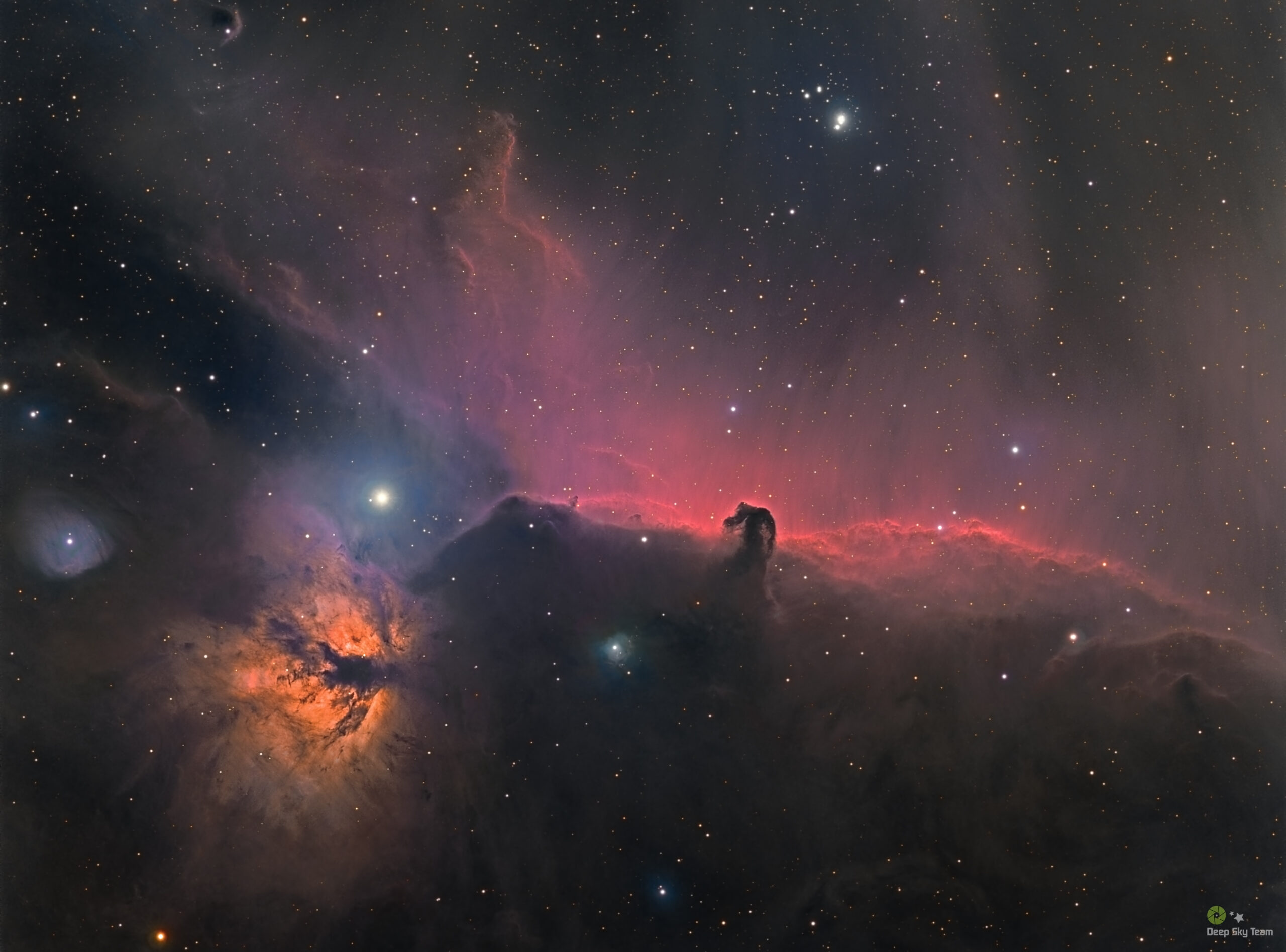
IC434 - The Horsehead Nebula V2
A dust cloud standing out against IC 434, in Orion. It is one of the most recognizable shapes in deep-sky imaging (see the previous entry, same region).
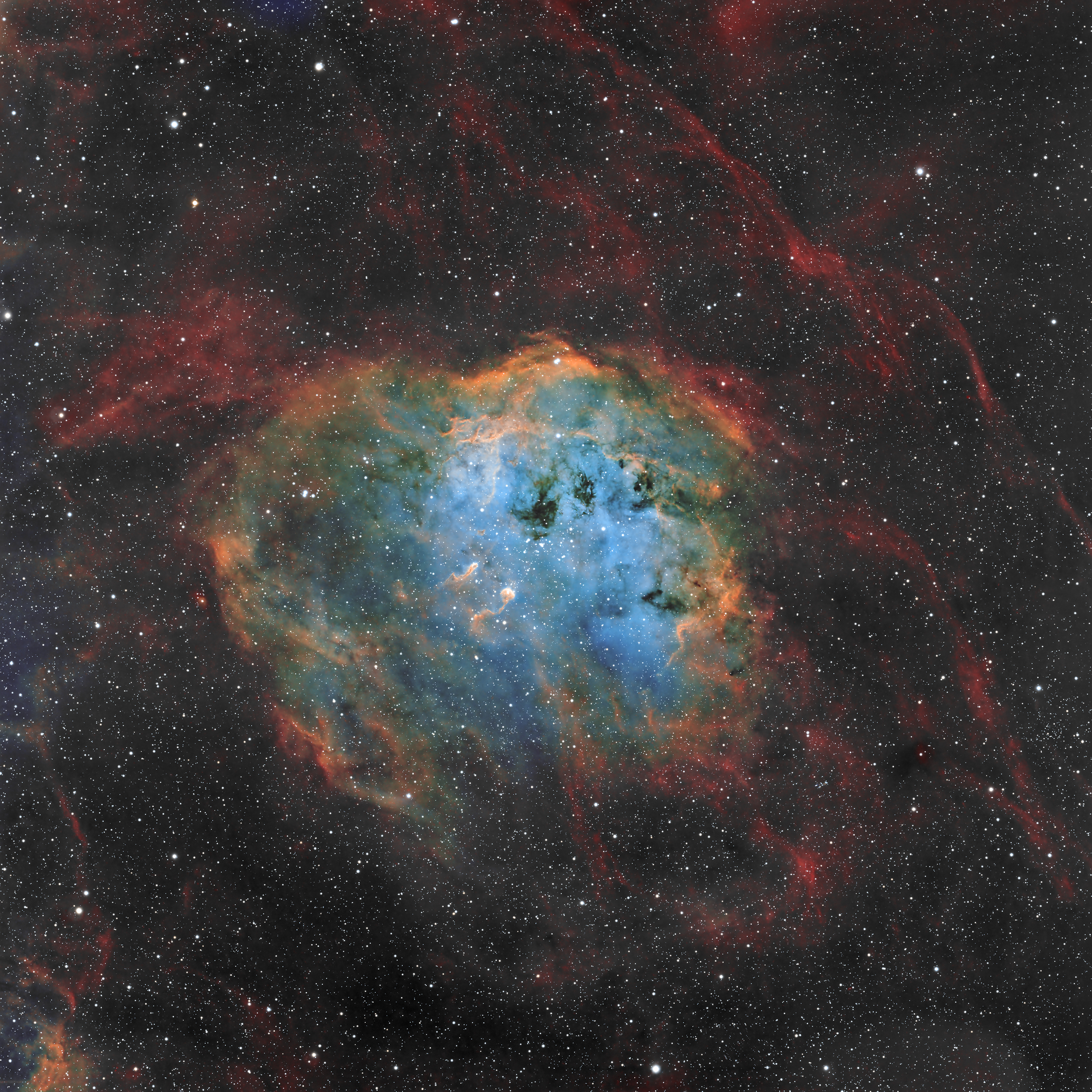
IC 410, the Tadpoles Nebula
An emission nebula in Auriga with two tadpole-shaped filaments. It surrounds the cluster NGC 1893.
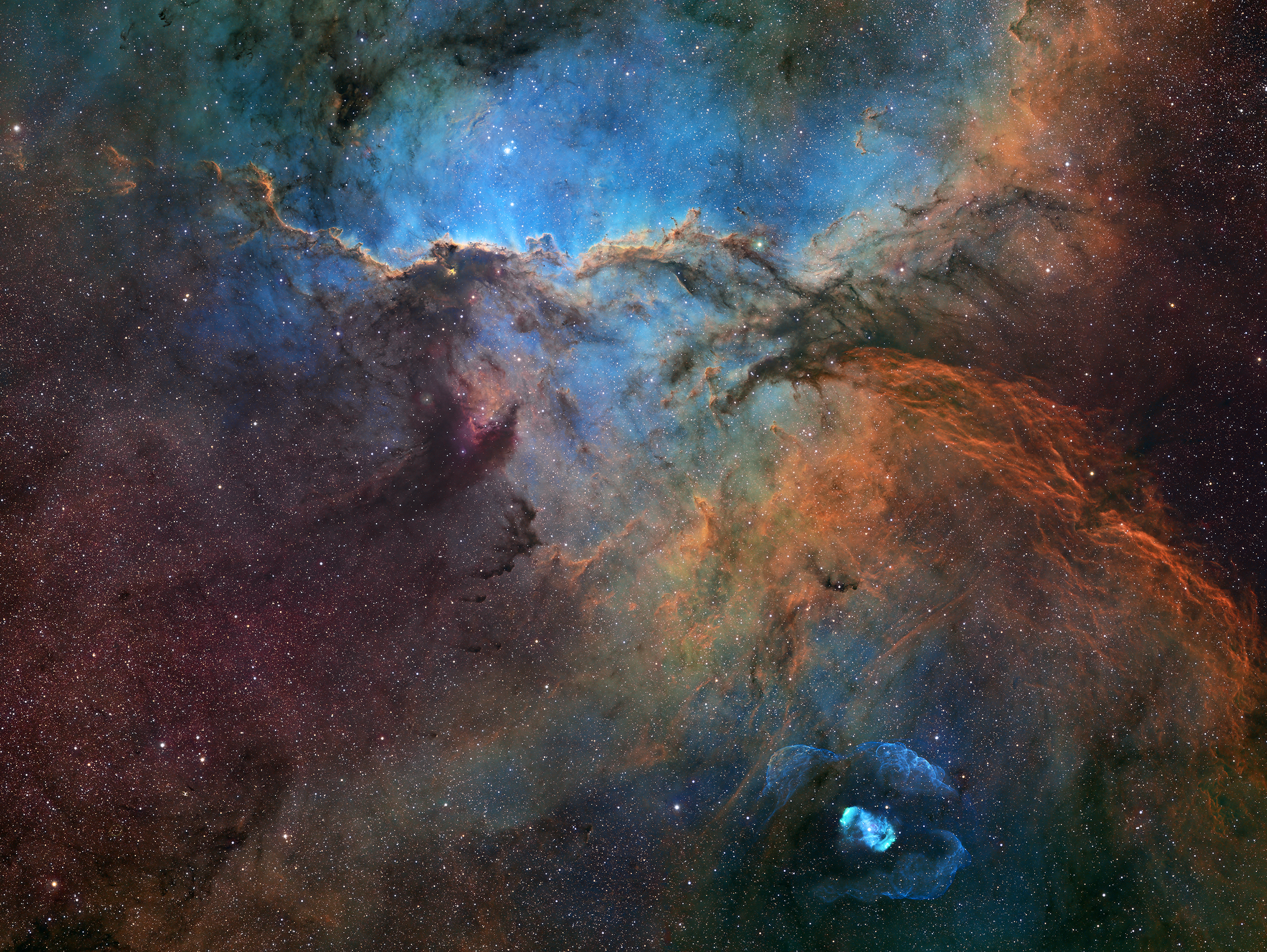
The Fighting Dragons of Ara and the Cosmic Egg SHO
A region in Ara comprising NGC 6188 (the Fighting Dragons) and the Cosmic Egg (NGC 6164/6165). Spectacular gas structures sculpted by young stars.
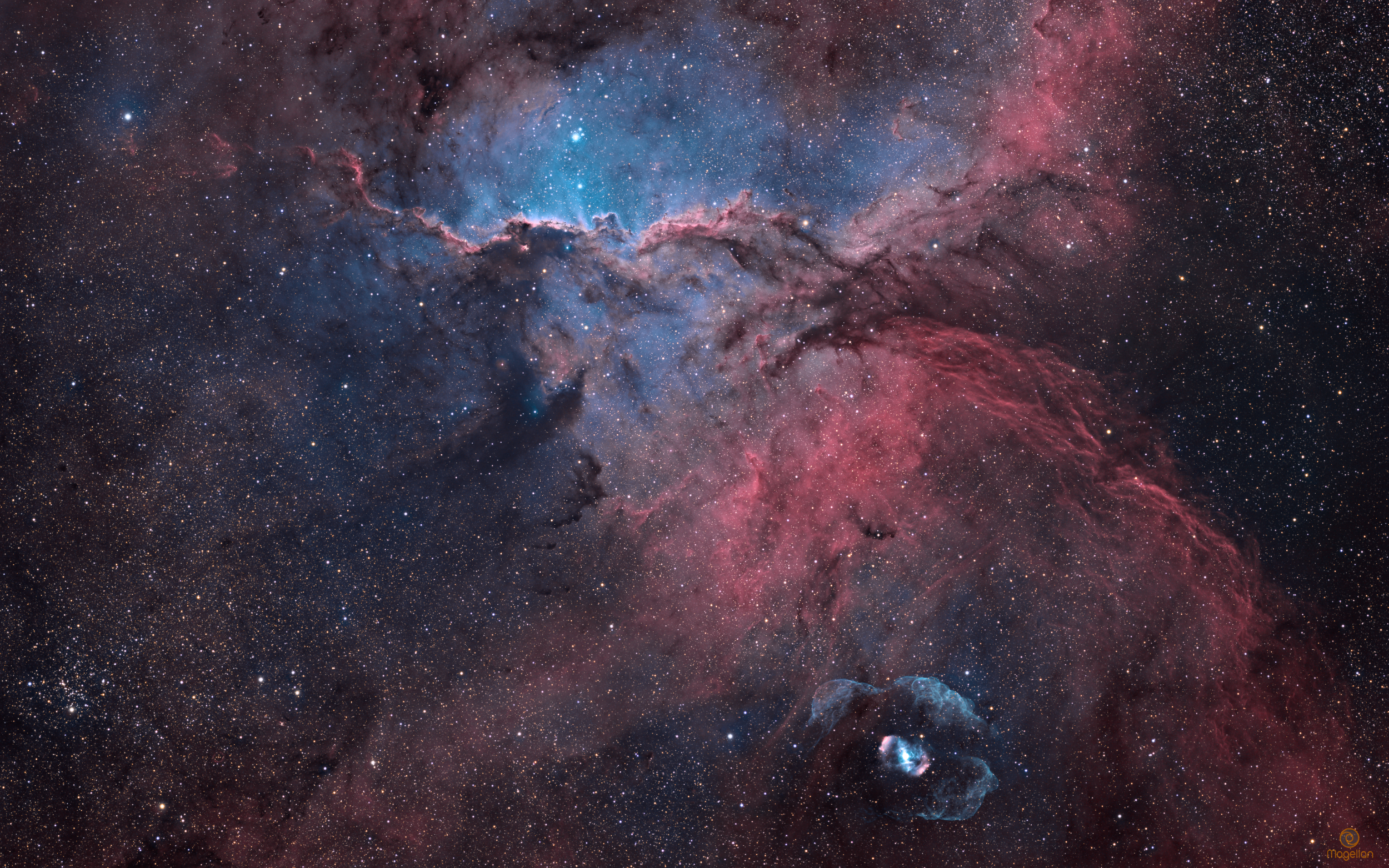
The Fighting Dragons of Ara in HOO
The same region as NGC 6188 (the Fighting Dragons), here in hydrogen/oxygen (HOO) bicolour. The blue-green OIII tones bring out the gas swirls sculpted by the region’s hot young stars.
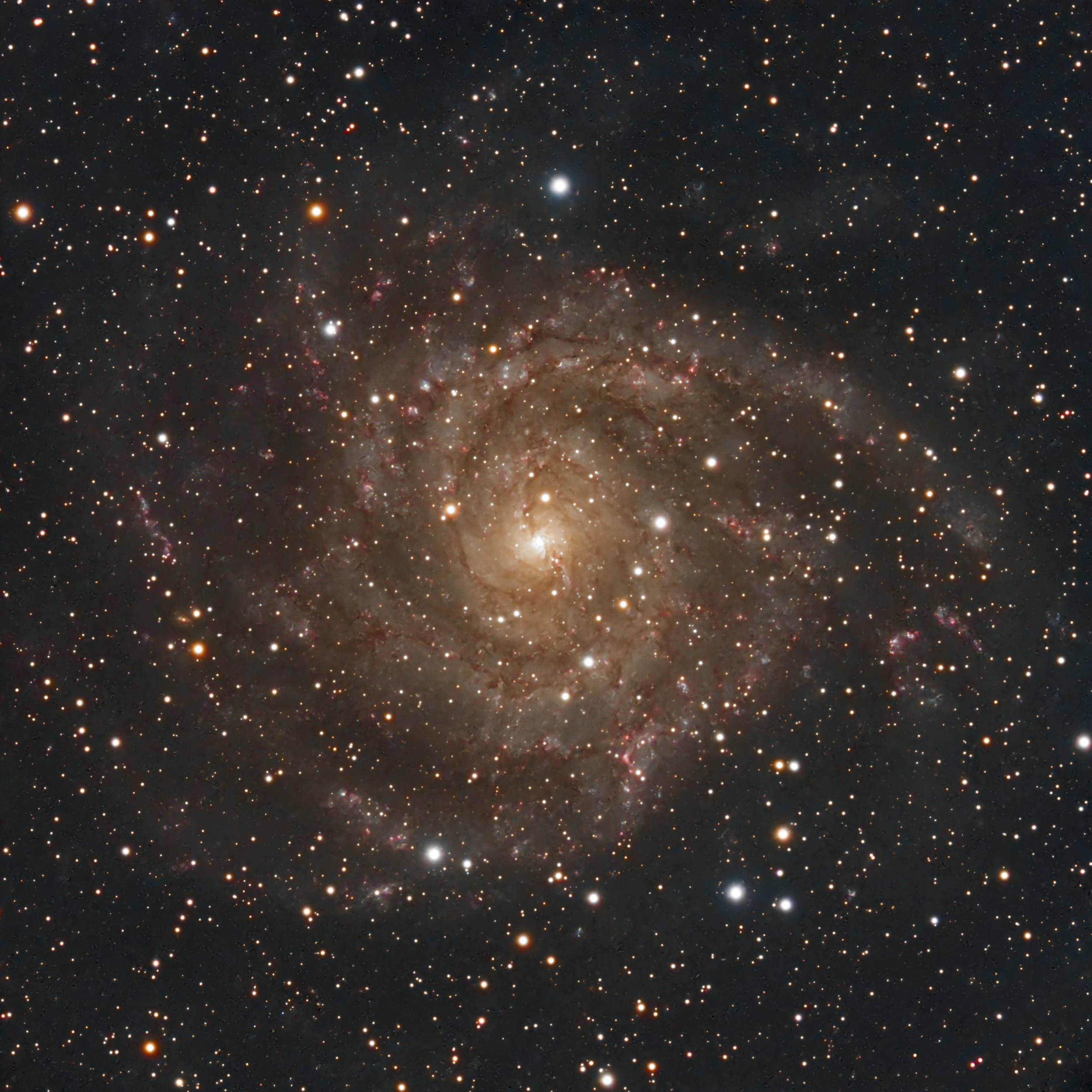
IC 342, the Hidden Galaxy
A large spiral galaxy in Camelopardalis, hidden behind the dust of the Milky Way. Its light is heavily dimmed, which makes it a challenging but rewarding target. Datas acquired in 2015, new treatment in 2025, 20h40 in LRGB.
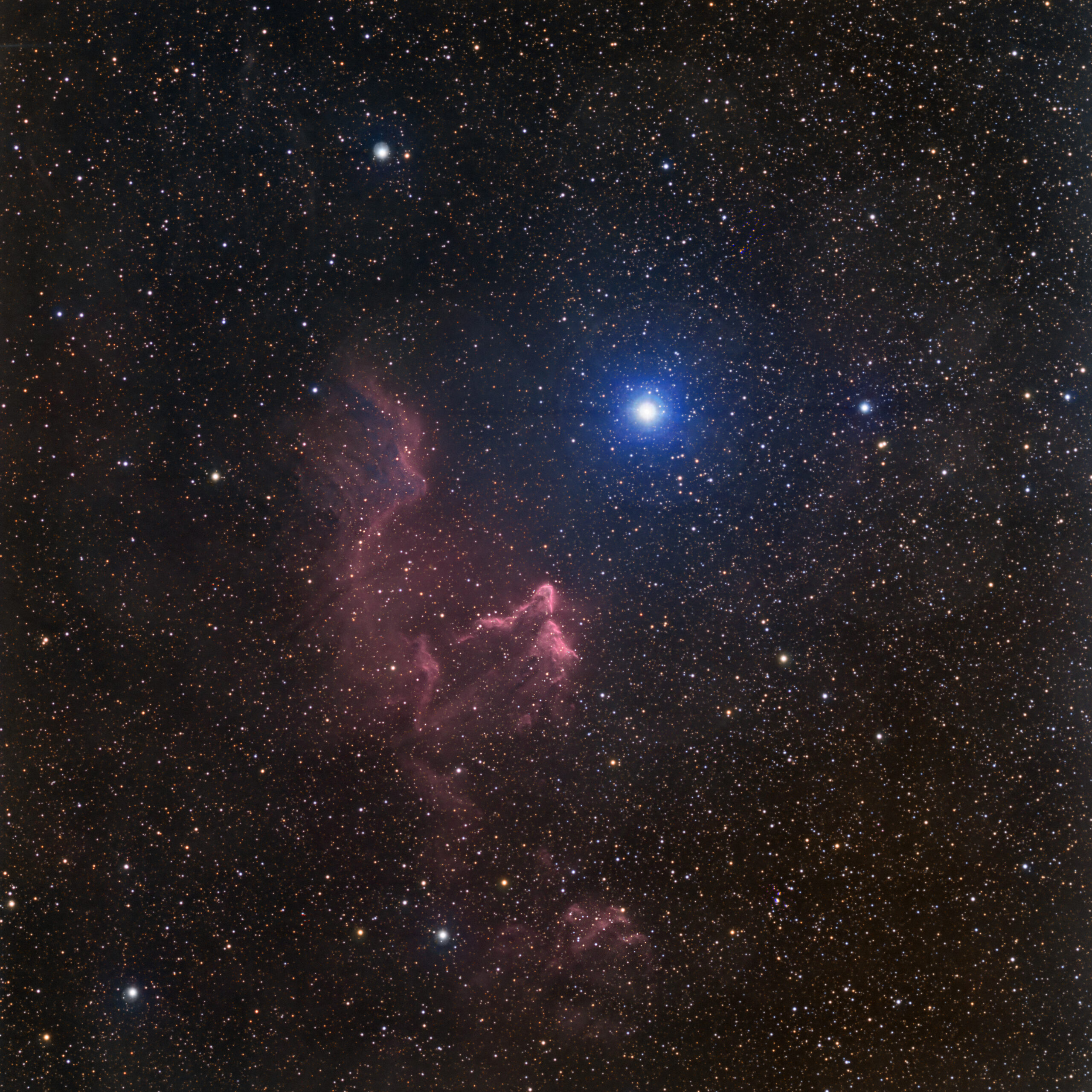
IC 63, the Ghost of Cassiopeia
A reflection and emission nebula near Gamma Cassiopeiae, with a ghostly appearance. The star’s light shapes its red wisps.
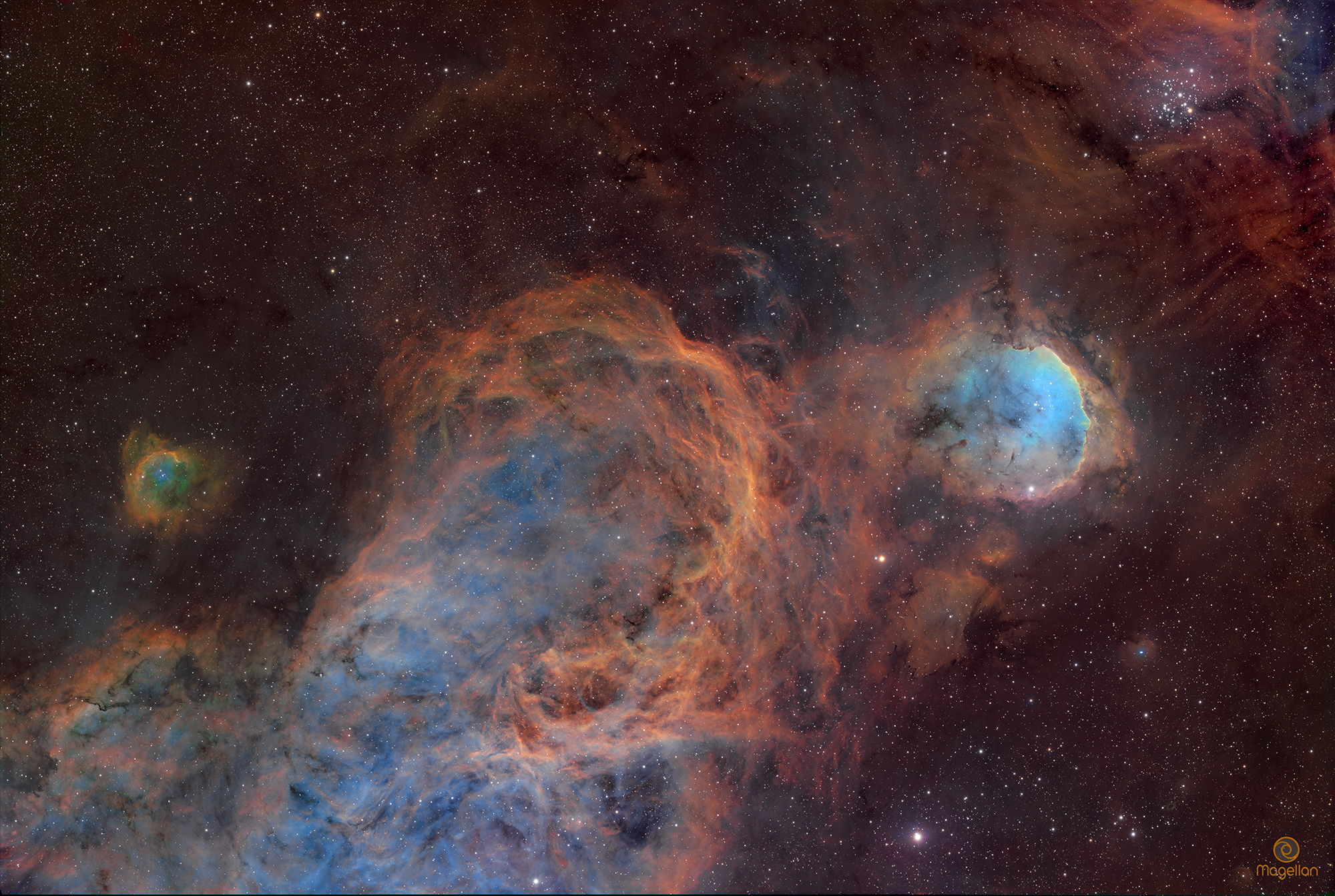
Gabriela Mistral Nebula - NGC 3324
An emission nebula in Carina, close to the great Carina Nebula. Its sharply defined edges recall a breaking wave.
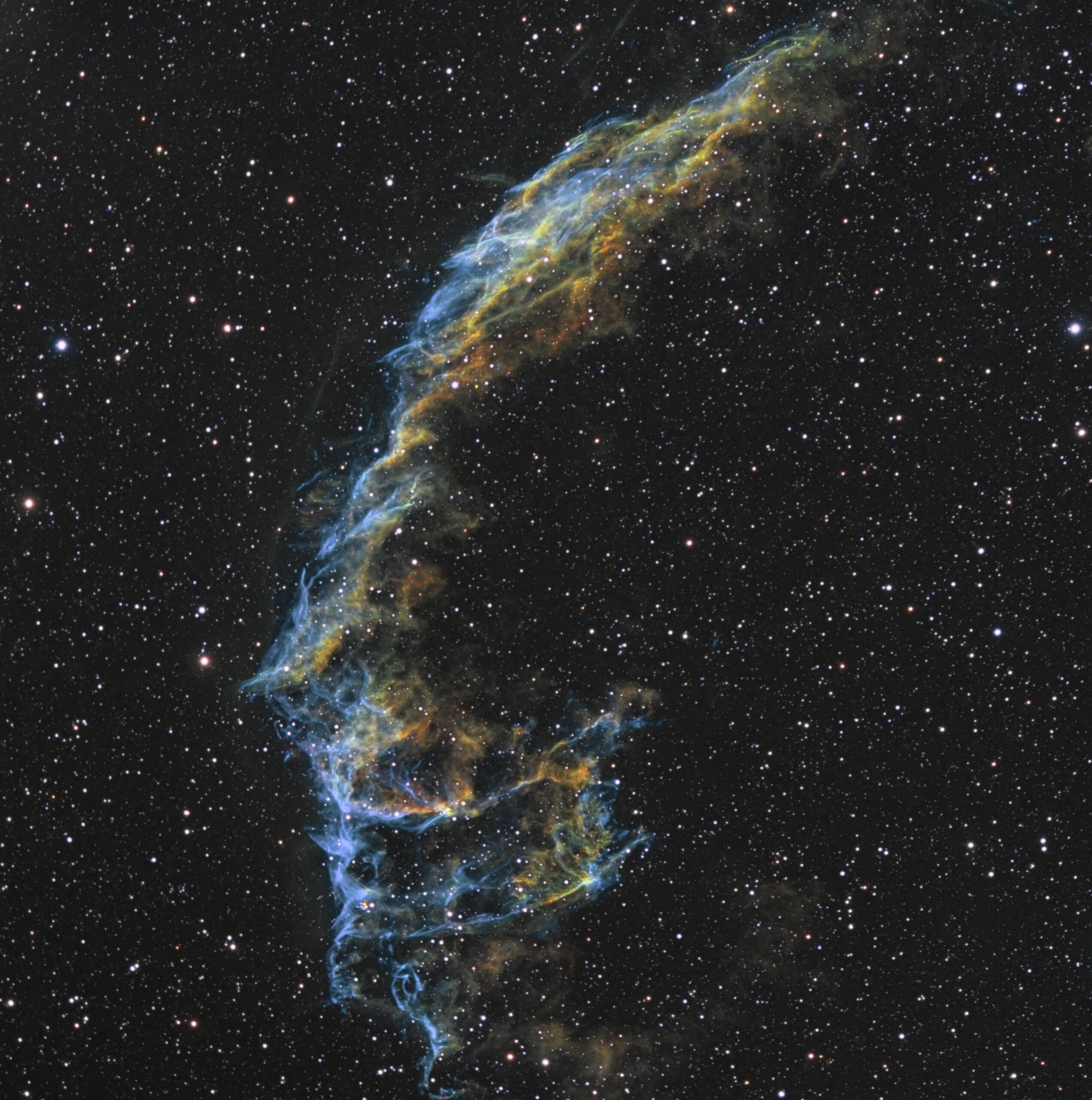
NGC 6992, Hubble palette
Part of the Veil Nebula, the remnant of a supernova several thousand years old. The SHO palette brings out the filaments of sulphur, hydrogen, and oxygen.
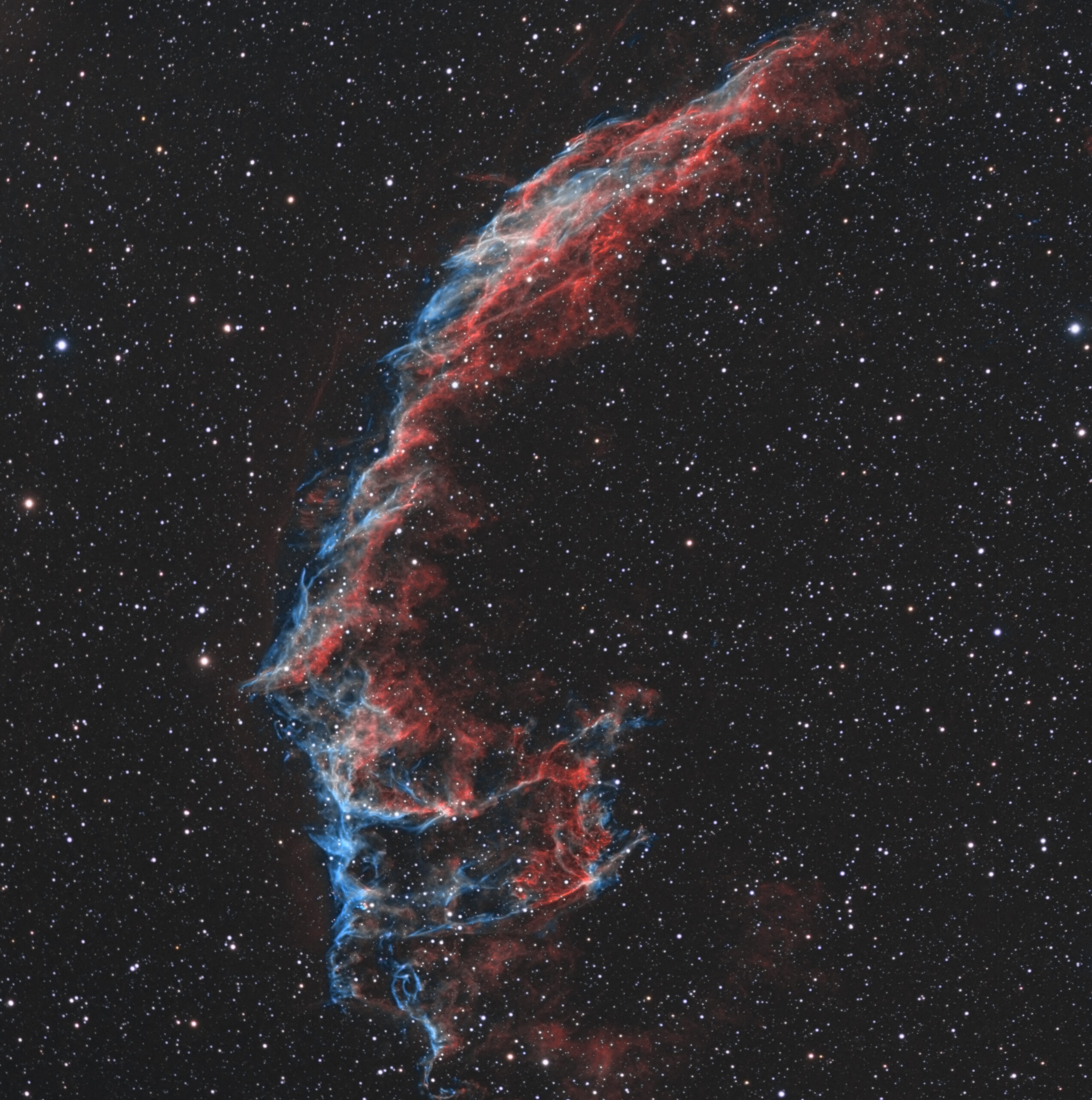
NGC 6992, HOO palette
The same object in hydrogen/oxygen bicolour: a more natural rendering, with fine reds and blues that highlight the supernova’s shock front.
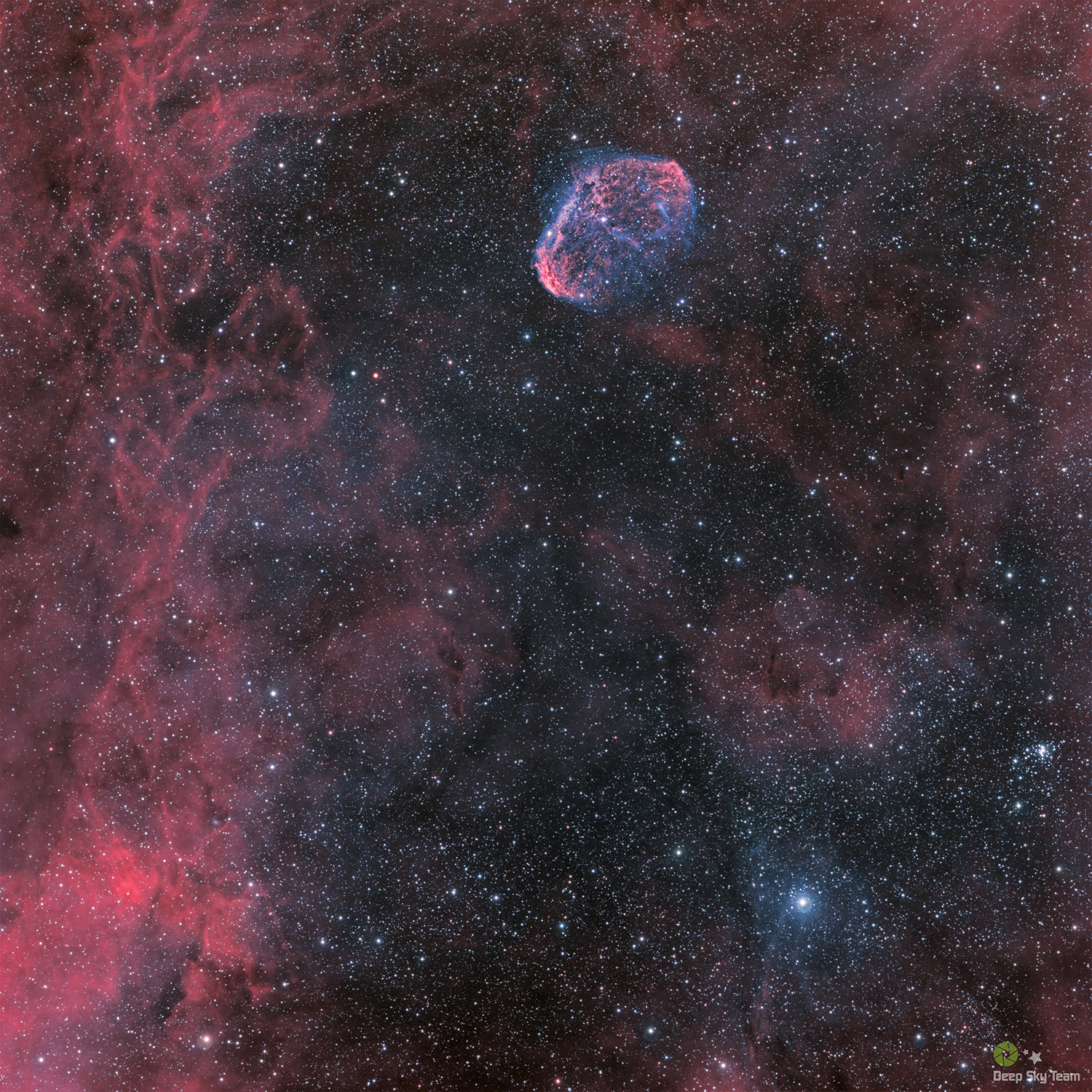
NGC 6888, the Crescent and the Soap Bubble
The Crescent Nebula, created by a Wolf-Rayet star in Cygnus, with the small Soap Bubble Nebula in the same field. A fine contrast of shapes.
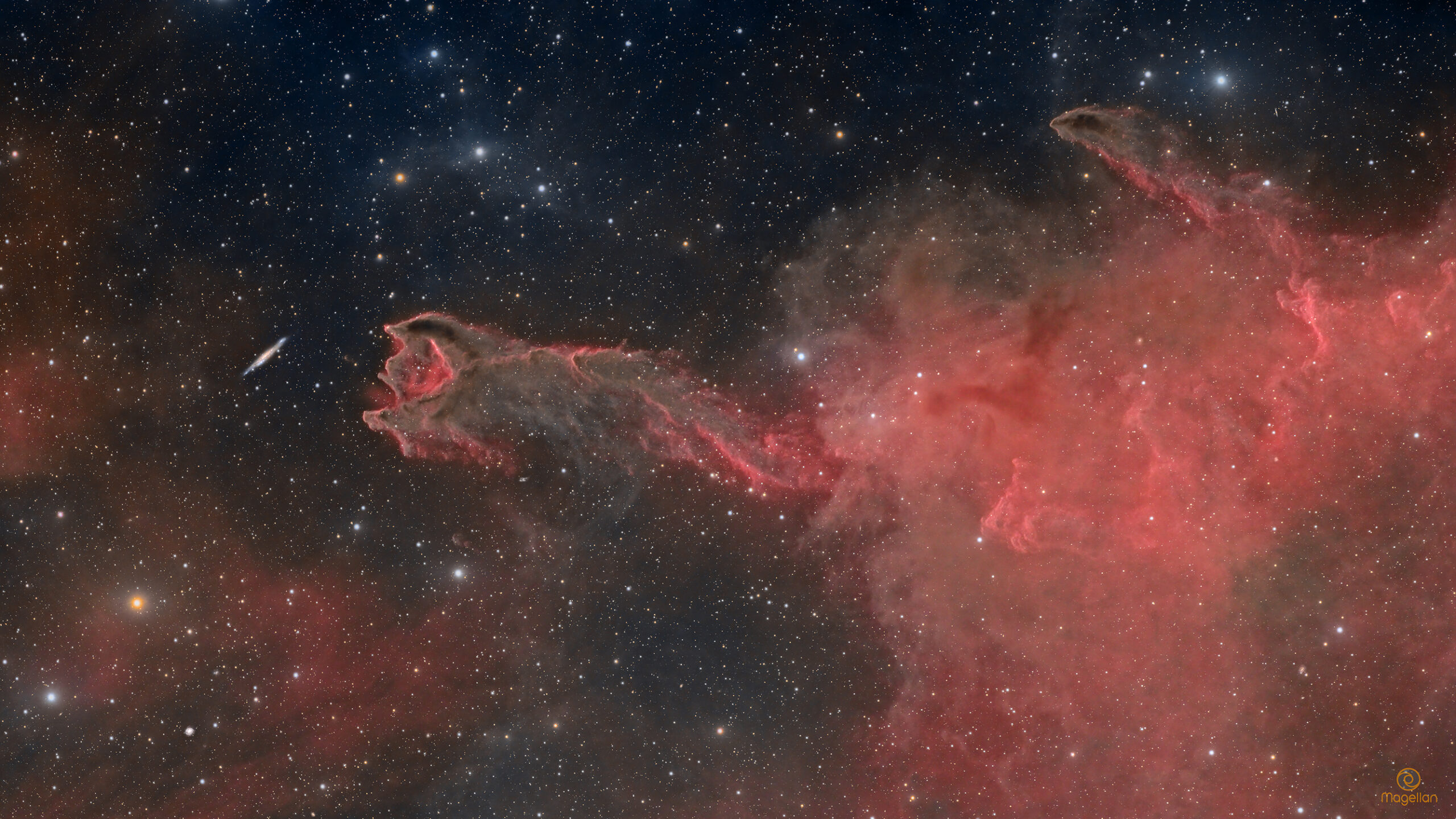
CG 4, Galactus the Devourer of Worlds
A cometary globule in Puppis, with the menacing look of a cosmic figure. A dark, dense cloud being eroded, nicknamed “God’s Hand.”
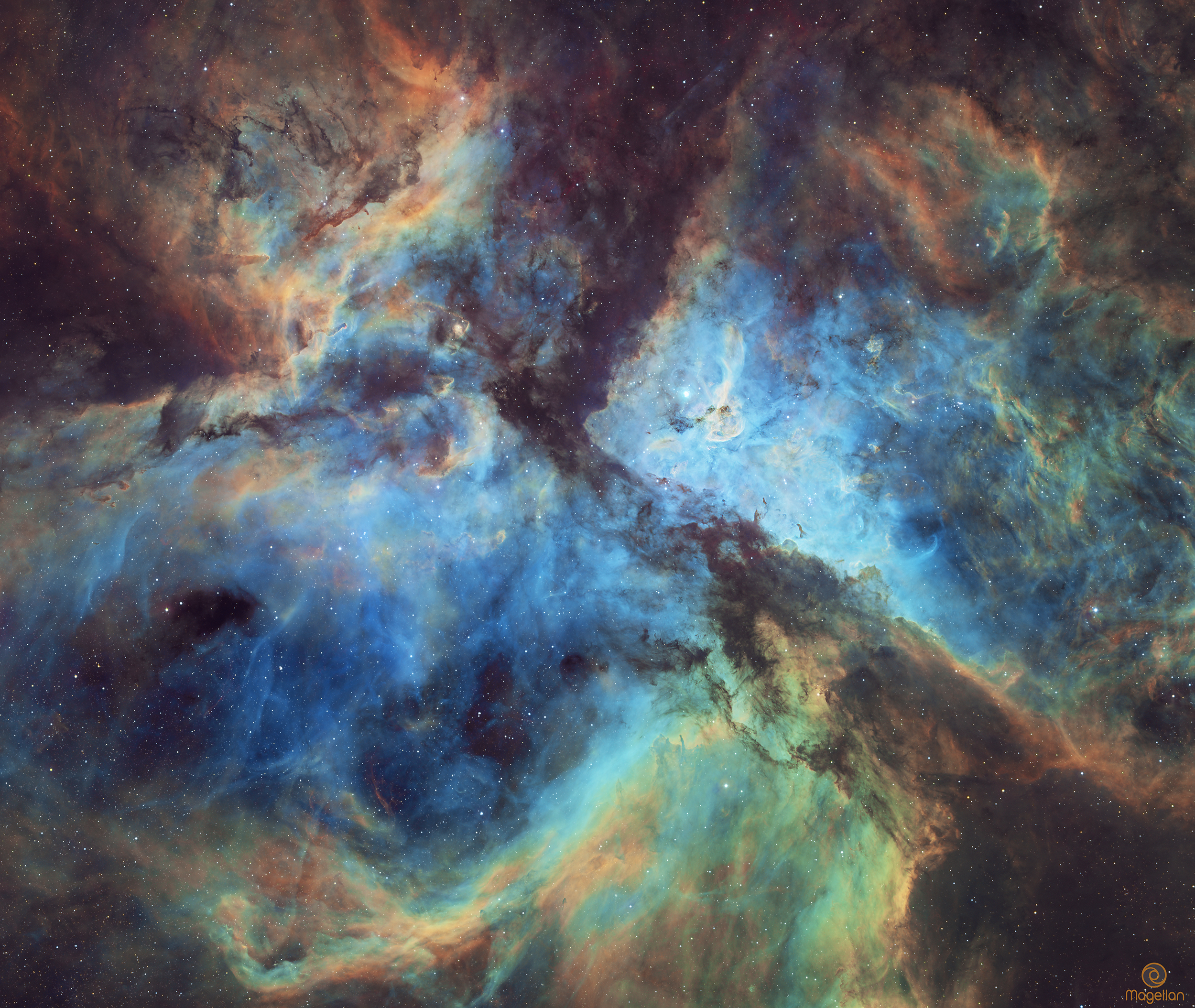
Carina Nebula - NGC 3372
One of the largest and brightest nebulae in the sky, larger than the Orion Nebula. It hosts Eta Carinae, a massive star close to explosion.
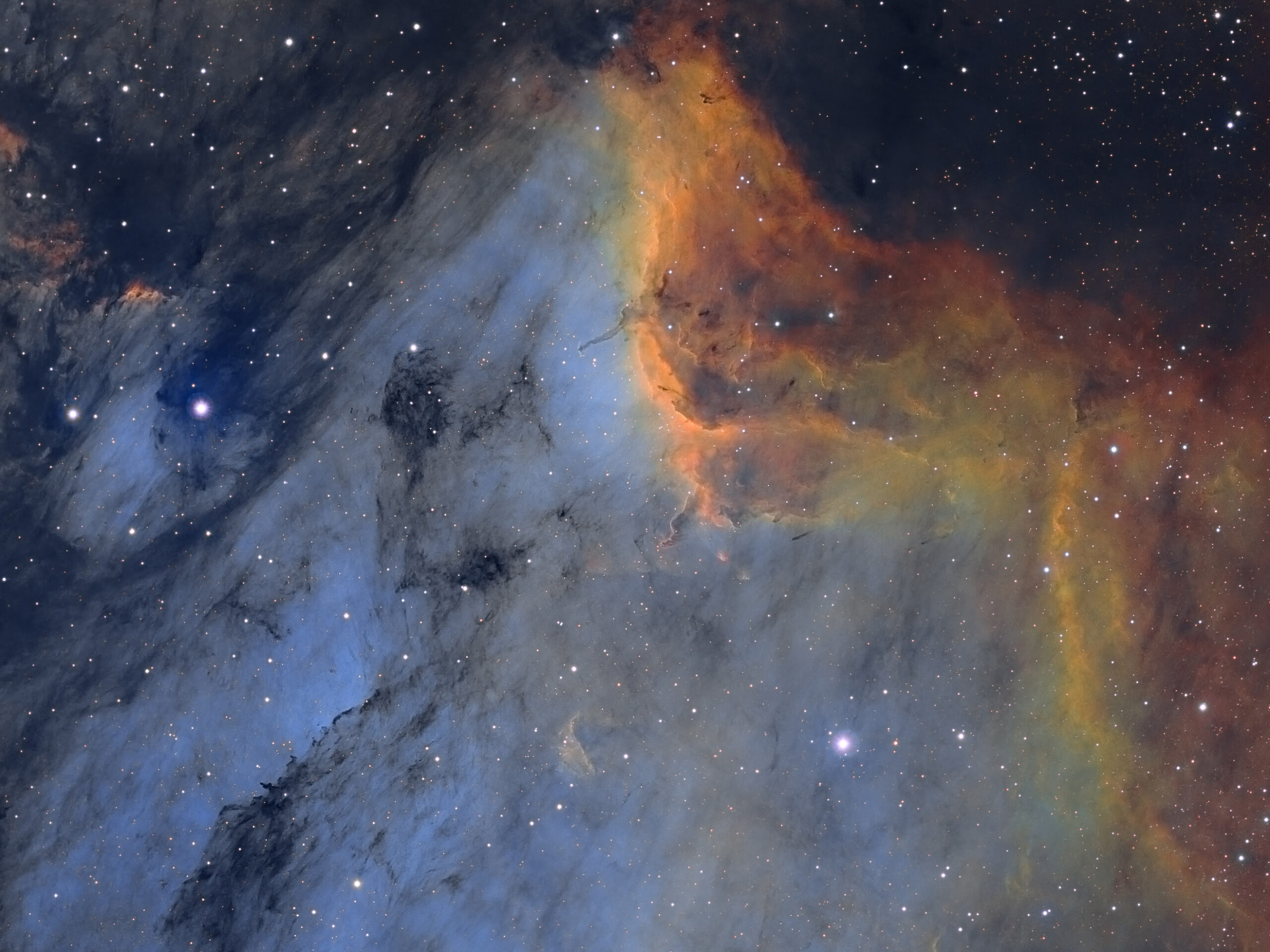
IC 5067 - the Pelican’s Neck
The northern part of the Pelican Nebula, rich in pillars of gas and dust that recall the bird’s neck.
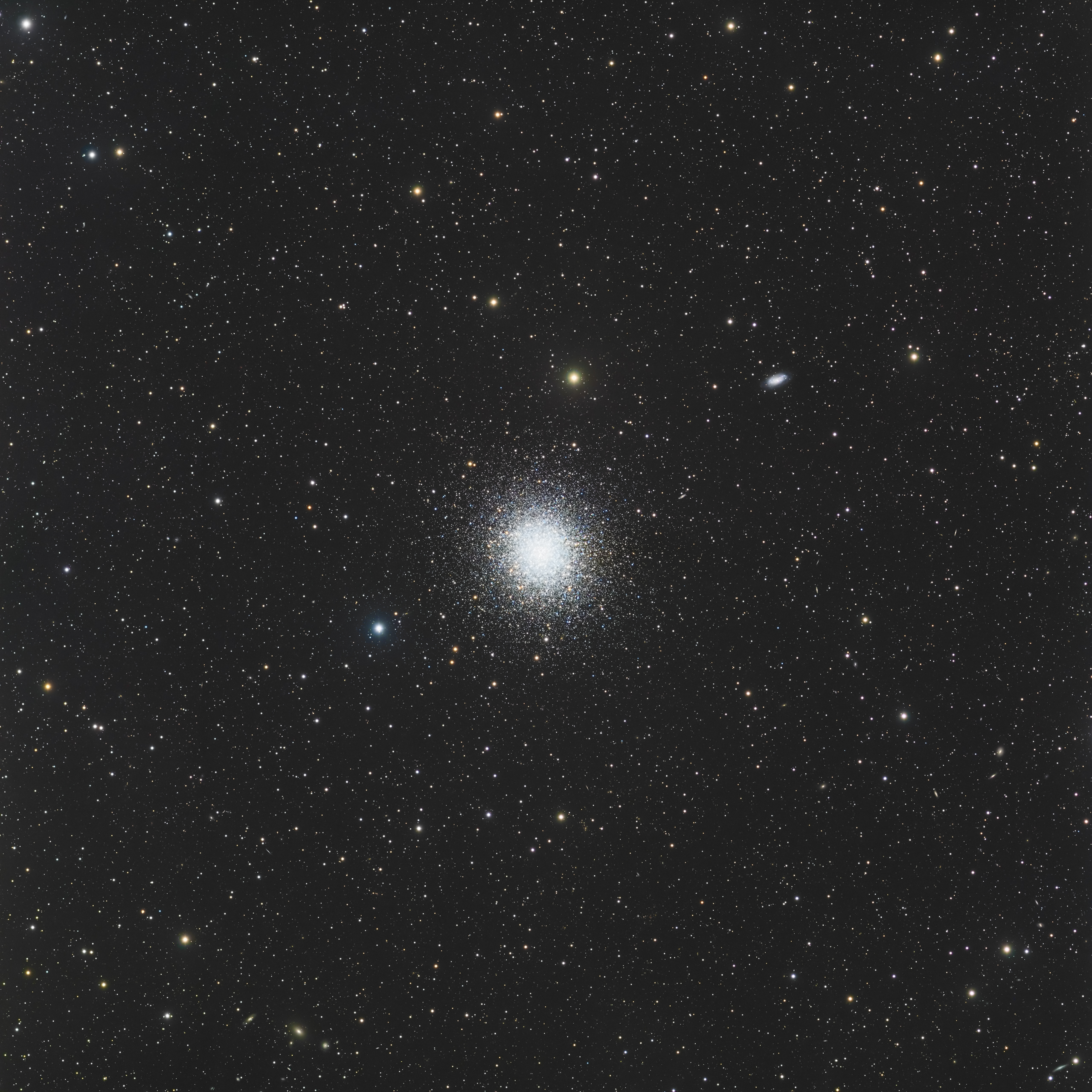
M13, the Great Hercules Cluster
One of the finest globular clusters in the northern sky, with about 300,000 stars 22,000 light-years away. Easy to find and impressive in images.
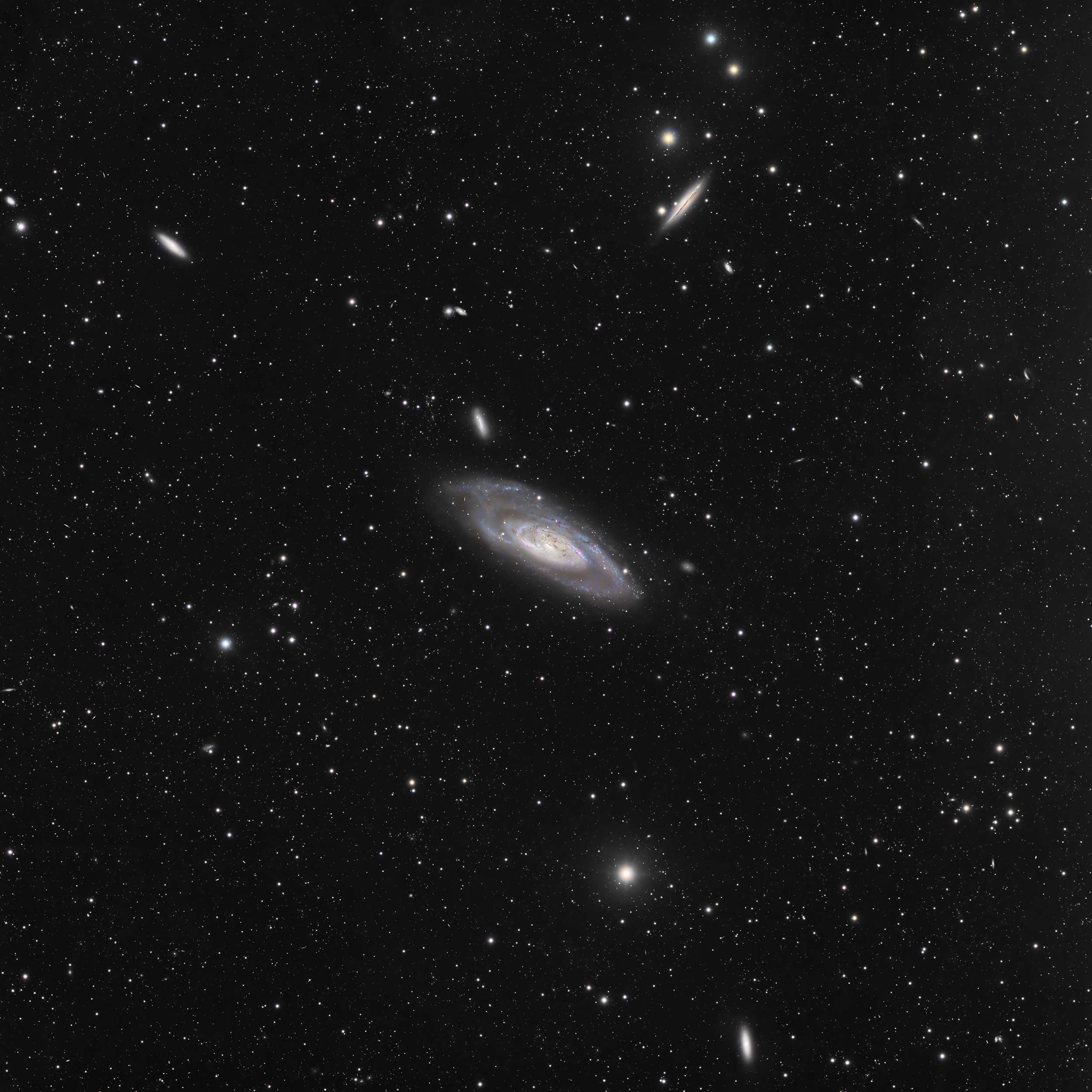
M106
A spiral galaxy in Canes Venatici with an active Seyfert nucleus. Its “anomalous” arms are visible in Ha, which makes it fascinating.
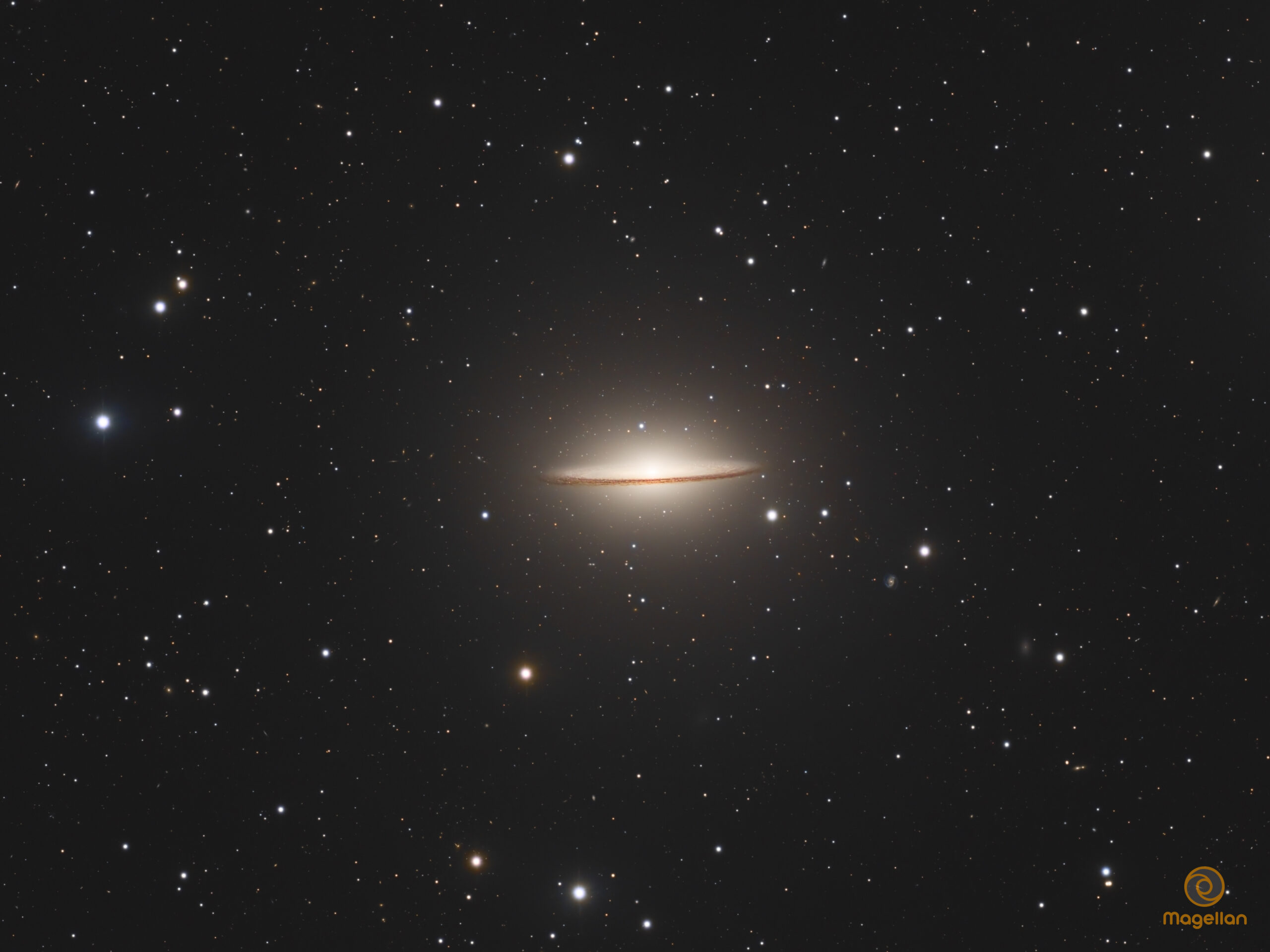
M104 - The Sombrero Galaxy
A galaxy in Virgo with a wide, dark dust lane and a bright bulge. Its shape evokes a sombrero hat, making it unforgettable.
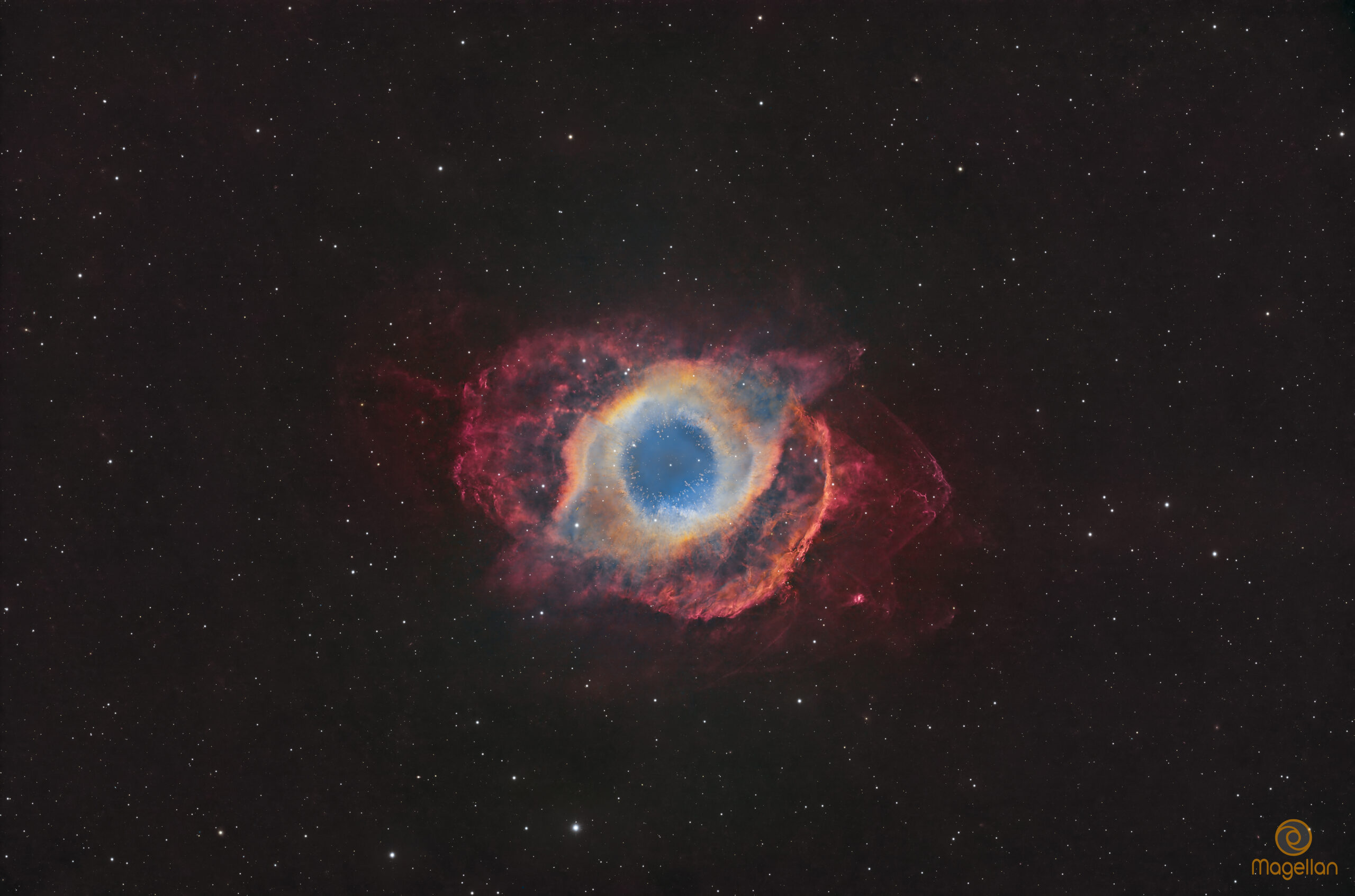
Helix Nebula - The Eye of God
One of the closest planetary nebulae (about 650 light-years away), whose appearance recalls a giant eye. It is the remnant of an ordinary star, the likely future of our Sun.
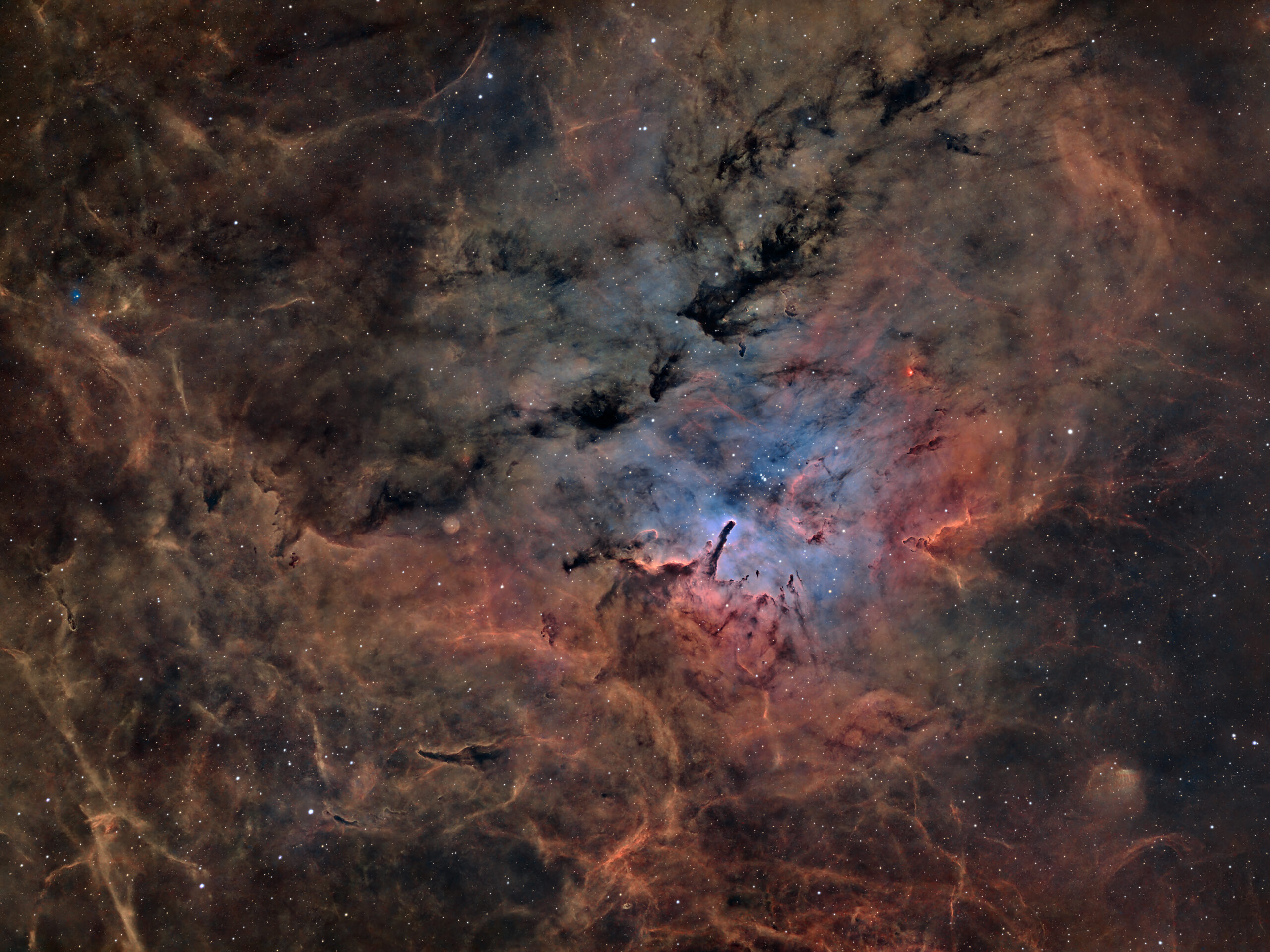
NGC6823
An open cluster in Vulpecula, surrounded by the emission nebula NGC 6820. It hosts young, massive stars and offers a fine contrast between stars and nebulosity.
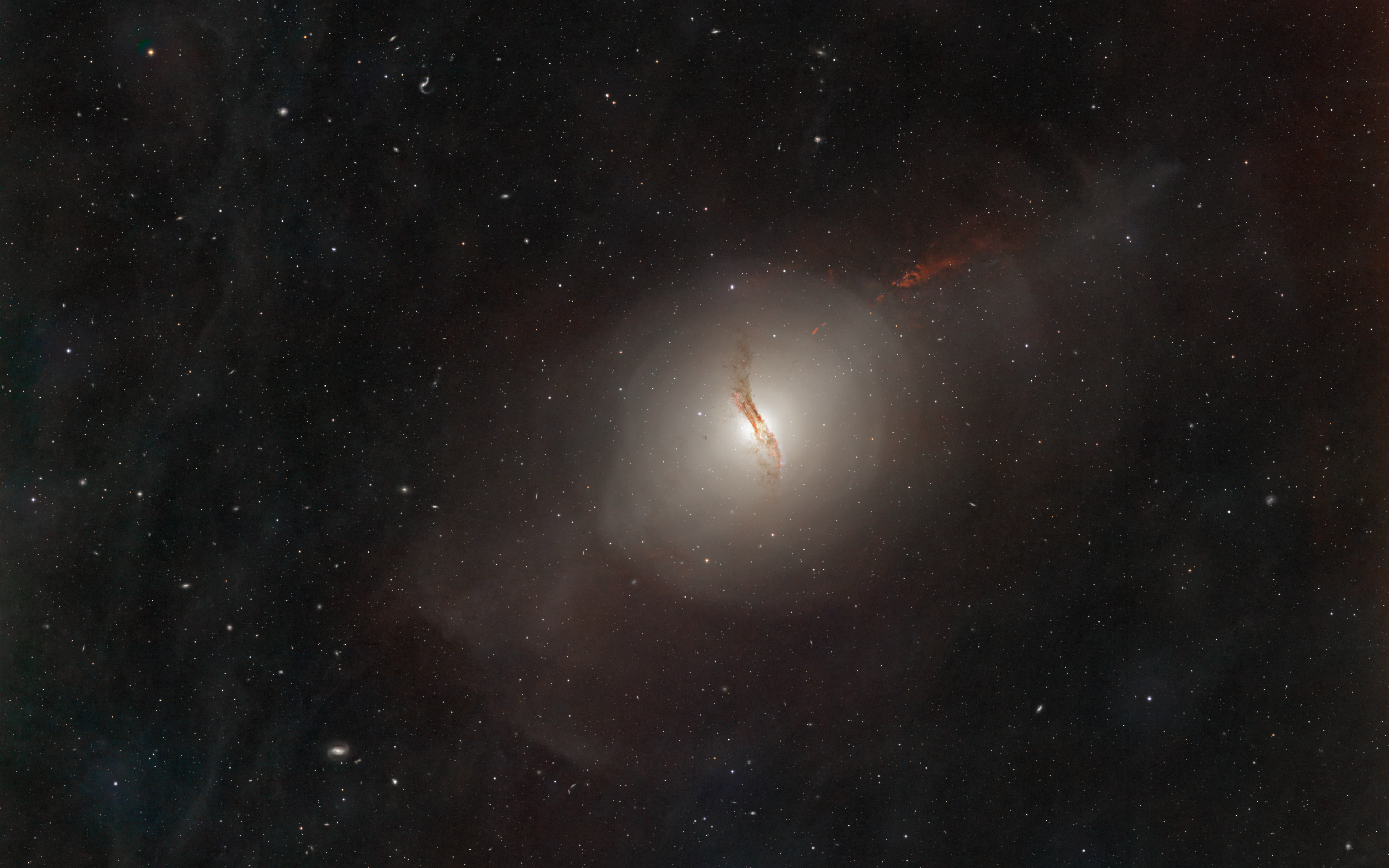
Centaurus A - NGC5128
A peculiar lenticular galaxy in Centaurus, crossed by a thick lane of dark dust. It hosts an active supermassive black hole powering strong radio jets, making it one of the closest radio galaxies.
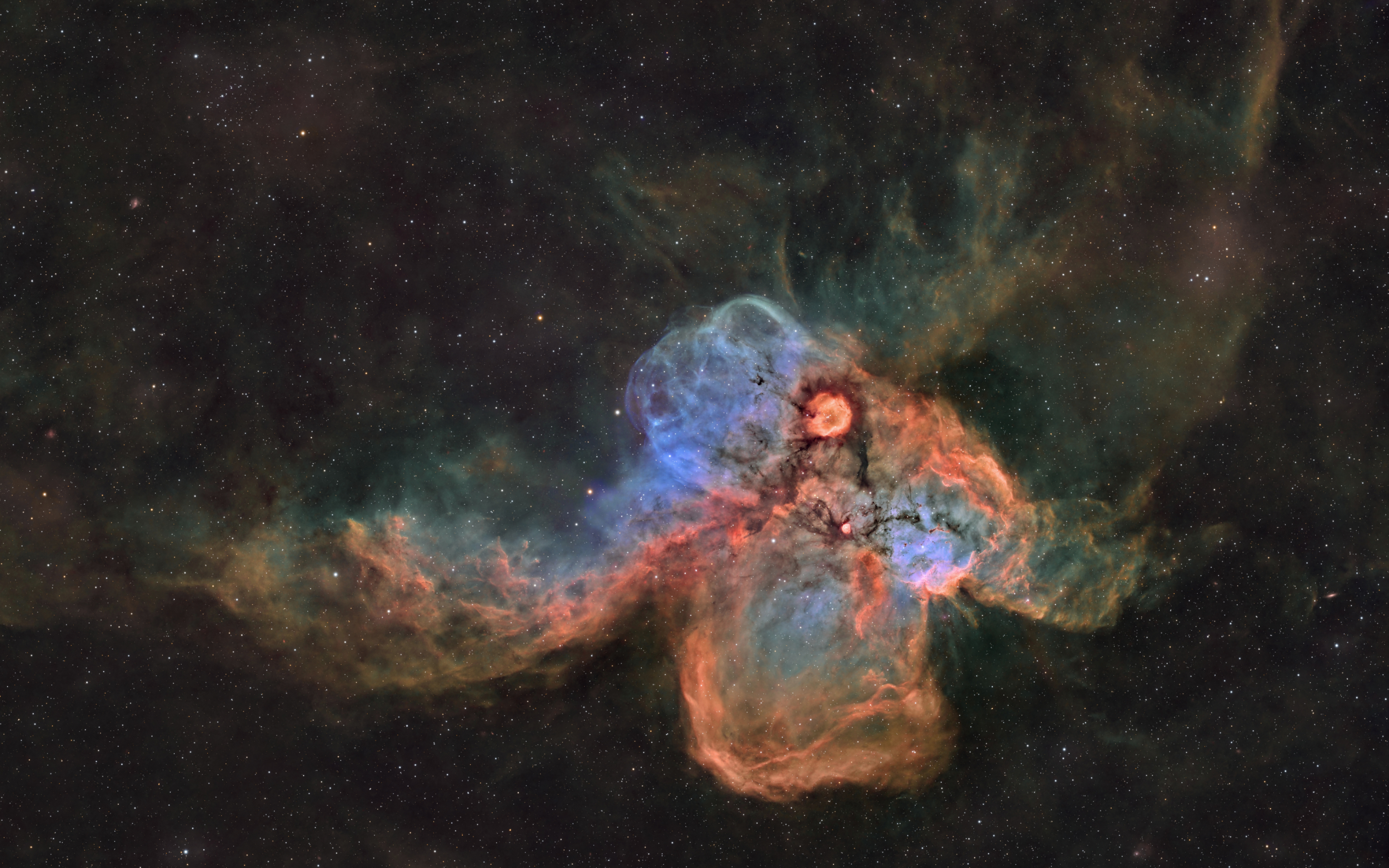
NGC2467
A star-forming region in Puppis, sometimes nicknamed the “Skull and Crossbones Nebula” for its dark patterns. It hosts a young cluster of massive stars ionizing the surrounding gas.
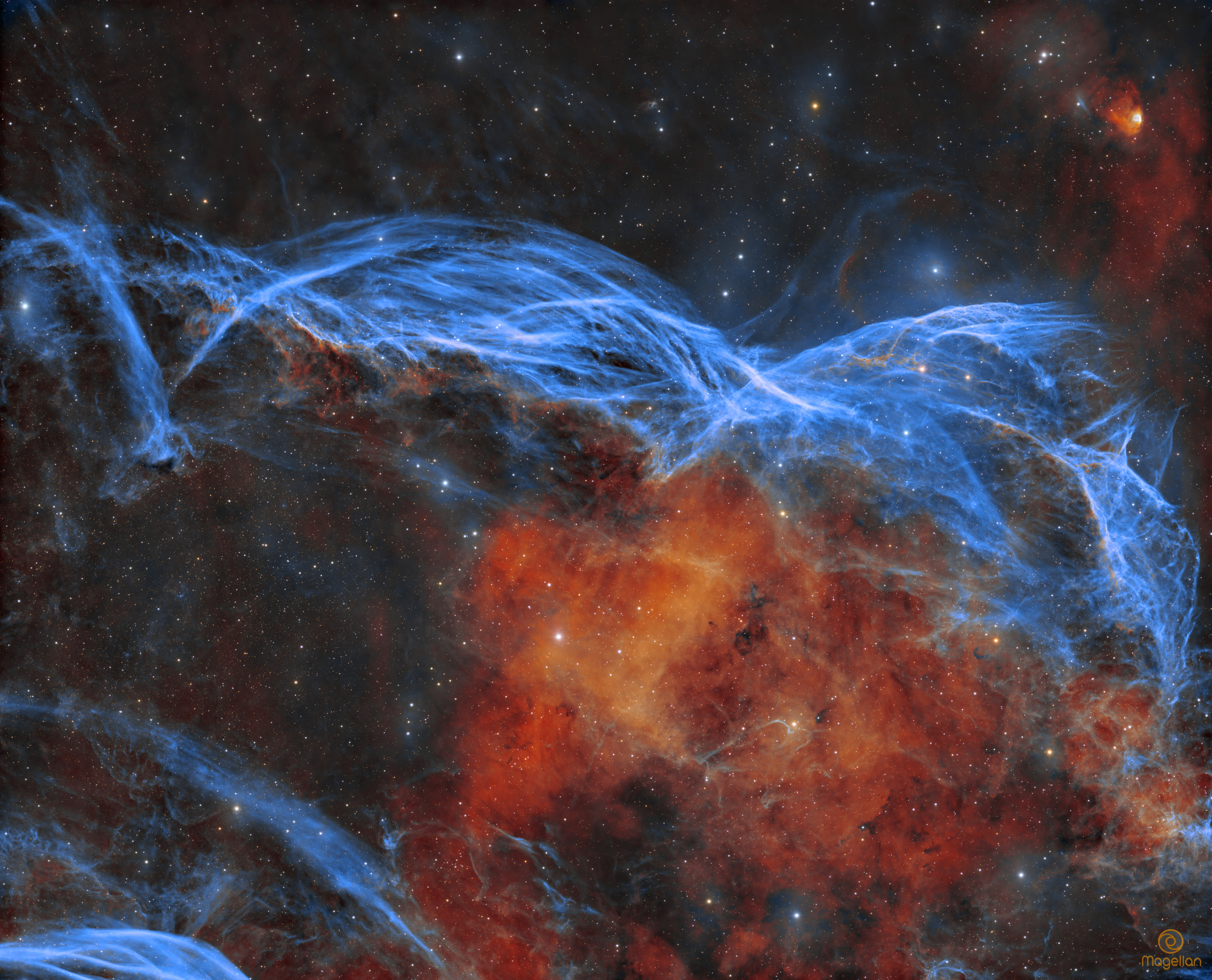
GUM18
A faint, diffuse emission nebula in Vela, part of the vast Gum Nebula complex. Its low surface brightness makes it a delicate target reserved for long exposures.
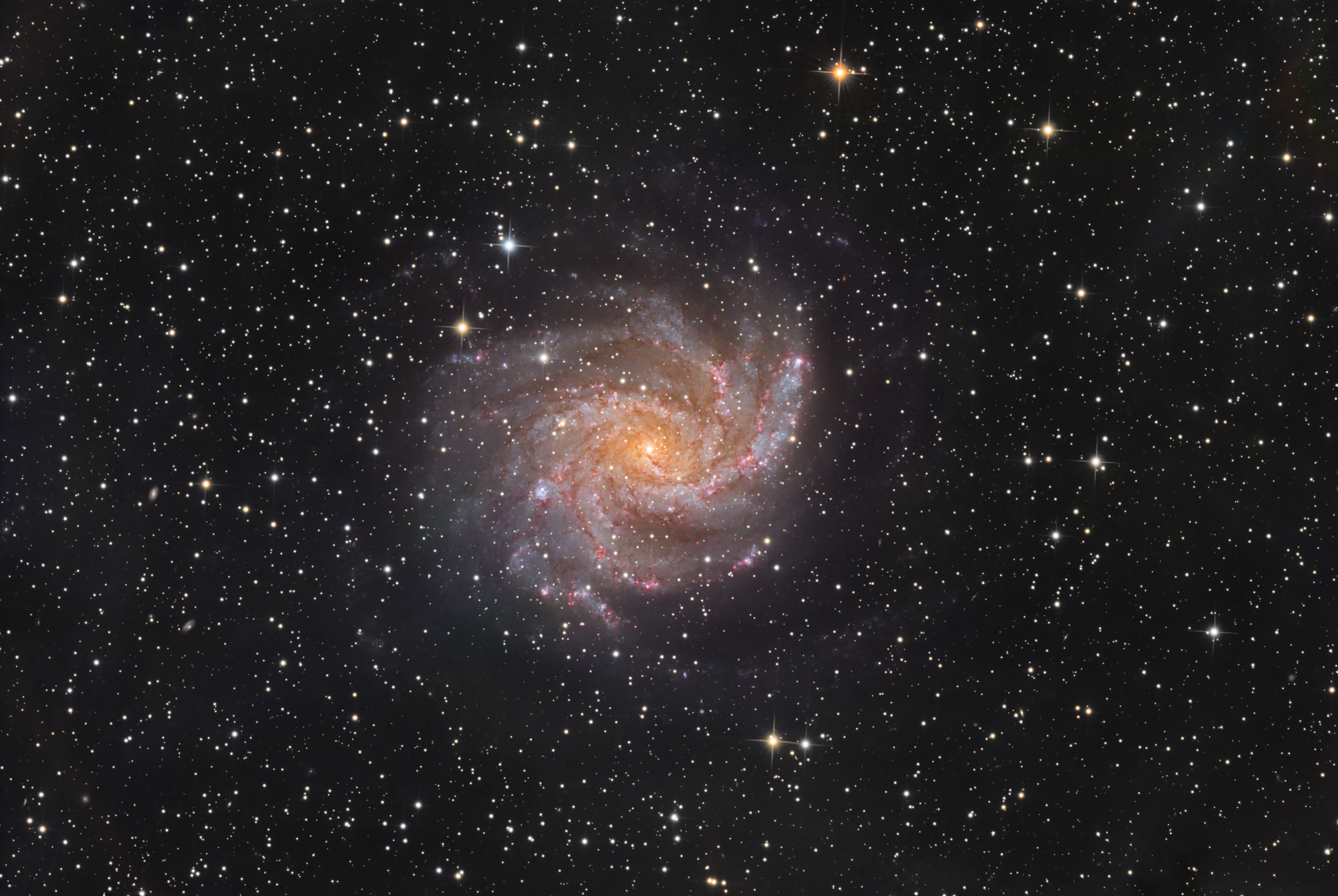
NGC6946 - The Fireworks Galaxy
The Fireworks Galaxy, a face-on spiral straddling the border of Cepheus and Cygnus. It owes its nickname to the exceptional number of supernovae observed within it (about ten since 1917), a sign of unusually active star formation in its arms.
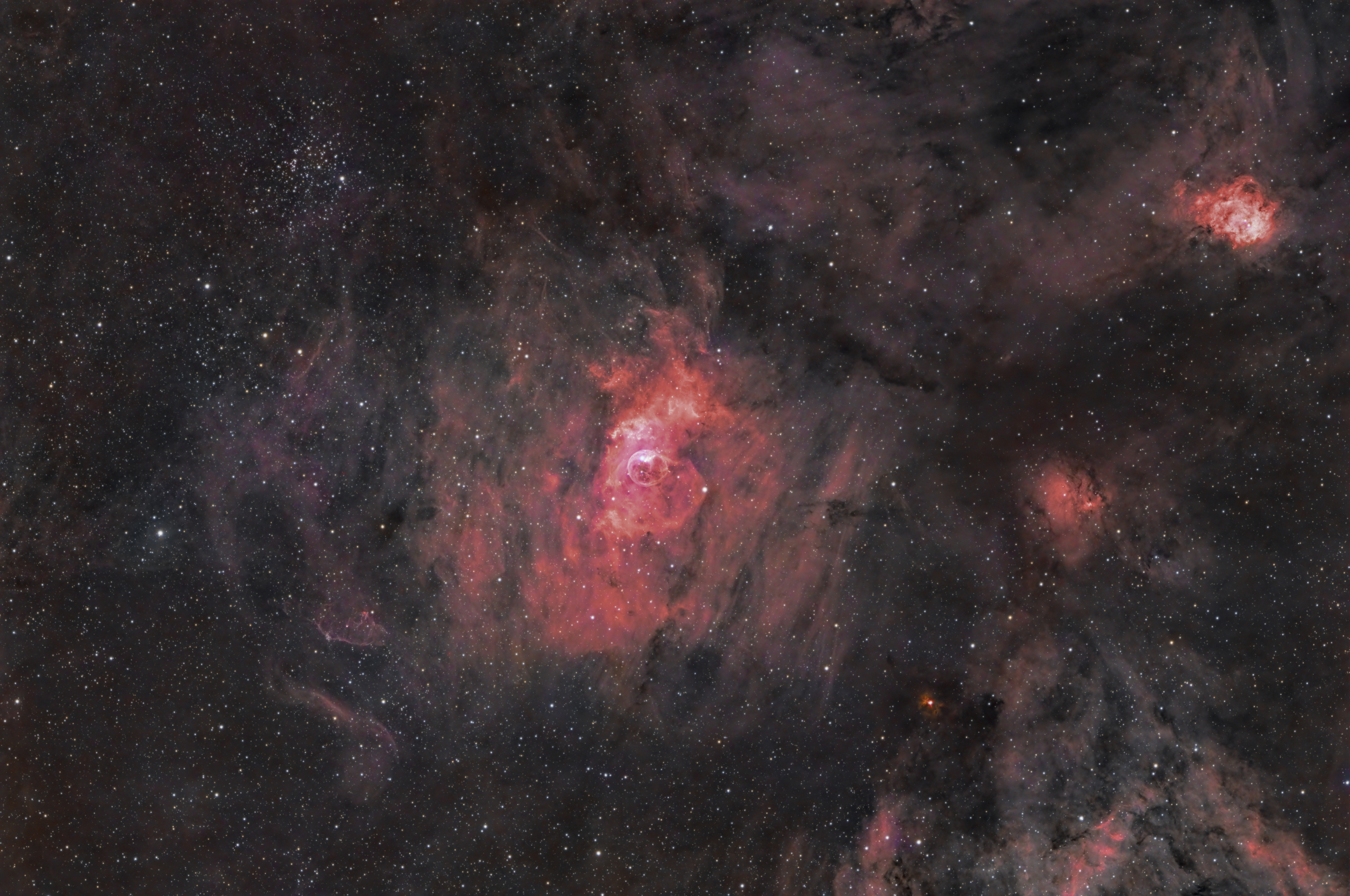
NGC7635 and M52
In the same field in Cassiopeia: the Bubble Nebula (NGC 7635), blown by the wind of a massive star, and the open cluster M52, a rich group of young stars. A classic pairing for a wide field, combining nebulosity and a stellar cluster.
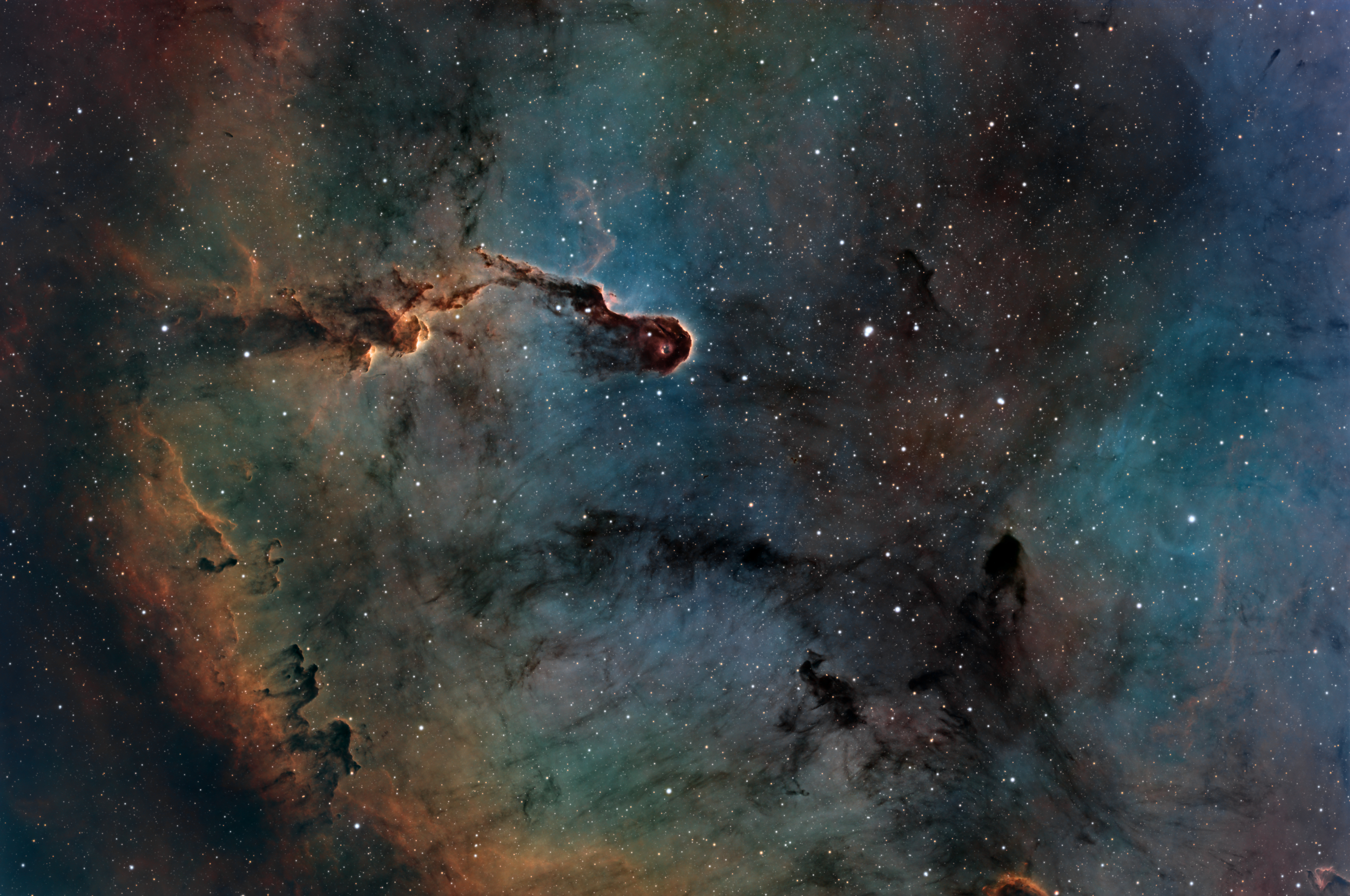
IC1396 - The Elephant's Trunk
A vast region of ionized hydrogen in Cepheus, surrounding the young cluster Trumpler 37. It hosts the famous Elephant's Trunk (IC 1396A), a dense dark globule where new stars are forming, sculpted by the radiation of nearby stars.
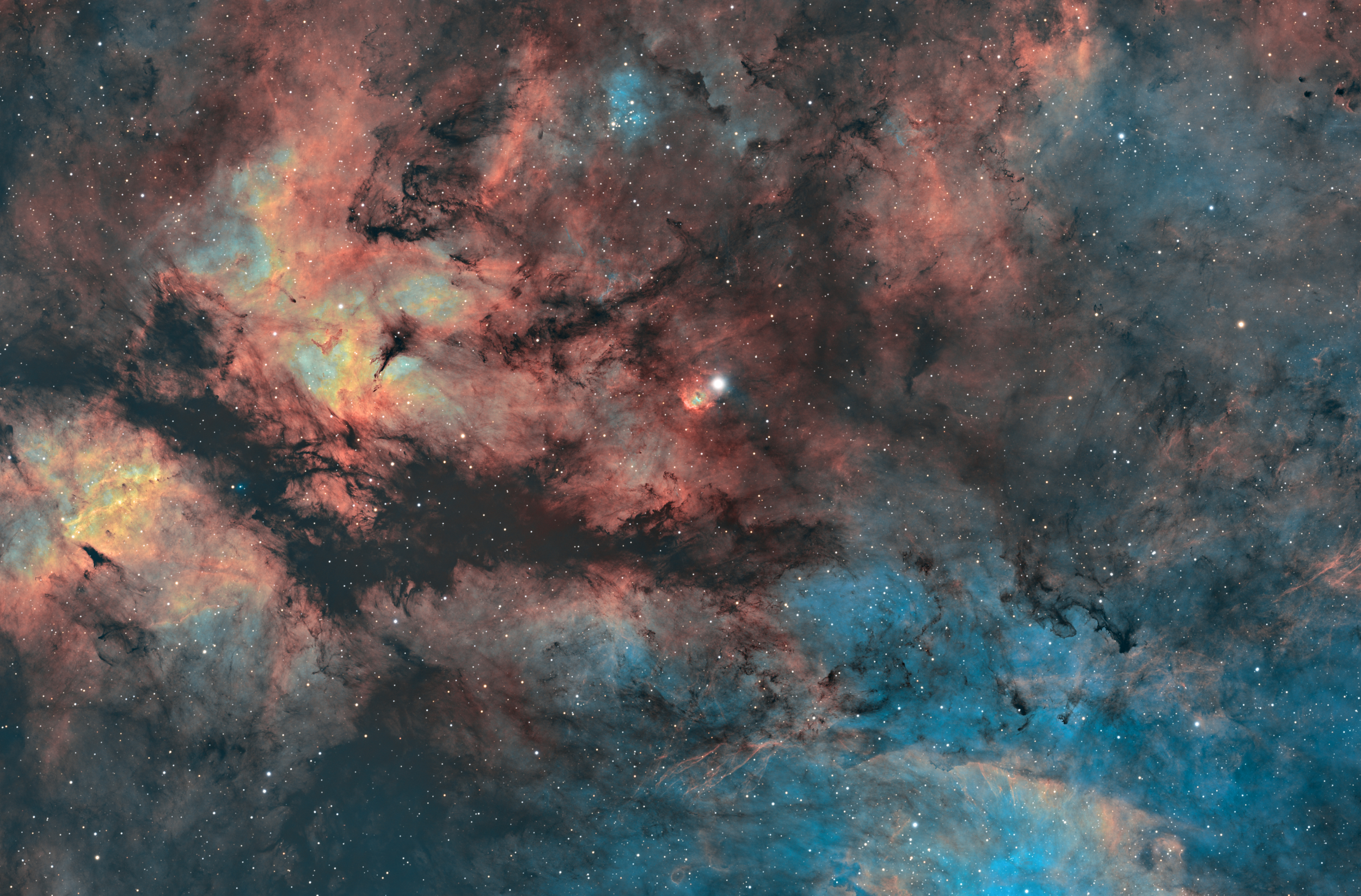
Sadr and the Butterfly Nebula
Around Sadr (γ Cygni), a vast complex of ionized gas (IC 1318) stretches across Cygnus, punctuated by dark lanes that trace distinctive shapes, including a butterfly-like pattern. An ideal region for observing the richness of the Cygnus arm of the Milky Way.
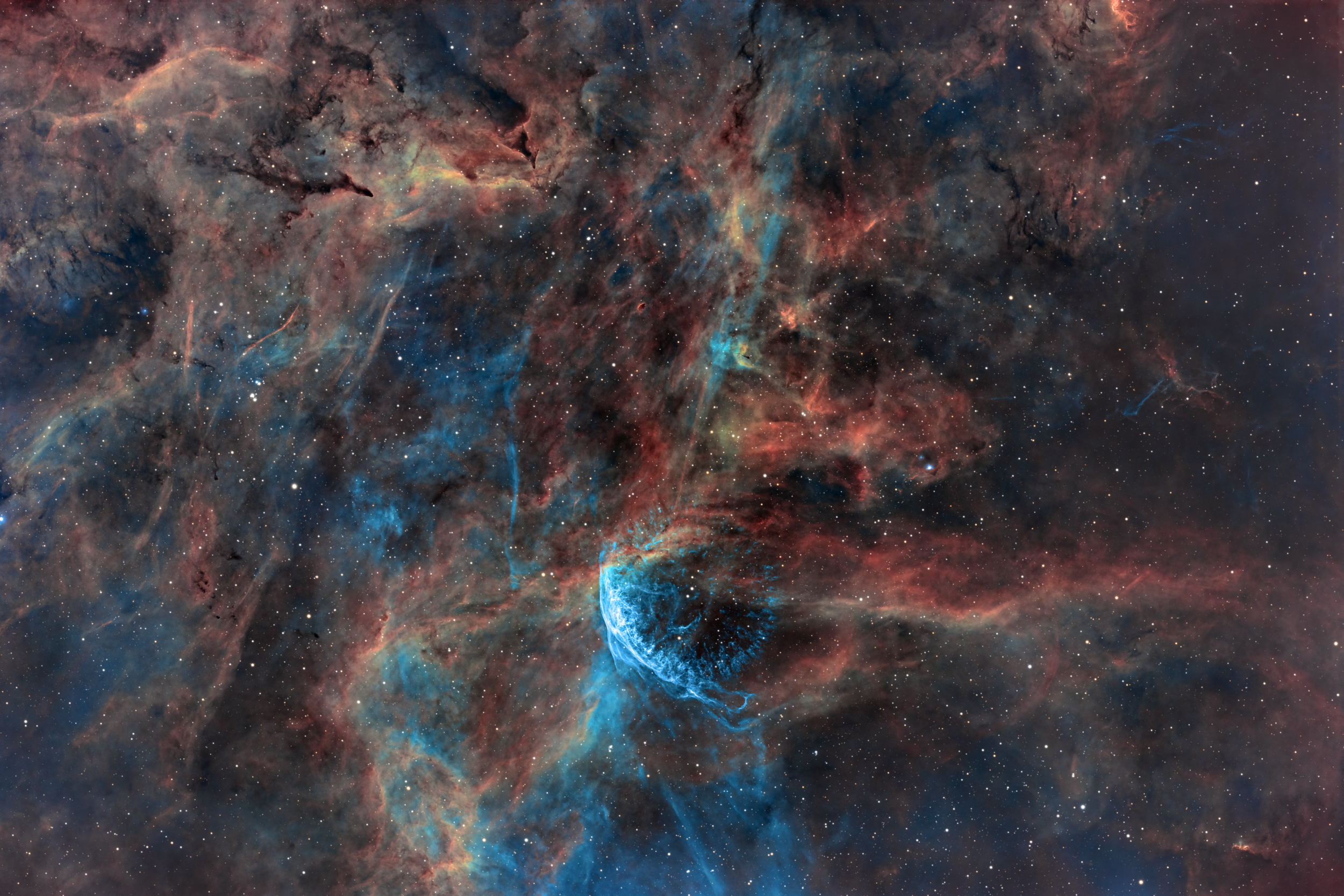
WR134
A Wolf-Rayet star (WN6) in Cygnus, surrounded by a faint circular nebula blown by its extreme stellar wind. A prime target for narrowband imaging, revealing the shell of gas it sheds before ending its life as a supernova.