

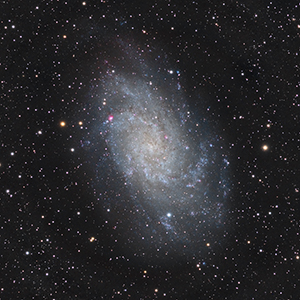
Discover the wonders of the universe
Astrophotography and spectroscopy
Explore the most beautiful deep-sky objects from both hemispheres, observed from Hérault, France and Chile
Who am I ?
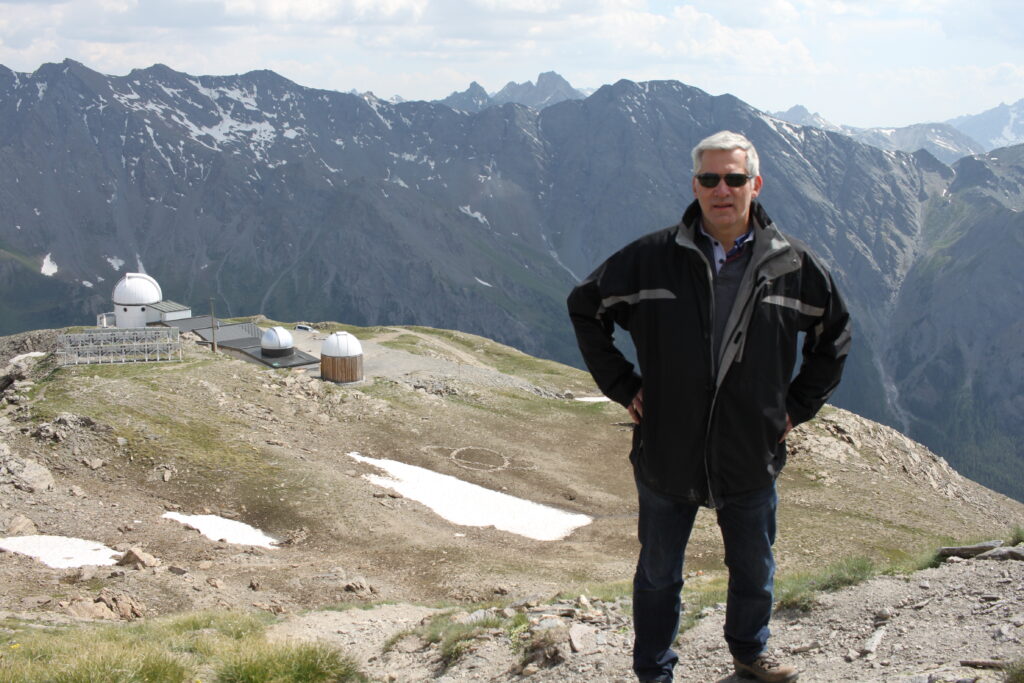
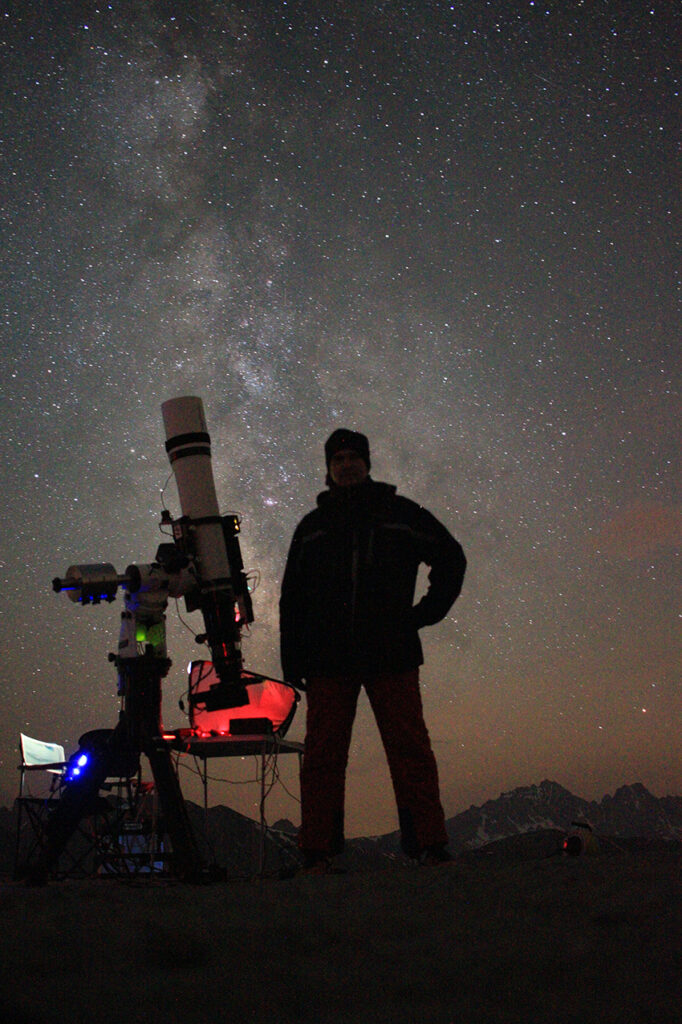
My name is Marian Gutowski. I am a surgeon at a cancer treatment center, but my passion extends far beyond the operating room — reaching into the depths of the Universe. My interest in astronomy expresses itself through two distinct practices: astrophotography, which allows me to capture the distant beauty of celestial objects, and spectroscopy, a fascinating technique that reveals the chemical composition, temperature and motion of stars by analyzing their light.
I am a member of the ALBE astronomy club, based in the Hérault region of France, and have further developed my image processing skills through AIP courses. I was introduced to spectroscopy during training sessions organized at the Haute-Provence Observatory (OHP) by Shelyak Instruments.
This passion has led me to an extraordinary opportunity: I am part of Team Magellan, a group of friends dedicated to operating a telescope under the exceptional skies of Chile.
Astrophotography

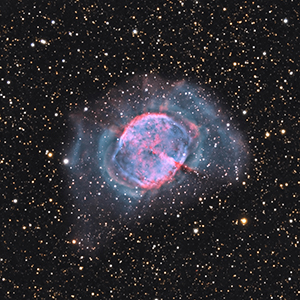
Planetary Nebulae
The final stage of low-mass stars, such as our Sun!
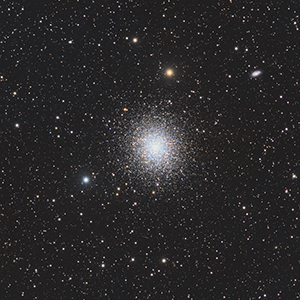
Open / Globular clusters
Stellar clusters in our cosmic neighborhood, from a handful of stars to millions
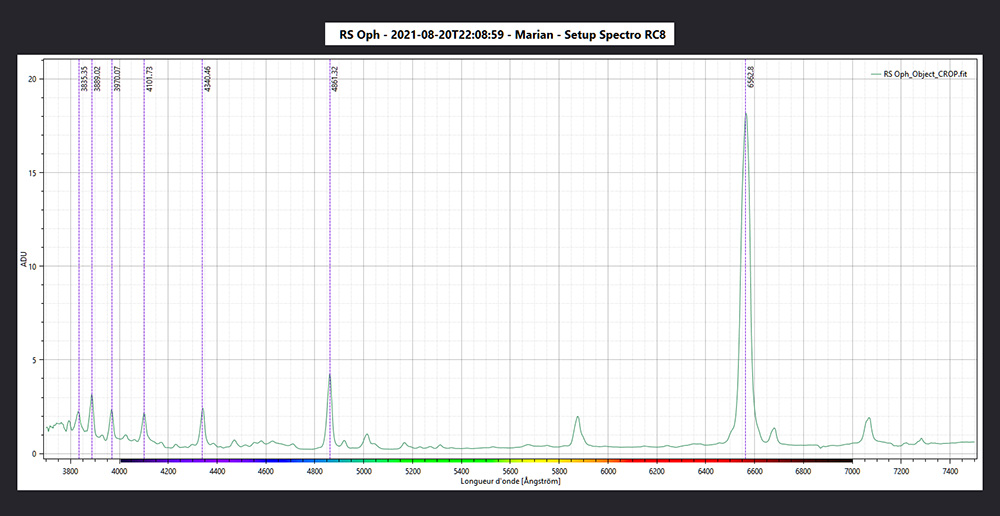
Spectroscopy
Reading the light of stars
Imagine being able to dissect the light of the Sun, or that of a distant star, to reveal all its secrets. That is essentially what spectroscopy does.
In simple terms, spectroscopy is a technique that involves analyzing the light emitted, absorbed or scattered by a substance. Rather than simply looking at white light, we break it down into its individual colors, much like a prism creates a rainbow. This decomposition produces a spectrum, which acts as a kind of fingerprint of the light source.
Each chemical element, when heated or excited, emits or absorbs light at very specific wavelengths — and therefore specific colors. These wavelengths form spectral lines: dark or bright lines that are characteristic of that element. By carefully studying these lines in the spectrum of an object, we can identify the elements it is made of.
Astronomy and Spectroscopy: a stellar marriage
In astronomy, spectroscopy is an absolutely indispensable tool. Light is the primary messenger we receive from celestial objects. By analyzing the spectrum of this light, astronomers can gather a wealth of information about objects located at unimaginable distances.
Rather than interacting directly with stars or galaxies, astronomers use instruments called spectrographs, attached to powerful telescopes, to disperse the light they collect. The resulting spectrum is then analyzed in detail.
What Spectroscopy Reveals About Celestial Objects
Through spectroscopy, astronomers can deduce an impressive amount of information about celestial objects, such as:
- Chemical composition: This is the most direct application. The presence of certain spectral lines reveals the presence of specific elements such as hydrogen, helium, iron, oxygen, and so on. This allows us to know the 'recipe' of stars, planets, nebulae and galaxies. For example, the study of the solar spectrum revealed the presence of helium before it was even discovered on Earth!
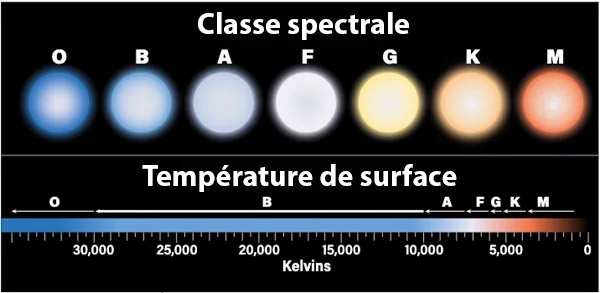
- Temperature: The distribution of light intensity across the spectrum (the dominant color) is directly linked to the temperature of the object. A blue star is much hotter than a red star.
- Radial velocity: The Doppler effect, also observed with sound waves (the pitch of a siren changes depending on whether it is approaching or moving away), also applies to light. If an object is moving toward us, its spectral lines are slightly shifted toward the blue end of the spectrum (the 'blueshift'). If it is moving away, they shift toward the red end (the 'redshift'). By measuring this shift, we can determine the speed at which a celestial object is approaching or receding from us. This is how the expansion of the Universe was discovered!
- Density and pressure: The width and shape of spectral lines can be influenced by the density and pressure of the emitting or absorbing gas. Broader lines may indicate higher density or pressure.
- The presence of magnetic fields: The magnetic field of a star can influence the energy levels of atoms and thus slightly shift the wavelengths of spectral lines (the Zeeman effect). Studying these shifts allows us to measure the intensity of stellar magnetic fields.
- Rotation: The rotation of a star can broaden its spectral lines. One side of the star is moving toward us (slightly blueshifted) while the other is moving away (slightly redshifted), which 'spreads out' the spectral line.
More information and examples of amateur spectroscopy applications?

Observations
Hot stars, pulsating stars, various objects, spectral classes… if you want to see some results, this way!
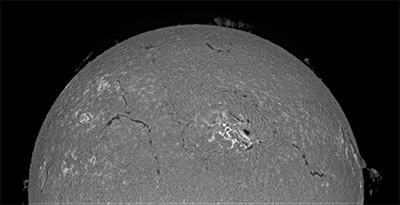
Spectroheliography
Solar imaging at different wavelengths using a high-resolution spectrograph
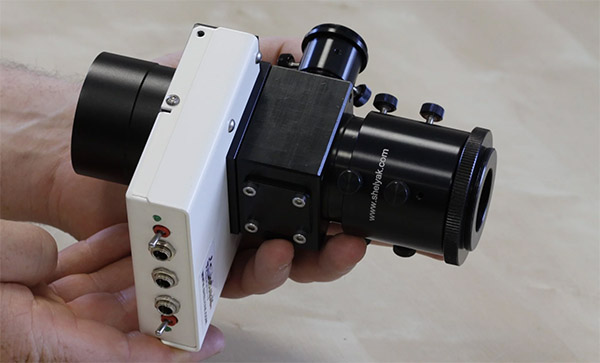
Equipment
Commercial spectrographs and 3D-printed spectrographs
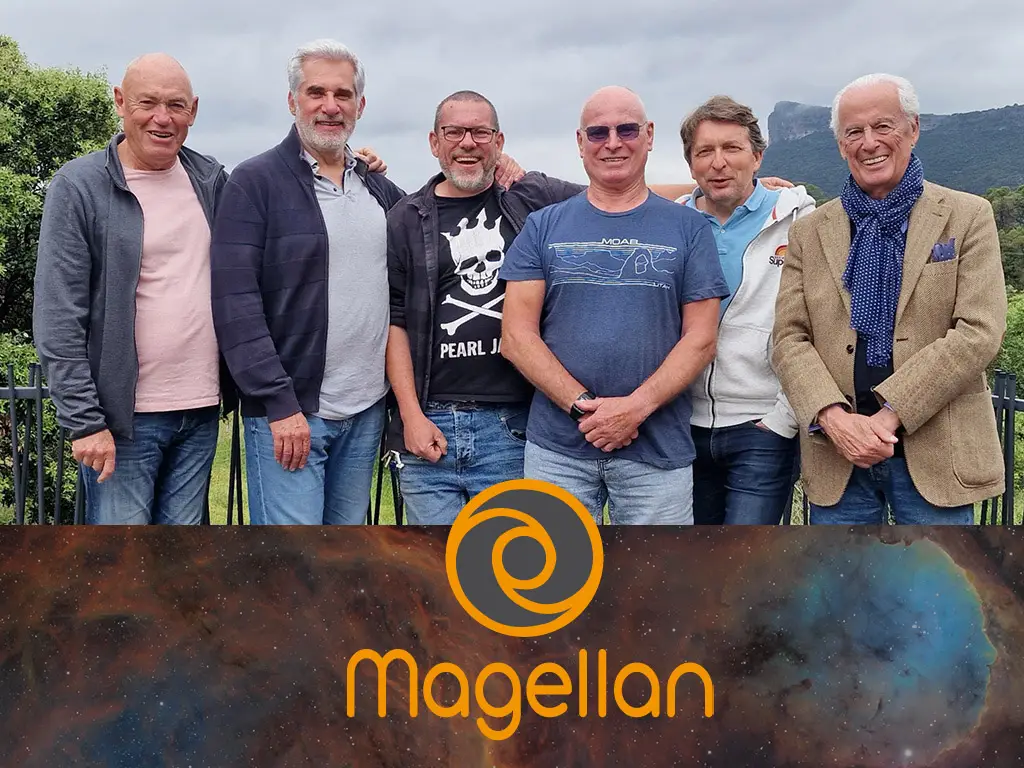
Team magellan
Team Magellan, from left to right: Jean-Michel Lebos, Marian Gutowski, David Legrand, Gérard Lemaître, Laurent Almarcha and Jean Prunet.
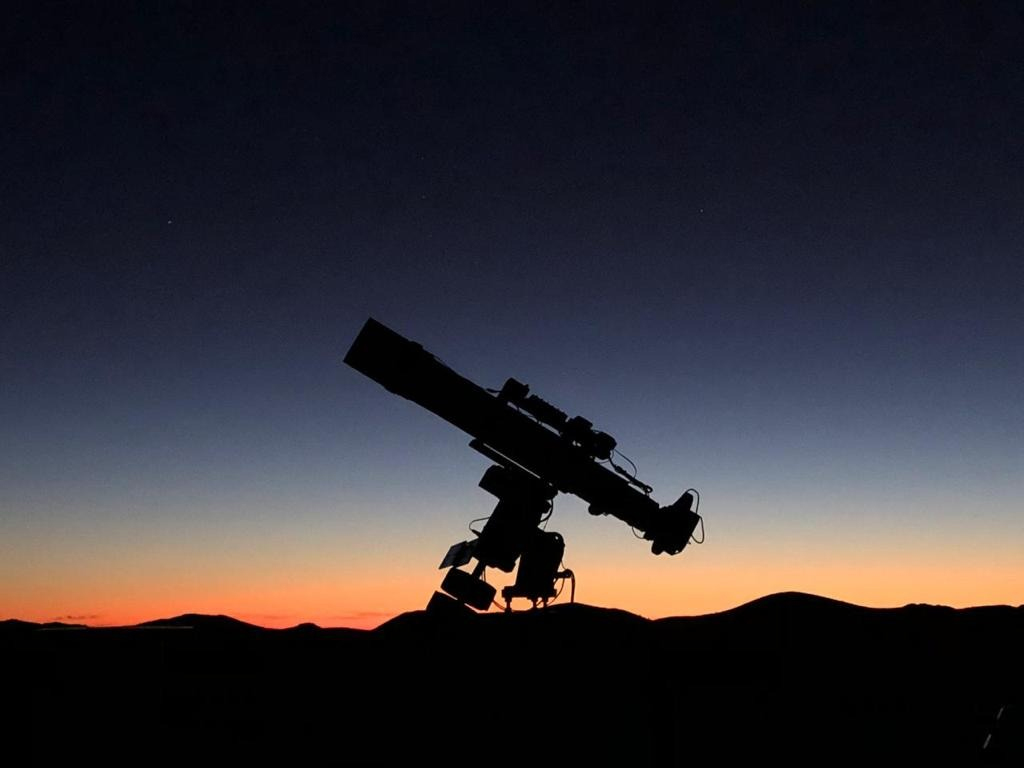
Our setup: Astrophysics AP155 EDF refractor on EQ8 mount, ZWO ASI6200MM with filter wheel, ZWO filters, off-axis guiding with Skymeca, SX Ultrastar mono guide camera. Controlled via NINA and PHD2.